Publisher: Capcom
Developer: Capcom Development Division 1
Release Date: June 5th, 2025 (original release June 1st, 2024)
Version(s) played: Nintendo Switch 2, PlayStation 5
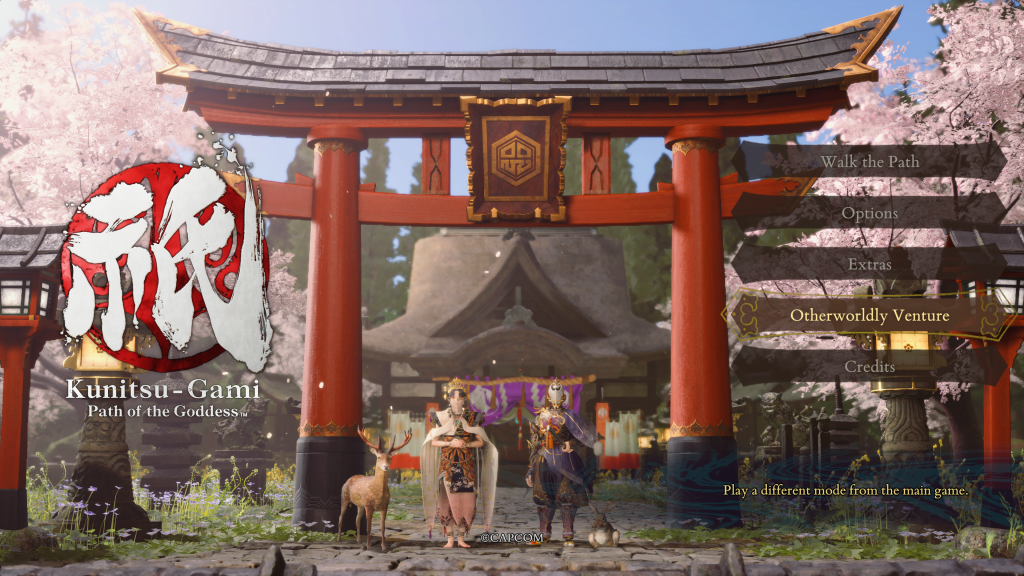
Nintendo Switch 2 version review key provided by Capcom USA at request. PlayStation 5 version was purchased. Some text has been repurposed from my earlier preview article. Screenshots in the article will be from the PlayStation 5 version unless otherwise stated.
We’re about one year past Kunitsu-Gami: Path of the Goddess’ original release date, and I still can’t stop thinking about it. Originally released on PC, PS5, and Xbox Series consoles, Kunitsu-Gami is a beautiful genre mashup with incredibly strong themes and absolutely cracked art direction. The game has lived rent free in my head ever since the release of the game’s demo version, and I was quick to plead with you all to buy the game after it was released.
Though I don’t get the impression the game has done terribly well, a new Nintendo Switch 2 version was recently released alongside a new game mode, Otherworldly Venture, which is available for free on all platforms. Since my preliminary preview article on the game, I’ve had the chance to fully clear it, seeing every goal and optional objective through. Though I’ve since done a good job kicking my PlayStation trophy addiction, I couldn’t help but squeeze as much as I could from Kunitsu: Gami, so I’ve also collected all the trophies, if that counts for anything. More pertinent to publishing a second piece on the game, Capcom USA were helpful enough to pass along a review key for the new Switch 2 release, so I have since played a few hours of that version and also a fair few rounds of the new game mode, Otherworldly Venture. The goal with this article (besides being an updated version of my preview article) is that it can serve as a very robust guide on whether Kunitsu-Gami is right for you, though I hesitate to say that if you’ve even made it to this page, it probably is. Without further ado.
I’d forgive you if you missed 2019’s Shinsekai: Into the Depths. Published by Capcom as an exclusive launch title for Apple Arcade, Shinsekai was an awesome 2D adventure set deep undersea. You navigate your unnamed, silent protagonist through a deep sea cave system with a pressurized suit and suitably high pressure challenges. Though the game was eventually delisted entirely from iOS, it’s since been rereleased digitally on Switch, where I did manage to complete it (it even runs at a locked 60 FPS on Switch 2 nowadays).Shinsekai marked the directorial debut of longtime Capcom staffer Shuuichi Kawata, whose first credited role at Capcom seems to be back on Resident Evil 4 in 2005. Impressively, he’s pulling double duty nowadays—serving as both Director and the Art Director on Shinsekai and Kunitsu-Gami. The parallels between the two games are extremely strong, and only two games in, he already appears to have a strongly established visual and storytelling style truly unlike anything he’s worked on before. Shinsekai was a solid game with arresting art direction, but Kunitsu-Gami is a modern masterpiece through and through.
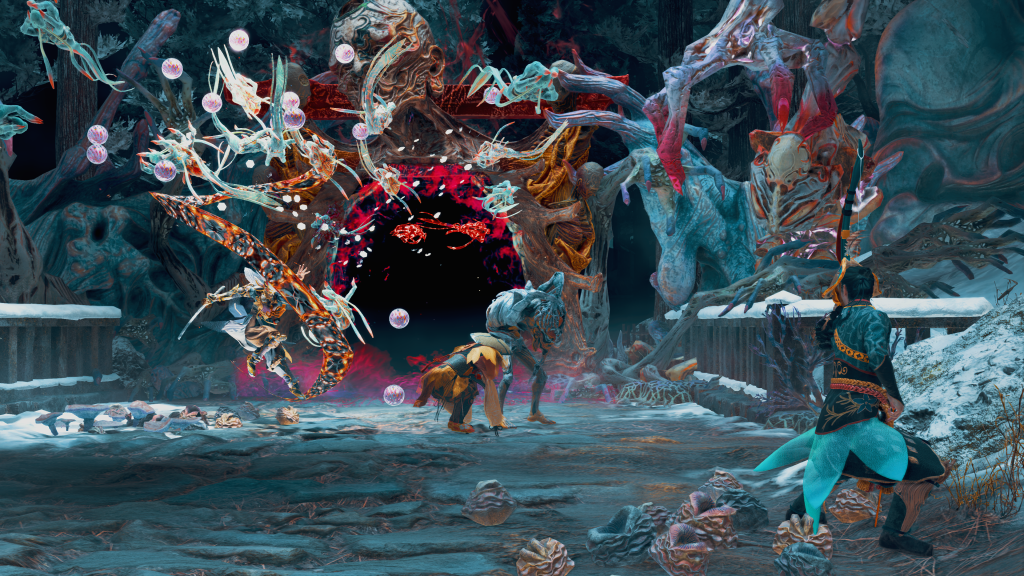
Kunitsu-Gami is very unique in terms of genre: broadly speaking, it’s a combination of third person combat and tower defense, with a heavy emphasis placed on exploring the maps to gather knowledge and resources. It’s kind of a Pikmin game, but it’s also an Odama. It’s an Overlord, but also a Bloons TD 6. There’s some semblance of Army Corps of Hell, but also a few drops of Harvest Moon for good measure. It’s a gamer’s game, anyways, that’s for sure.
In the game’s main levels, you control the mysterious warrior, Soh. During the day, you’ll explore the levels, purifying various points of interest to gather precious crystals and release helpful villagers from the corruption invading their mountain home. The villagers aren’t your only ally on the journey, as the only way to properly purify the Seethe invasion is through a ritual carried out by the maiden, Yoshiro. By using crystals, Soh can highlight a path (the titular “Path of the Goddess”) for her to traverse the level on. Once she has a runway defined for her, she’ll slowly and ritualistically dance her way through the stage until she reaches the goal. Her movement is intentionally quite slow, which intersects nicely with the timer the game operates on as the second half of the main game loop eventually appears.
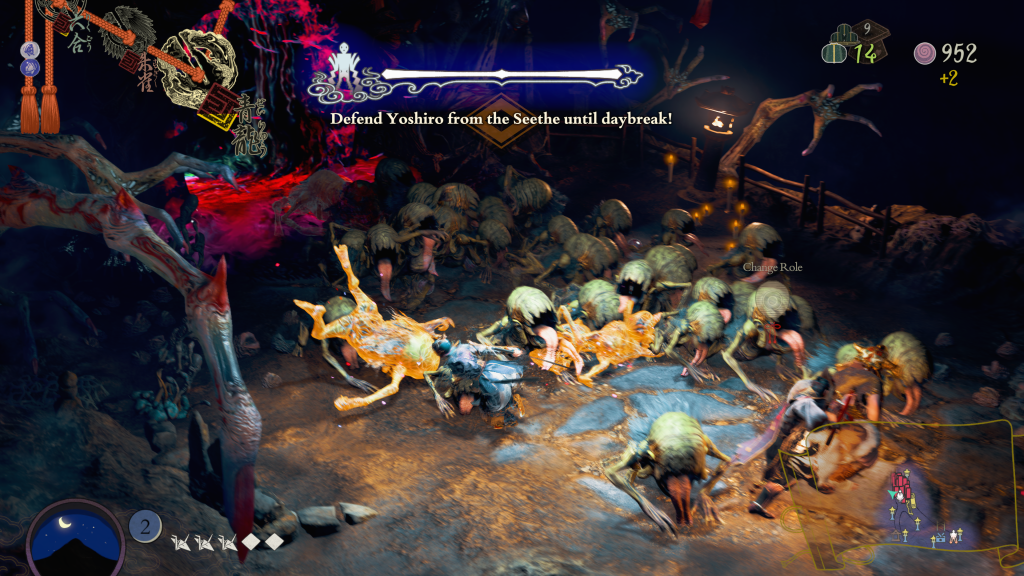
As night sets on the mountain, the Seethe themselves begin to appear. These nasty, corrupt monsters are ceaseless in their attempts to try to kill Yoshiro. Thankfully, Soh is no slouch in combat, equipped with a very well considered designed moveset that provides perfect counter options to various enemy types. Yoshiro will halt her movement completely during the night, staunchly holding her place on the path of the goddess as you do your best to hold out until dawn. Enemies will emerge in large waves from the corrupted torii gates you may have spotted during the day, so thankfully you aren’t alone in Yoshiro’s defense. Enter the last piece of the puzzle: the villagers.
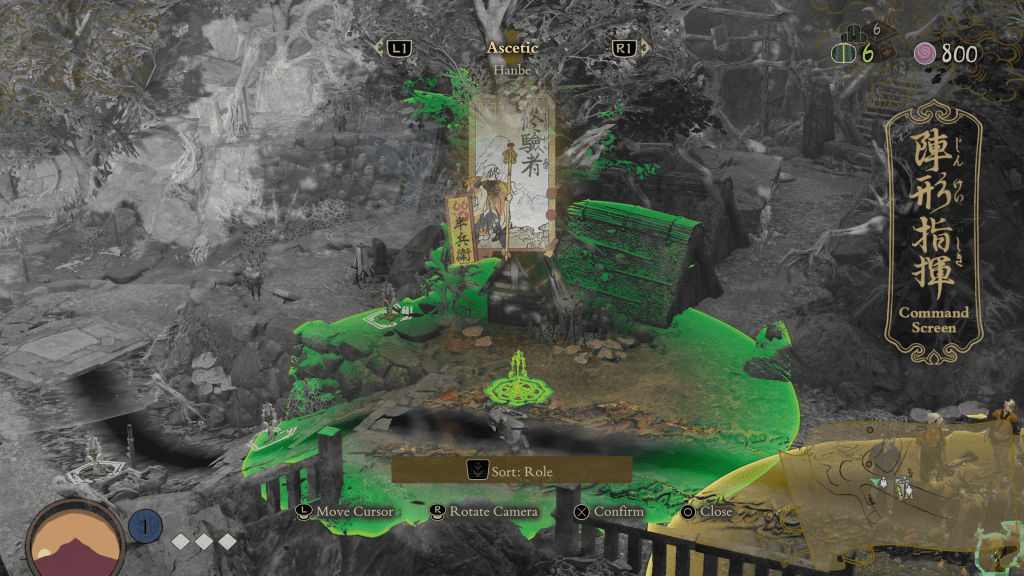
Once they’ve been saved from corruption during the day, villagers can be assigned a combat role by spending crystals. There are twelve roles in all, from the humble archer to the AoE-capable sumo wrestler, and they offer a wide range of abilities to take advantage of. Choosing a role isn’t a huge commitment, either, as you can always change them later on in the level if you’ve got the crystals to spare.
When you’re ready to flex your tower defense brain, you can freeze time by opening the Command Screen and assign villagers spots on the map using a cursor (on Switch 2 you can use mouse controls for this, which is nice). As with any tower defense game, properly anticipating enemy movement and cleverly positioning your allies makes all the difference. Place them well enough, and you won’t even need Soh to engage in combat in many cases!
One extremely smart combat element that I absolutely have to praise is the soft-cap on your crystals and healing items. For both types of resource, you have a number that you can bring into a stage with you (let’s say five healing items and 500 crystals). The game will allow you to collect resources in excess of those values during a level, but if you finish the stage with a resource above the soft-cap, everything in excess of that value will be discarded. This obviously strongly encourages you to actually use healing items and spend crystals, rather than hoarding them. It’s a very smart move that trains you to learn to not hold back on using your resources, which has great knock-on effects as it almost always means you’re regularly performing closer to your best, and that you’ll be overall more effective at clearing your objectives. I think other games should liberally steal this idea where they can. Super clever stuff.
There’s a tantalizing rhythm to the flow of the game in these main levels. The sunrise grants a great sense of relief and reward now that you and Yoshiro have safe time to advance with a freshly full pocket of crystals (taken from Seethe corpses) before a sense of urgency regularly settles back in as you remind yourself that there simply won’t be enough time to prepare as well as you’d like to. Yoshiro will need to continue her march closer and closer to the danger, and you just need to do your best to make the most of the day. It’s a powerful gameplay loop which likely won’t wear out its welcome until you’re comfortably in postgame territory.
As a quick aside, I have a lot of respect for combat designers who choose to develop characters with purposefully small move lists. The tightness of Soh’s melee moveset reminds me of games like the original Streets of Rage, where the main attacks are so straightforward and each serve such a necessary purpose that you can’t remove a single one without leaving a gaping hole in their repertoire. Despite the fact that it literally takes more labor, it can be easy to design a bloated movelist with plenty of overlapping techniques that neither appeals to a clarity of purpose, nor the massive freedom of a Devil May Cry, so I applaud Kunitsu-Gami’s combat designers for building Soh’s moves out with such a strong vision.
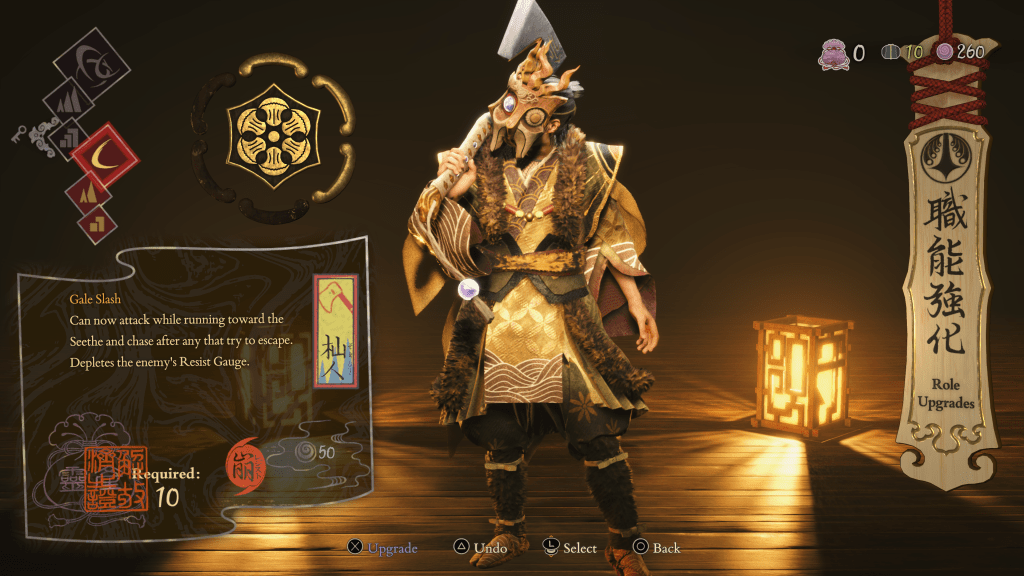
As the game progresses, you’ll unlock more and more villager roles, you’ll encounter multi-day stages and multi-objective stages, you’ll gain the ability to reconstruct level traps and gimmicks to your advantage, and you’ll be able to upgrade your villager classes, and even Soh. You’ll find that up until the end of the game, there’s a real feeling of constant growth, and your tactics will naturally evolve as your capabilities expand over the course of the adventure. Many of these advances are doled out in a specific order along the main route, but by repeating missions to clear their optional side objectives and taking the time to repair the many settlements on the mountain after you’ve saved them from the Seethe, you actually get a lot of agency in claiming upgrades as well.
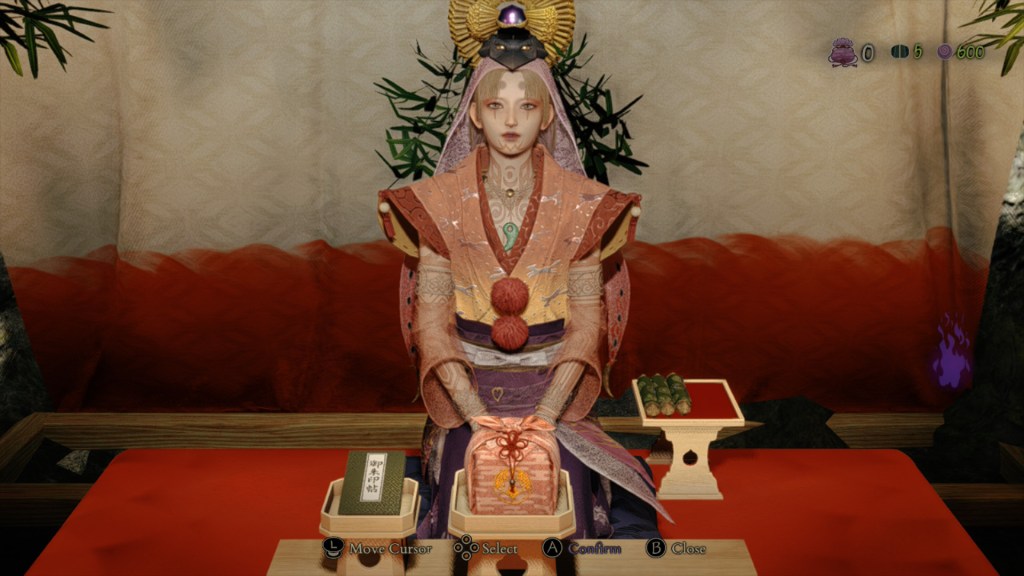
The other main gameplay section is the village gameplay. Between missions, you can return to any of the villages you’ve saved and help the villagers reconstruct by delegating tasks. You can also visit Yoshiro in her tent, where you can choose from a huge array of unlockable gear, upgrade the various villager classes (and Soh, once you’ve progressed far enough)—and even serve Yoshiro beautifully rendered traditional Japanese desserts as the village’s hierarchy of needs are progressively met. Rewards for rebuilding the village are plenty and powerful, with unique equipment, new desserts for Yoshiro, permanent upgrade materials, art, and vital currency cap increases on offer. There’s a powerful sense of tranquility to these village segments, contrasting the chaos of the action levels, and it helps complete the game’s immaculate vibe.
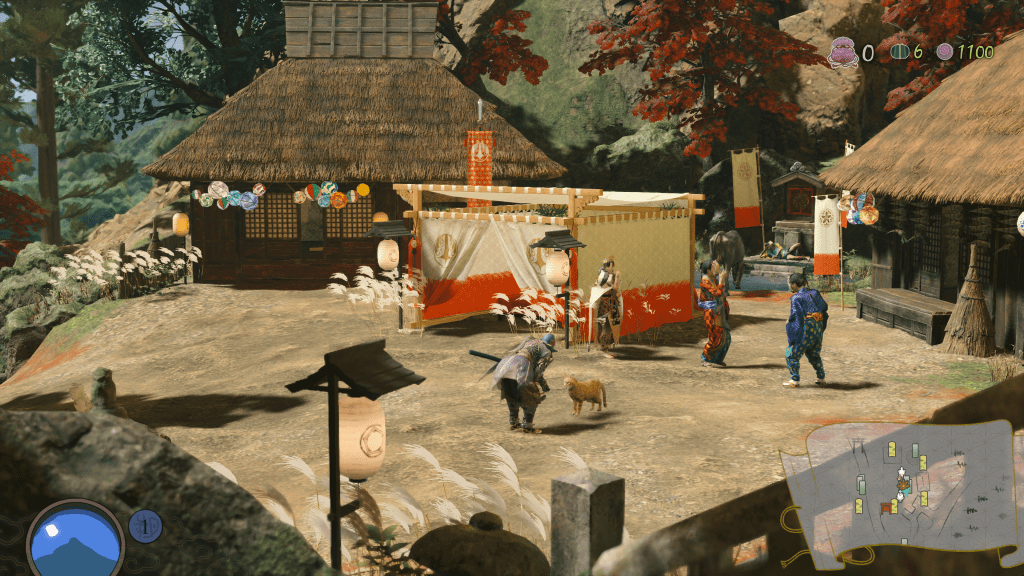
As I played through the game, I found myself repeatedly blown away by the breadth of ideas on show. The game is absolutely bursting at the seams with playful gimmicks and crafty gameplay scenarios, and there are new bosses introduced almost every other level, to boot. Though I don’t want to give everything away, I was particularly impressed with an early level where you actually can’t use Soh for combat at all, and a later boss where you have no villagers and must engage in a solo duel as Soh. Whether it’s poison swamps, autoscroller boat stages, or a stage built directly onto a boss monster, Kunitsu-Gami will keep you guessing up until the very end.
Speaking of the end, for anyone sad about that sort of thing, I have good news! Kunitsu-Gami has a robust New Game + mode that offers you new cosmetic and equipment rewards every time you clear the game (up to eight times, according to info I read on Reddit). Additionally, when you enter NG+, the difficulty ticks upwards (enemy patterns are adjusted as well), and each stage gets an additional two side objectives that reward you with gear and upgrade currency. It’s actually not possible to max out everything until you’ve finished all the side objectives unlocked in NG+ alongside the base game’s side objectives, so if that sort of completion is your thing, I recommend getting into NG+ as soon as possible since your objective completion carries over. It’s really nice that in this way a single player game like Kunitsu-Gami can still make you feel like you’re making forward progress on unlockables and secrets if you choose to replay it.
Like Shinsekai before it, the game portrays a beautiful natural world, this time a picturesque mountain home to a community of villagers under invasion by the Seethe. The mountain is home to a solid variety of environments, including settlements both big and small, lakes, graveyards, swamps, and caves. I feel that a great deal of thought went into constructing a believable world, and as the levels zig zag their way across and down the mountain, you’ll visit nearly 20 unique levels (not including the many boss stages). Each of these levels represents an encampment or village of some sort that you get to help recover and rebuild after the Seethe have been booted. The Seethe are explained to have come to the mountain in response to the greed of humanity, and this process of renewing both nature and society through gameplay supports a beautiful central theme of recovery and rebirth that runs effortlessly through the whole game.
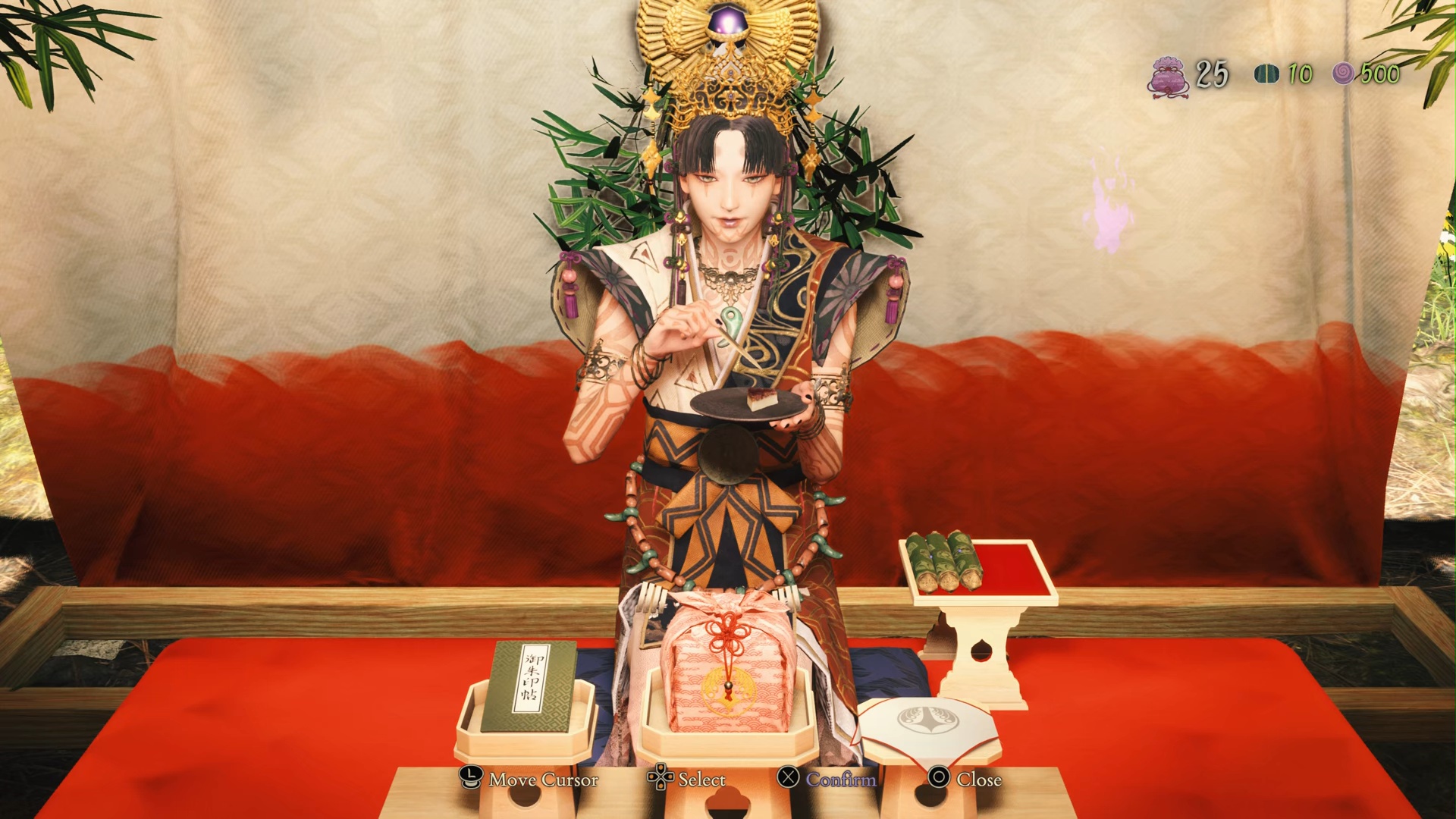
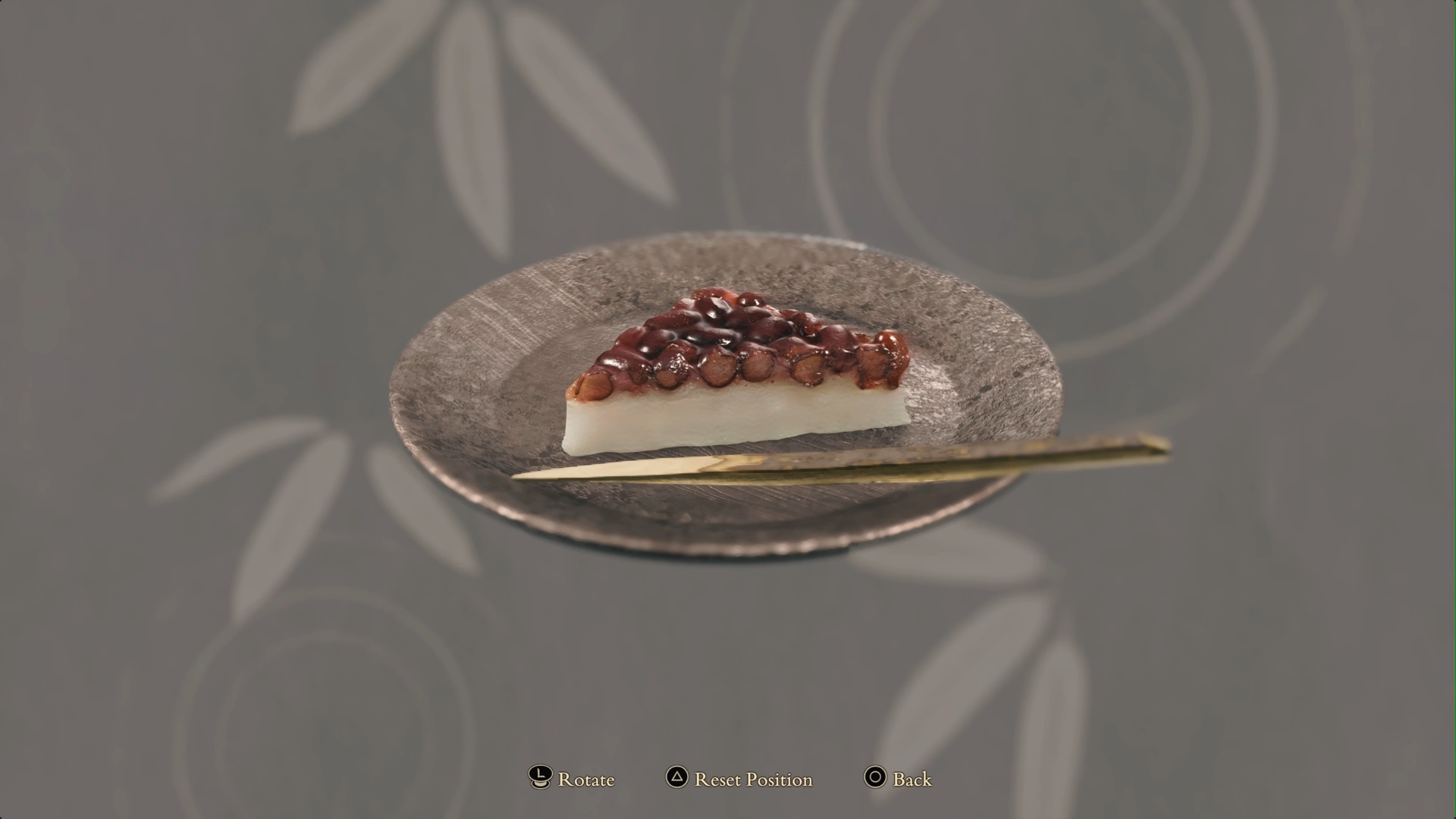

IThis theme ties well with the cooperative nature of the gameplay, as well. In Kunitsu-Gami, Soh can’t save the mountain alone. Soh can’t rebuild the villages, or walk the path of the goddess alone in any way that matters. Soh, Yoshiro, and the villagers all need to partake in this beautiful cooperation to have any chance of pushing back the Seethe’s darkness. Not every game that puts you at the head of an army manages to land that all-important emotional connection to your troops and the world around you, so I’m really impressed by how well Kunitsu-Gami rises to the occasion narratively. The game also sports two endings, one of which you’ll have to clear the game twice to see. Both are good and suit the story very well, but the second one is quite the joyous affair, indeed.
Putting aside the beauty of the narrative and setting, let’s talk about the technical beauty on display. As with all of Capcom’s RE Engine titles, Kunitsu-Gami leans heavily on the amazing Quixel Megascans library to create a high-fidelity realistic world, and boy does it land. Every bit of this game’s nature is so well realized, it really brings me back to my childhood, where I lived and grew up playing in the many forests nearby. The sights and sounds of nature are all just so dead-on. Aside from Yoshiro, all humanoid characters wear wonderfully designed wooden masks, and the Seethe have tremendously cool designs, all borrowing heavily from traditional Japanese art and yokai. Really, the world is basically a pseudo Japan with some slight changes here and there, and it lands perfectly. The authentic feeling of traditional wooden architecture lends to the overall sense of serenity in the villages, and the shinto symbolism helps ground it in a place and time in Japan’s history. Snappy cutscenes appear surprisingly often, interrupting to briefly show off new environments, features, and foes, and they hit too. At a glance, you might think this game is a small title in some way, and while it’s certainly not AAA, it’s much bigger and more elaborately produced than you’d think at first blush.
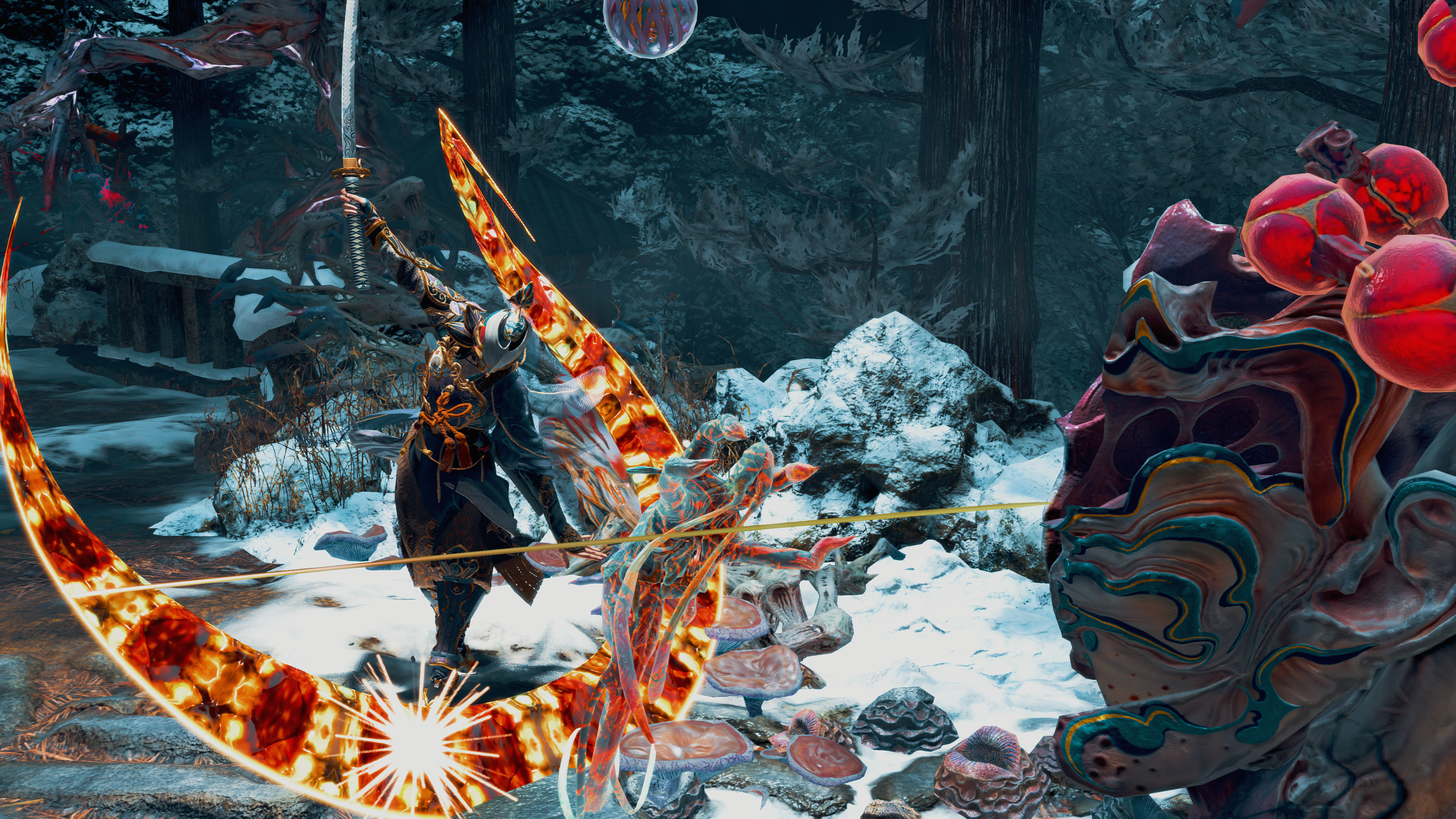
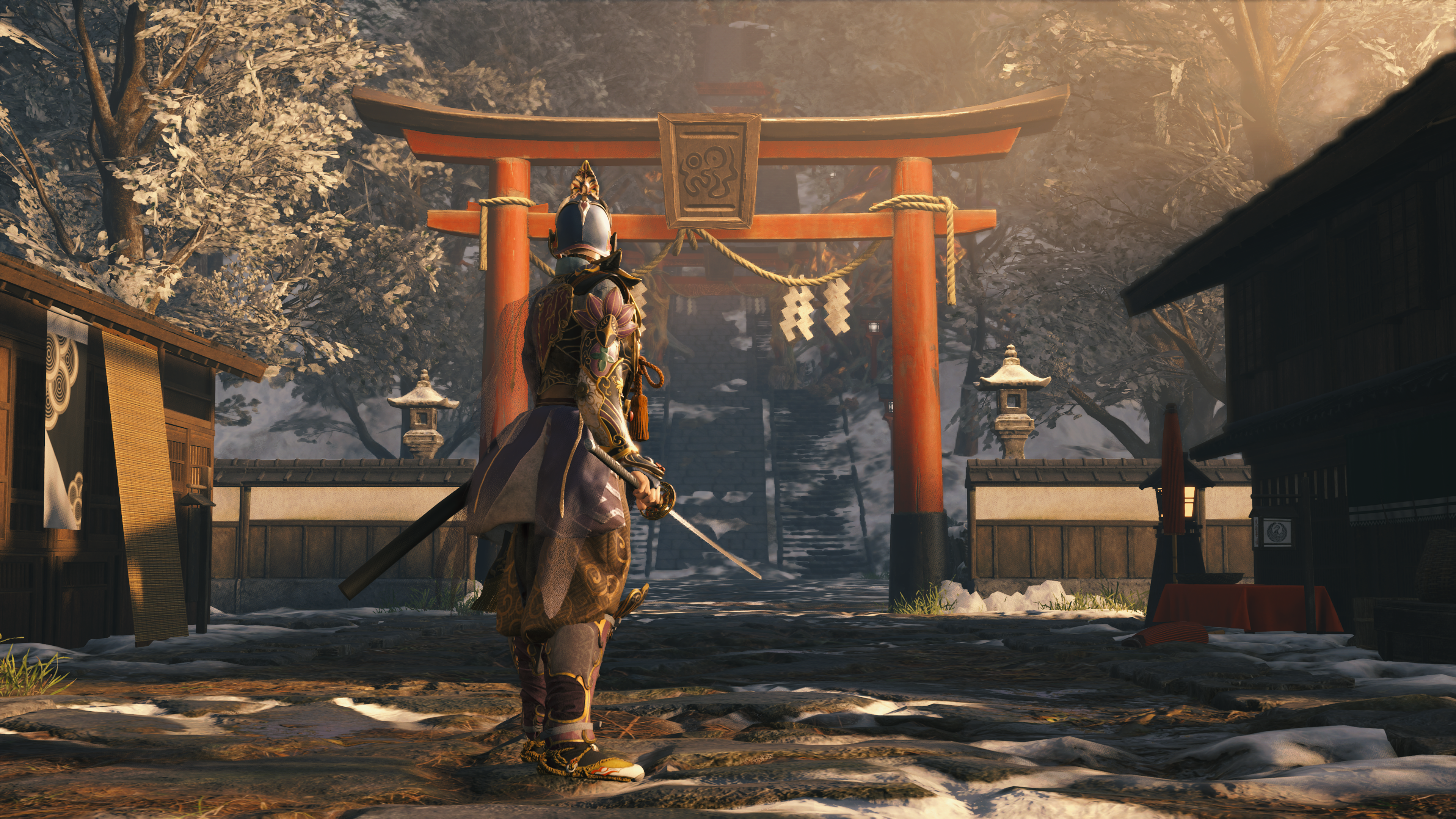
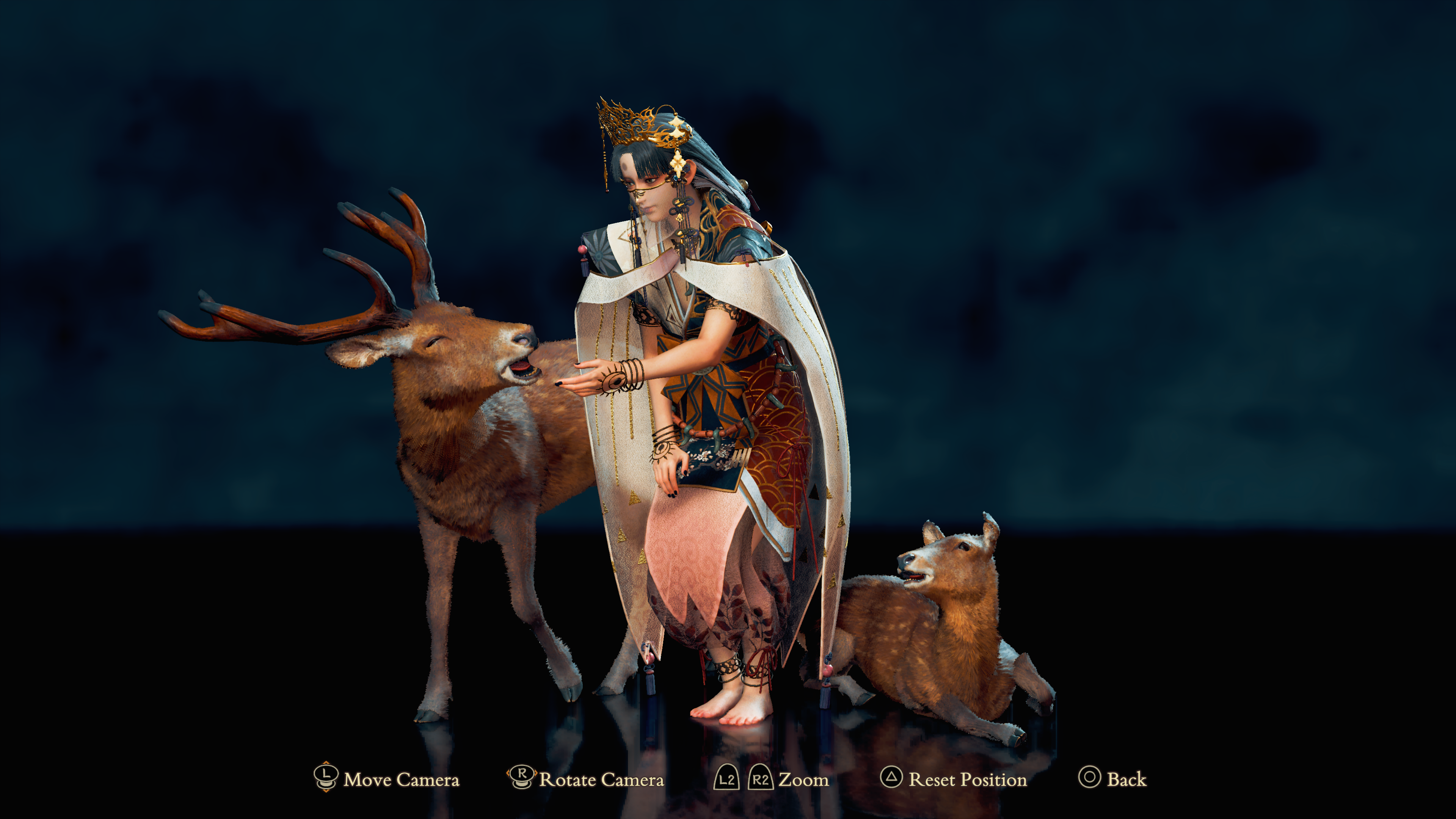
Acoustics are not my specialty, so I frankly have little to say. Music’s great, sound is great. Maybe the parry sound effect could be a smidge better, but all around 10/10 stuff. The most interesting thing to me is the lovely, mostly silent world. The game does have voice acting (both the Japanese and English dubs are great), but it’s very subdued and used sparingly. Yoshiro will wish you well when you leave her tent and cry out for help when she needs it, but by and large the game is purposefully designed around the absence of voice acting. Shinsekai, if I recall correctly, featured zero voice acting, so I consider this to be part of the director’s style at this point.
All in all, if you value unique games at all, I really think Kunitsu-Gami is hugely worthwhile. I think it’s only a matter of time until the next generation of YouTubers start publishing videos about how this game was a hidden gem that everybody missed (AND DID YOU KNOW THERE ARE OKAMI COSMETICS, CHAT?) but if we all band together and buy it, we can surely save it from that fate! Maybe!
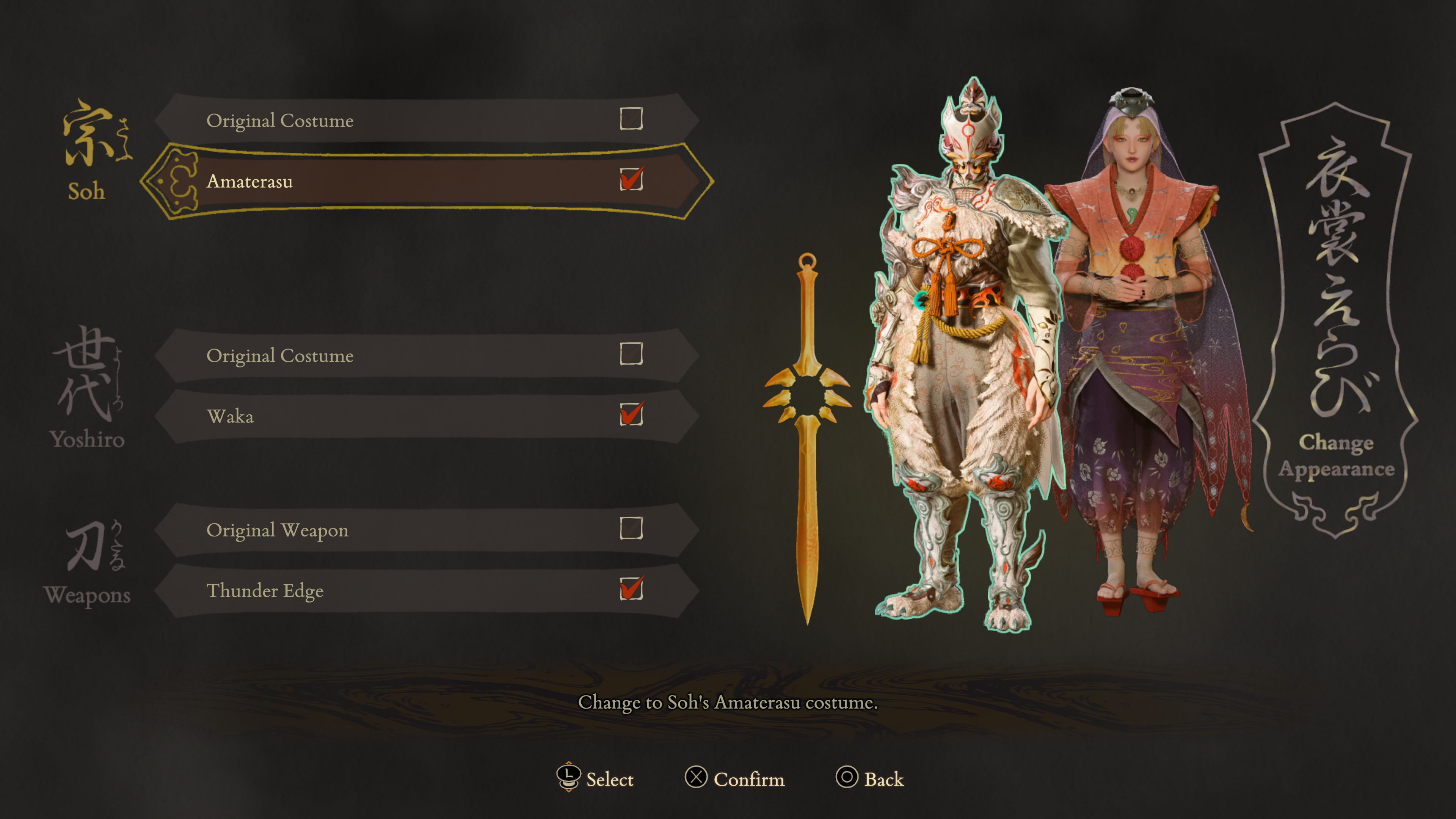
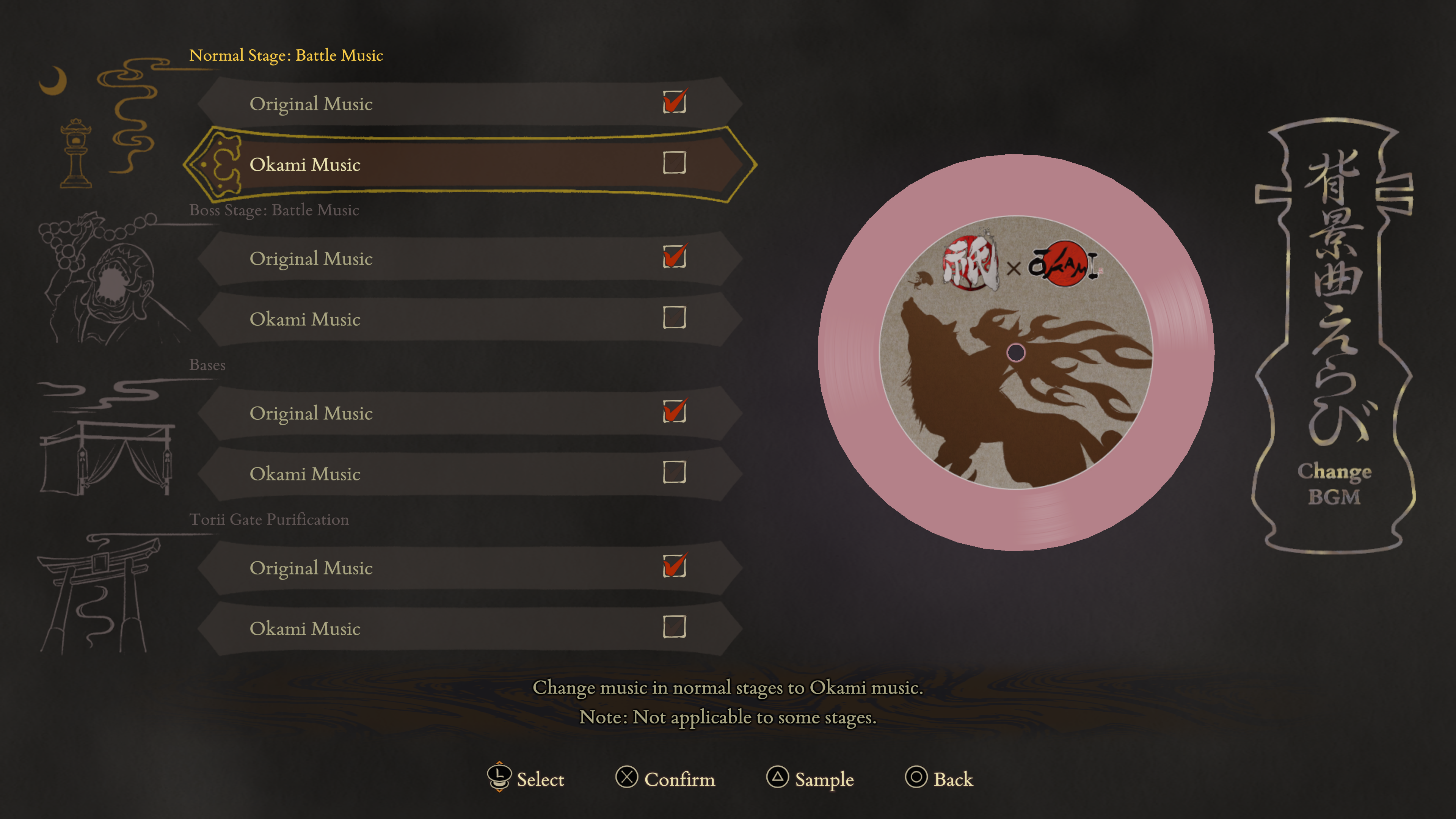
On the various versions of Kunitsu-Gami, I’ve now finished the PS5 release and played around five hours of the Switch 2 version. I feel quite confident in recommending the PS5/Xbox Series/PC version (having seen videos of the latter platforms) as they’re pretty uncompromised. Switch 2 is going to depend on your interests and tolerance. The resolution has been dropped a fair bit, and the image upscaling techniques used do add a bit of noise to the game’s look (particularly in handheld mode), but I still think that element isn’t much of a huge deal as the art is very high detail in the first place which somewhat conceals the new noise for anyone lucky enough to have not seen it on stronger platforms. I’ll share a selection of Switch 2 images right below this paragraph so you can see how it holds up. Since I barely used them on PS5, I decided to use the Okami cosmetics for my playthrough this time- check out Soh’s Amaterasu costume pawpads in the fourth picture! Cute!
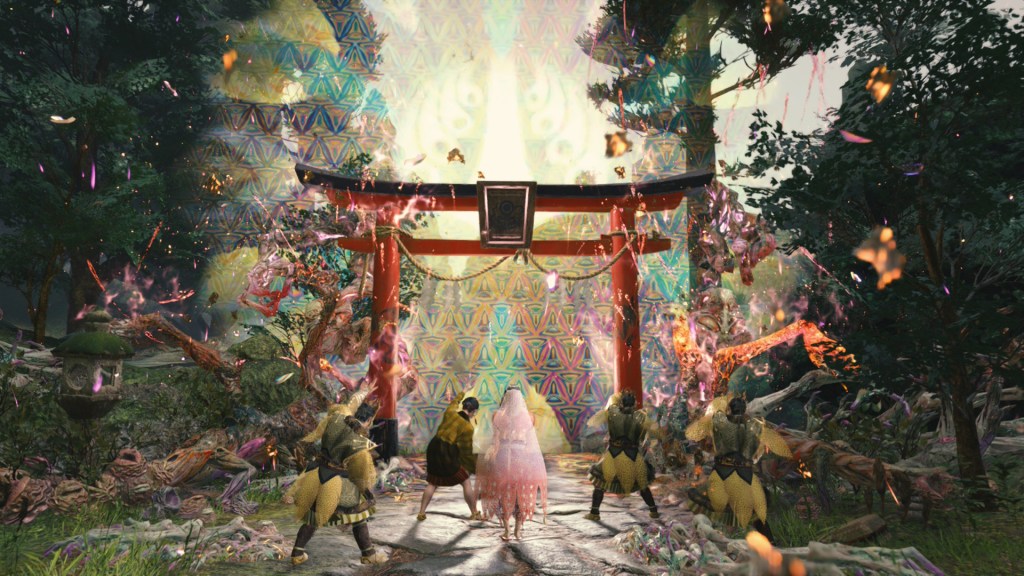
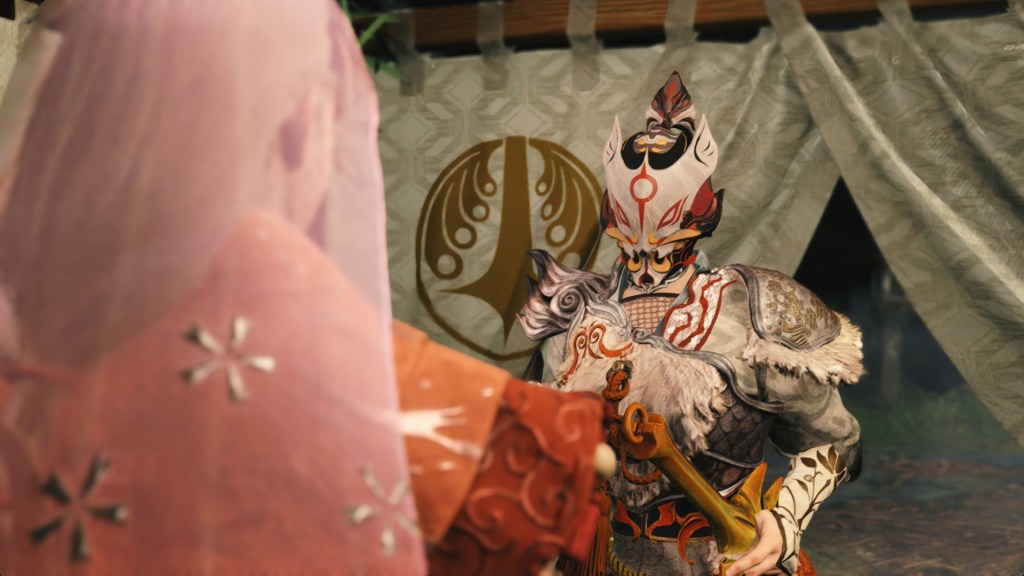
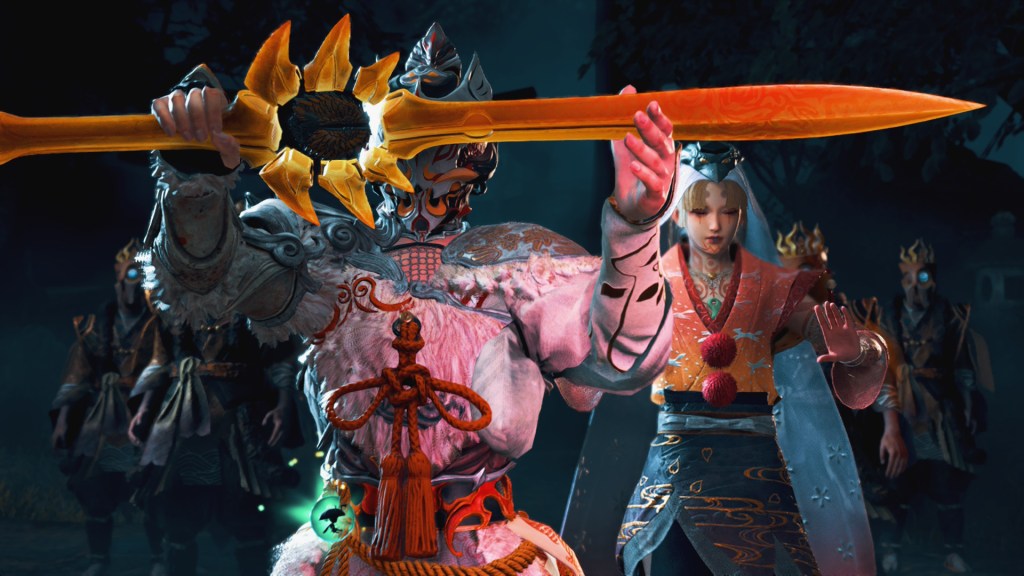

On the framerate side, I have no measuring tools, so allow me to lean on this video here. The game seems to target 60 FPS, but in reality appears to hover in the 40s. The video linked is performing the test in the game’s opening level, where Soh is accompanied by a nearly full troupe of villagers and a sizable horde attack you before a boss arrives. Based on what I’ve played and my very unscientific opinion, I feel this performance is very representative of the busier nighttime sections, and the daytime exploration sections have either been smoother, or otherwise performance issues are less noticeable given the low-stakes gameplay occurring. No idea if VRR is engaged in handheld mode. For my tastes, this has been perfectly acceptable, and I’ve been greatly enjoying playing the game at this level of performance, but please consider your preferences before making a decision!
As far as unique features, the Switch 2 version supports a hybrid controller/mouse setup that’s pretty dope. I used it for around two hours before going back to controller mode (sadly I just have too much muscle memory built up for this game), but it was quite good, and as with any game released on PC, the benefits of mouse controls are varied and obvious. My one gripe has more to do with the limitations of the hardware. Though the mouse functionality of the Joy-Con 2 controllers works excellently, they’re not quite as ergonomic as a standard computer mouse if you want to use all the buttons, which Kunitsu-Gami does. I find most gameplay to be solid with the mouse controls, but having to reach down to dodge with the Y button is a little more awkward than I’d hoped. Credit to the team for devising a new control scheme uniquely for this version and the specific input layout of the device, though. I’d recommend you give it a go if you try the game on Switch 2!
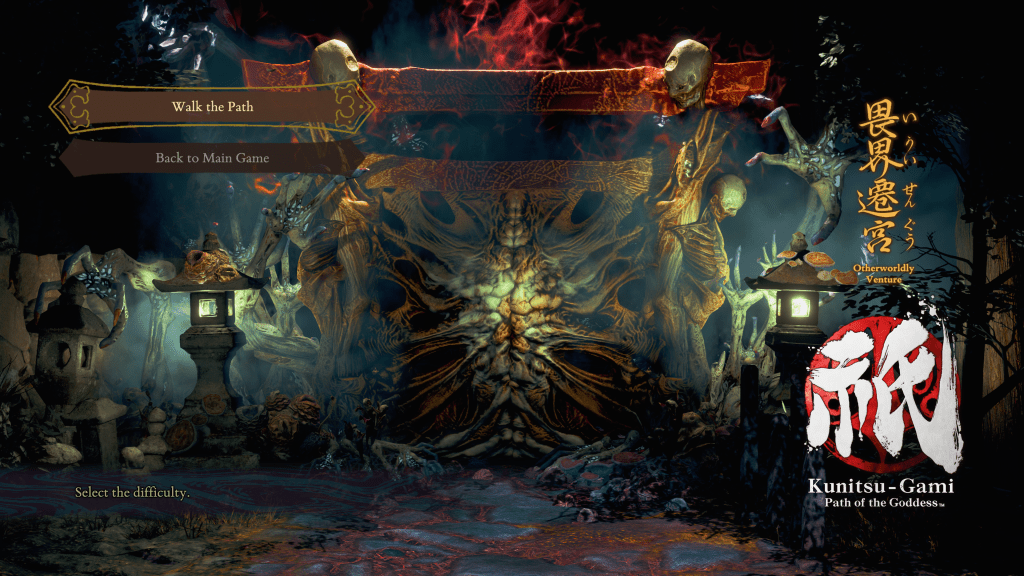
Finally, the new content. Otherworldly Venture launched on all platforms alongside the Switch 2 version, and it’s pretty good! Accessed from the main menu after having finished the main story at least once, Otherworldly Venture is more or less a roguelike mode with shuffled enemy and powerup arrangements with a fixed stage order. The mode offers a more limited Easy and Normal mode, where you play a set selection of stages before hitting a definitive victory screen at the end, and a brutal Hard mode that apparently goes on endlessly. Past the Easy difficulty, this mode pulls no punches, and it took me a few tries to even finish Normal. Your progress from the main story doesn’t carry into this mode for better or for worse, and you don’t get any persistent upgrades as you clear runs, so it’s always up to your skill (and luck) to build up again from scratch. Soh has a variety of abilities unlocked from the start, thankfully, so you’re not beginning with absolutely nothing. The mode also brings with it three new costumes to unlock, which is really nice! One of them is particularly spoilery and gorgeous, which I got a real kick out of.
Though I think I would have preferred new content built into the main game/new game plus postgame, I can’t deny that this is a really solid mode with fun combat scenarios you’ve never encountered before. Bosses are normally encountered in predefined boss zones, but having one suddenly run up to you in the middle of a standard stage while you’re already handling regular enemies and limited resources… It’s absolutely devilish stuff. Even though you need to finish the main story to access Otherworldly Venture, you will get bopped hard in this mode.

If you’re still on the fence about Kunitsu-Gami, firstly, get down from there. You’ll hurt yourself! Second, there’s a demo available on all platforms except Nintendo Switch 2 (I hope that’s on its way) which includes three levels and a boss, with their order slightly rearranged from the main game. Fully clearing the demo and all side objectives took me close to two hours, but you can save and reload if you need to break it up. It’s a pretty luxurious sample of the game with only one big flaw: your progress won’t carry over to the full title. My advice is to try it out, but if you feel like you want to play the full game, drop the demo early. No sense in having to play more than you need to if you’ll just need to restart anyway!
I’ve seen many suggest Kunitsu-Gami is “the kind of game we used to see on the PS2.” Honestly, I kind of get it. Big companies don’t regularly make new IPs with this type of creative game design, let alone at this level of polish and finesse. Kunitsu-Gami is a rare title from that perspective, and a triumph in its execution. I’d comfortably recommend it to anyone who is remotely into action stuff at all. You really shouldn’t miss it if you can help it! After Shinsekai, and now Kunitsu-Gami, I sincerely hope Shuuichi Kawata will be able to lead a third game. I’m already looking forward to it. For now, I’ll just be satisfied that I can play Kunitsu-Gami in bed.
tl;dr
A truly unmissable game that will remind you why you play games in the first place. Its captivating art will draw you into its unique blend of action/tower defense gameplay.
9/10
 「RISINGSUPERBLOG」
Leave a comment