Publisher: Nintendo
Developer: Intelligent Systems
Release Date: September 25th, 2025
Version played: iOS (iPhone SE 3rd Generation)
This article was originally written in November 2025, then edited in January 2026. I’ve updated a few sections to reflect the timing of things as the game has continued to update, but if there were any gameplay or content changes during that time that I misrepresented, that’s my bad! Thank you all for your patience on this article- Enjoy!
Recently announced and surprise-released, Fire Emblem Shadows near-immediately garnered a pretty harsh reception from critics and series fans alike. Aside from two brief stints as Musou games, Fire Emblem has long been a series defined quite rigidly by its turn-based strategy, character relationships, and overarching medieval fantasy stories.
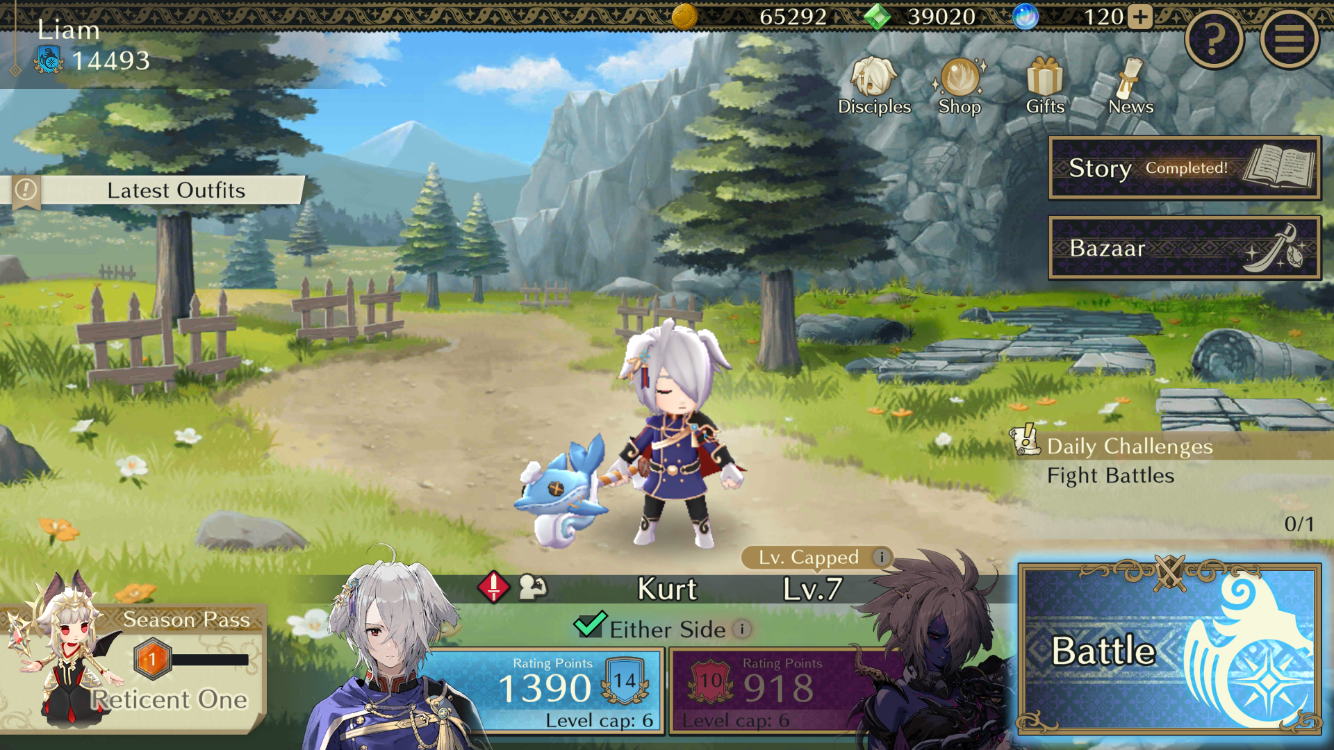
Shadows opts instead to be an autobattler/social deduction game. Although Among Us is the nearest analog for the English side of the internet, I suspect that Dead by Daylight knockoff Identity V‘s ongoing high profile success in Japan may have been the real impetus for them to take a stab at the genre.
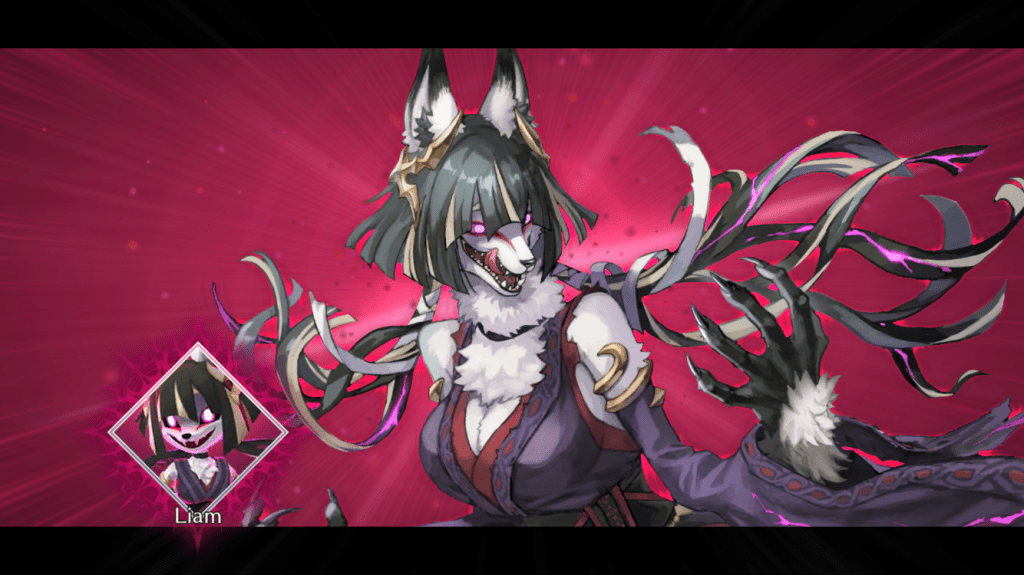
Though Shadows makes fun choices, like giving every character in the cast visible animal features and cool/sexy (sometimes both) evil forms, it also bucks most of Fire Emblem’s signature elements, and sadly does not deliver perfectly in almost any area. I count myself among the few who would call themselves a fan of Fire Emblem Shadows, but even with some strengths on display, I can’t say that they’ve really landed every choice.
I played the game daily from launch to the beginning of the third battle pass (featuring Veronica from Fire Emblem Heroes) and fully completed both of the first two paid battle passes. The fourth one, starring Path of Radiance’s Ike, just launched as I edit this. But I haven’t paid for either of the later passes. At this point I’m a bit over CAD $20 deep and I may wrap up my time with it soon, but not before I share my thoughts on it. Regret isn’t a factor, for what it’s worth! While I’m not normally a battle pass type of guy, I had fun with it in Shadows. I like the game quite well and I actually think the game is stronger than people give it credit for in some areas (mainly gameplay), but I have big complaints that I feel haven’t been well addressed by everyone’s rush to lambast the game within 48 hours of release. Let’s start with something I did like; the characters and story.
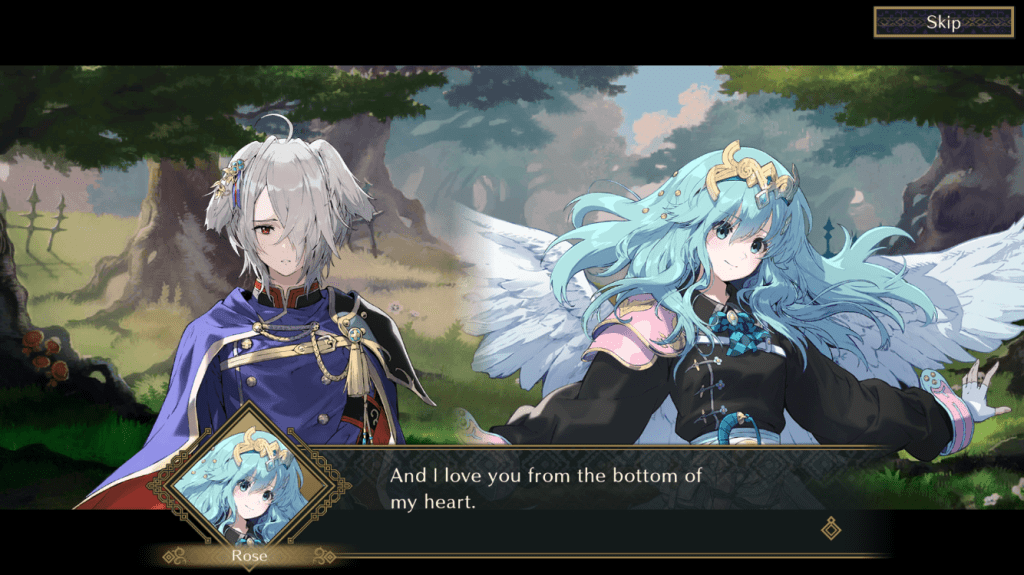
Right out of the gates, I have to congratulate Nintendo and Intelligent Systems for centering the story around a main character who is canonically lesbian. I almost couldn’t believe what I was seeing given how conservative big Japanese companies tend to be around this type of material, but the game goes to lengths to show us that indeed, these girls are in GAY love.
The game stars Prince Kurt, the young leader-to-be of the kingdom of Ast. As the only child to a throne that is culturally disallowed to be passed down to a woman, she is forced to keep her true identity a closely guarded secret in order to maintain her station. I was initially unsure of Kurt’s chosen gender identity, but in an early scene where her secret is found out by an outsider, she specifically identifies herself as “not a man”… so I’m assuming she still identifies as female. We’ll have to see if that ever changes further down the line.
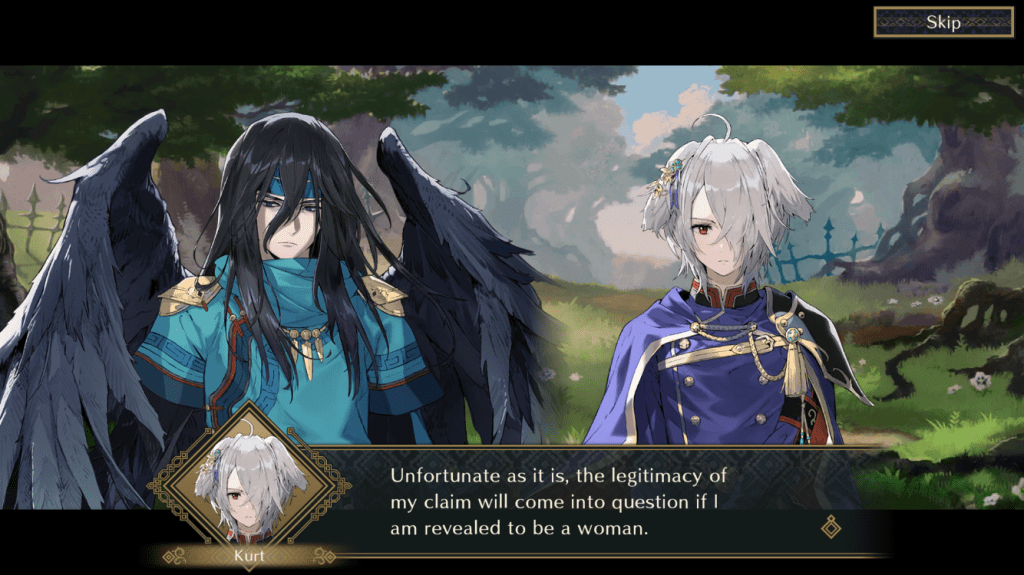
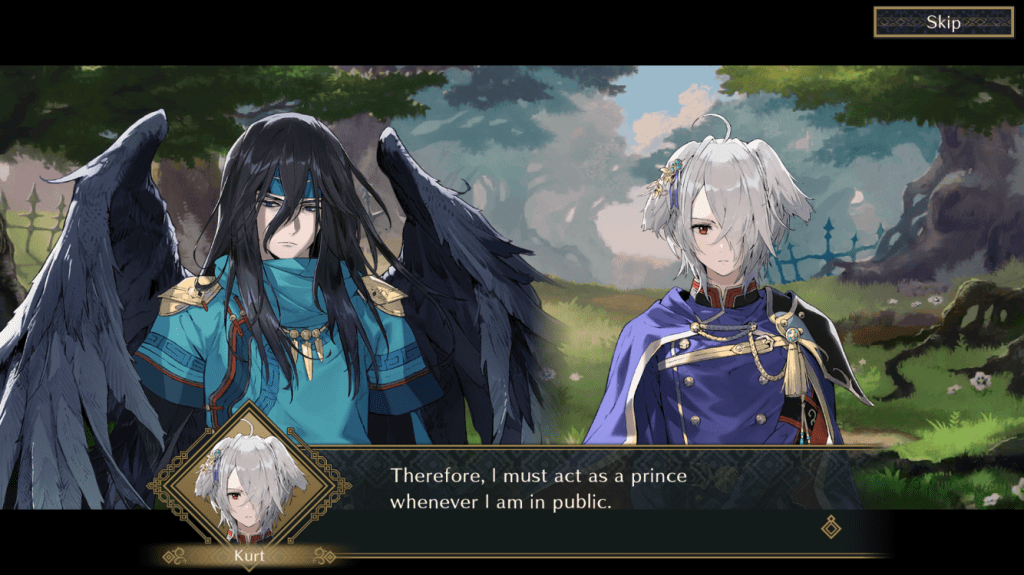
Anyways, Kurt is soon revealed to have a fiancé named Rose. Beating out my expectations for how this stuff normally goes in corporate-made games, Rose also nearly immediately reveals that she is fully aware that Kurt is a woman, and proceeds to immediately insist that she absolutely loves Kurt and is excited for their marriage. Her unlockable shadow side story (where the character is portrayed in a more evil state- we’ll get to this soon) has her even insist: “Everything I am is for Prince Kurt.”
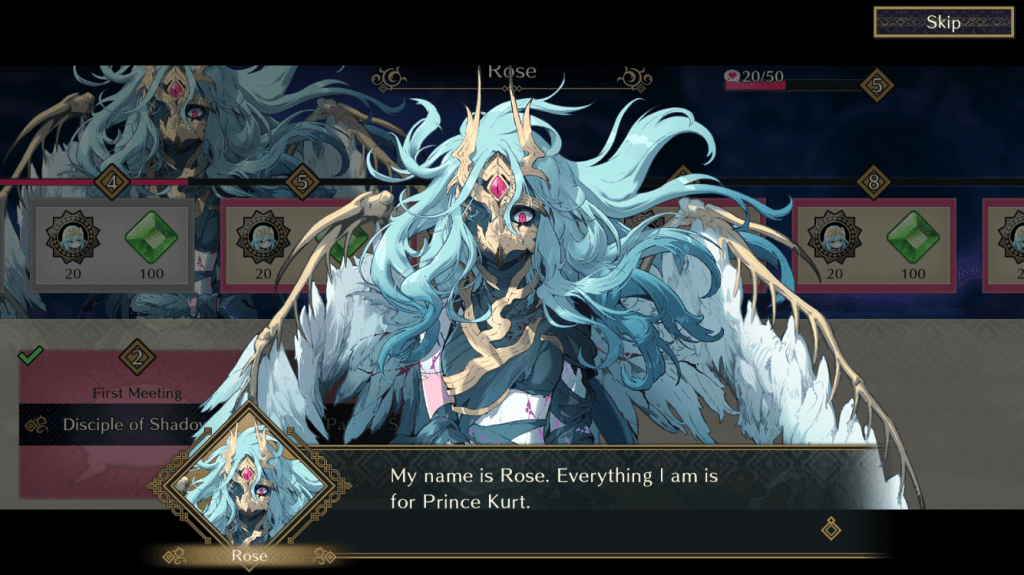
I gotta say, I really didn’t expect this from Nintendo, nor a game like this! All too often, writers will be noncommittal or have the characters eventually discover the truth and call things off, but not in Shadows! Kurt immediately jumps high on my list of favourite FE Lords. Let’s go, lesbians!
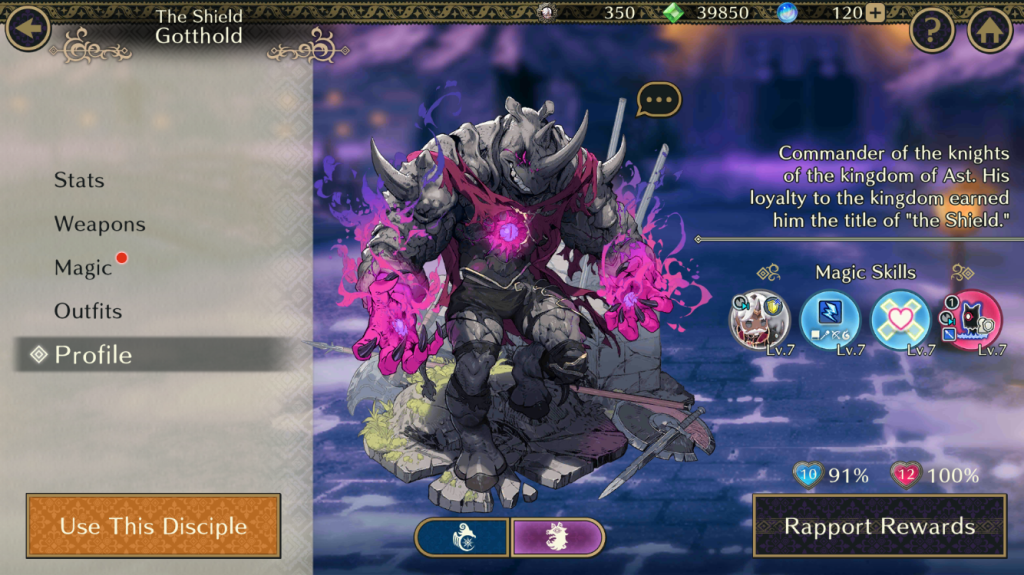
In general, the protagonist’s troupe are pretty likeable characters with what little screen time they have. Alberta and Carina are the standard issue Fire Emblem red and green colored cavaliers (at risk of exposing myself as a fake Fire Emblem fan, I thiiiiink this is the first time that either of them are women). Gotthold is your standard wise elder general character, and Zasha is the hired sword of the gang. All very standard Fire Emblem stuff, but it works.
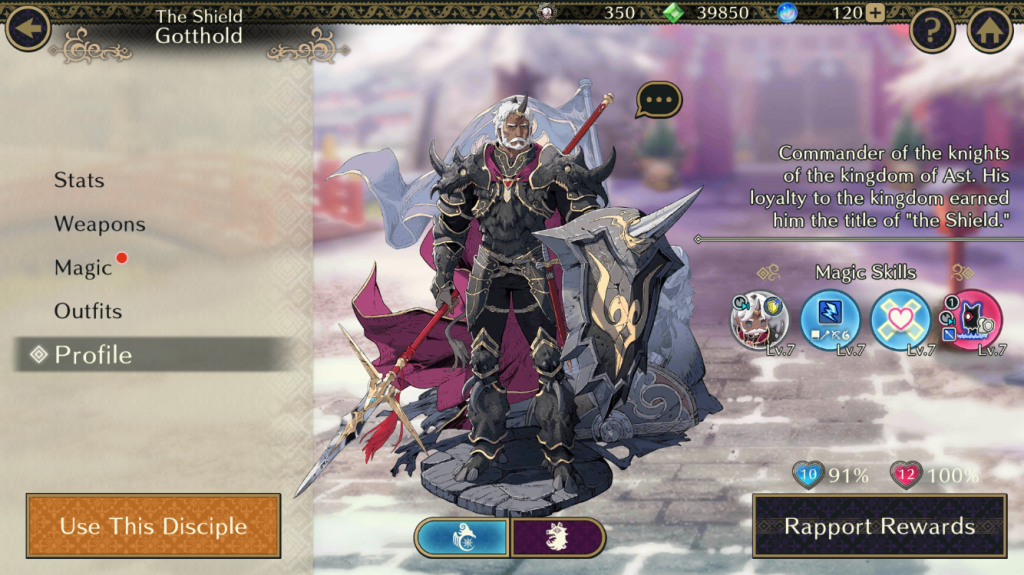
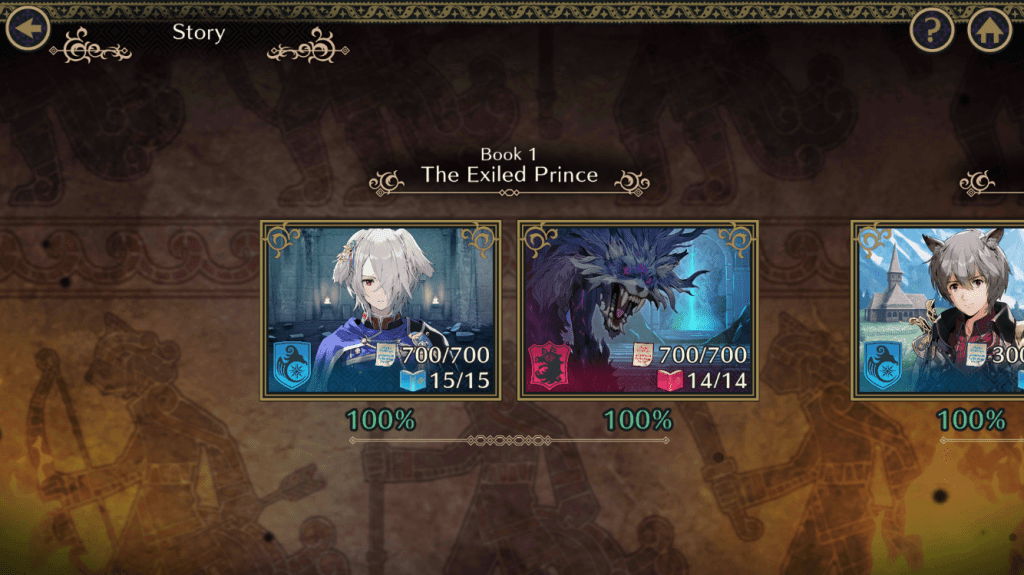
The main story is delivered in what the game refers to as “Books”. Each Book is a collection of chapters split across a light side and shadow side story. In effect, this is two sides of the same story per Book. Lots of jargon, but I hope that’s clear enough! At launch, the game featured all of Book 1 (15 light side chapters and 14 shadow side chapters). Chapters are nearly entirely short visual novel-style sequences with light voice acting and basic presentation, but it’s generally well done and moves forward narratively at a reasonably brisk pace.
The story of Book 1 follows Kurt’s party and their escape from the overtaken kingdom of Ast through to their arrival at Rose’s kingdom of Holtz. It covers Kurt’s secret, the necessary character introductions for the main party of six characters, and the first bit of narrative social deduction, culminating in the party rooting out a traitor in their midst. Though the player has no control over the narrative or determining the traitor, the reveal is reasonably good and sets up the tragic possibilities to come.
As narrative beginnings go, it’s a bit better than serviceable (largely owing to some fun choices with the light side cast) and it gets the story off the ground well enough. I generally appreciated how brief the story scenes could be, as the game doesn’t waste too much time repeating itself to you (though brevity is also a weakness we’ll loop back around on). Despite the solid start and my general positive feelings towards the story, I do feel that some choices have put a damper on my feelings towards it.
Firstly, my least serious complaint, the story’s shadow side includes crossover characters from previous Fire Emblem series games. Five crossover characters have been released thus far, and some of them have a small amount of narrative presence on the shadow side, but more or less all it has amounted to so far is them having been struck by amnesia and growing animal ears.
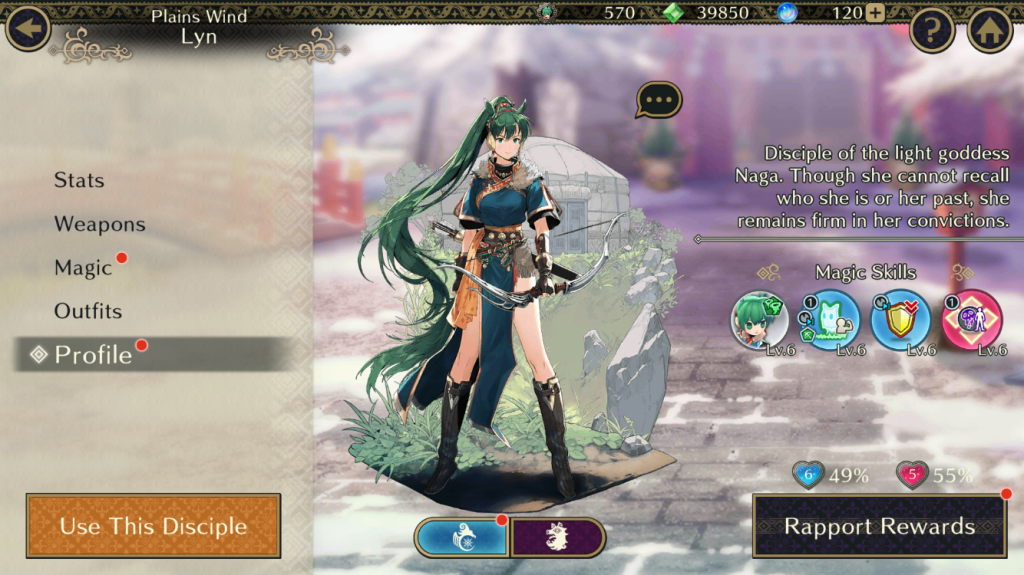
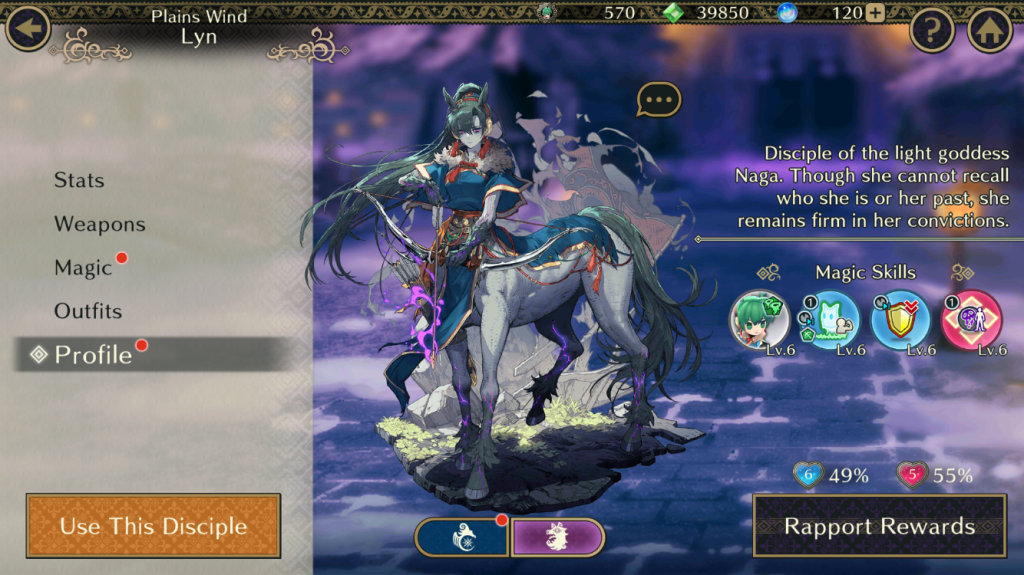
I understand the appeal of seeing characters you enjoy come back, and I understand that making them headline the game’s battle passes was probably the best shot at making some sort of money off of this project, but they simply don’t meaningfully add to the story. Their narrative presence is at least very light compared to the ways that games like Fire Emblem Engage center guest characters.
Secondly, a bigger issue. Fire Emblem Shadows has an extreme case of troubled narrative design, fueled mostly by a real big dose of ludonarrative dissonance.
The game’s gameplay in its entirety consists of groups of three players playing two back-to-back combat rounds in maps in a cool dungeon setting. Players are free to choose whichever characters they’d like, and someone will randomly be chosen as the secret shadow side “betrayer” character.
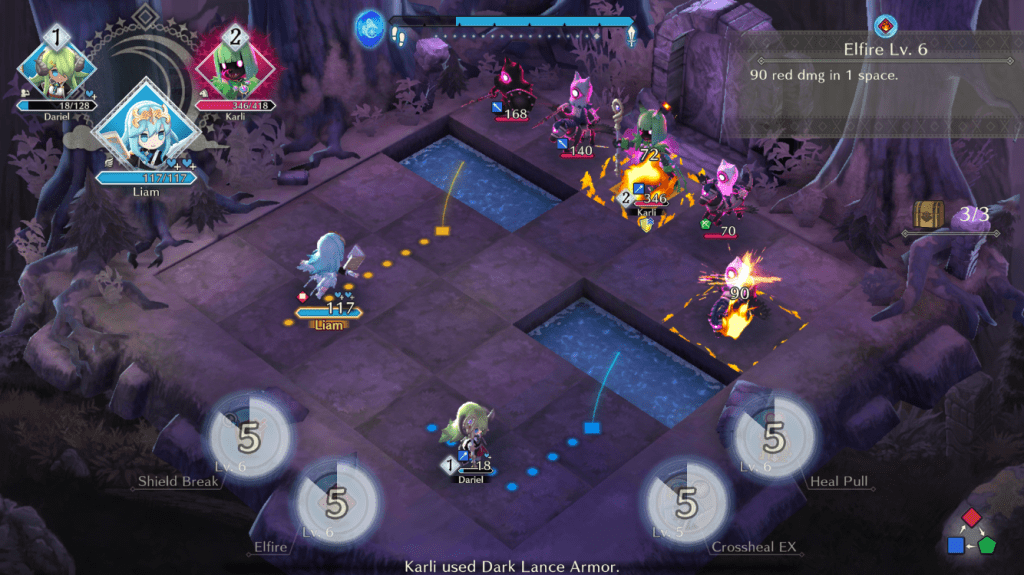
Depending on whether you played as light or shadow side, you’ll be rewarded points that contribute to unlocking the next chapter for the respective narrative side. Aside from one single designed narrative fight against the AI early in chapter one, this is legitimately the entirety of the gameplay, and there are zero ties between the gameplay contained within the dungeon and the story aside from the characters themselves. Why is Kurt suddenly able to manifest a shadow side? Where is this dungeon, and why do the characters keep going inside it while they’re narratively in the process of a desperate escape? Who are the many generic monsters you slay in battle? The list goes on.
I’m not saying this to sound harsh or anything, but imagine alternating multiplayer matches in a game like Uncharted or Splatoon and watching a campaign cutscenes between each one. The events of the story are simply completely disconnected from the gameplay, and the game doesn’t have any answers to users feeling this way.
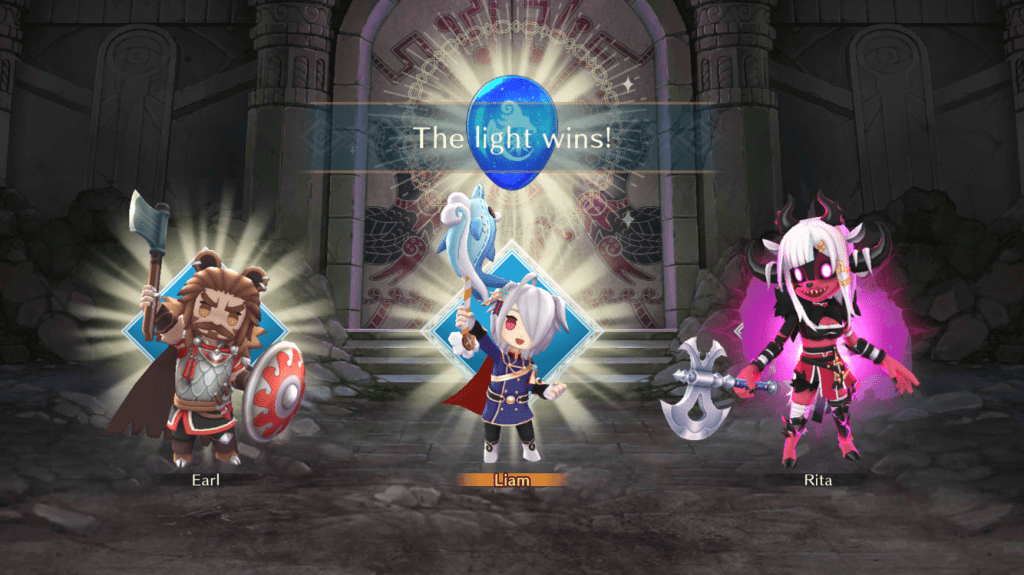
At time of writing, Shadows simply expects you to understand that the story is one thing, and the gameplay is a separate thing. Personally, I’m hoping that the game will reveal that the characters are all somehow magically trapped in this dungeon and eventually reveal that all the story sequences are flashbacks or something (which could solve it all pretty well), but I’m not optimistic.
Thirdly, my biggest problem with the game’s story. The roll out of story content is far, far too slow. I understand well that narrative content in games takes more labor than you’d expect (especially with how the game uses it to introduce new playable characters), but the numbers can speak for themselves.
I’ll be borrowing some figures from YouTuber Hunter’s Lodge for this comparison, as they’ve assembled all the cutscenes into uniform video form. For Book 1’s 29 chapters, we have 41:50 minutes on light side, and 26:20 minutes on shadow side (including the brief channel intro that I don’t feel like subtracting at this time). Over an hour of story content on day one, spread out across the battles necessary to unlock it, and telling a complete chapter’s worth of story. Not too shabby!
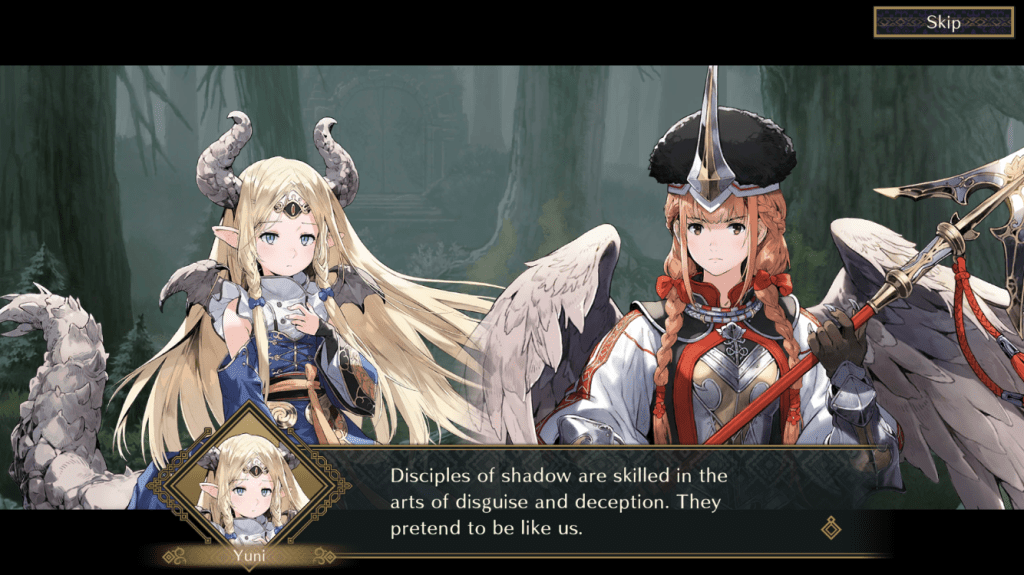
Since then, however, we’ve moved on to Book 2 and had three drops of new story content. The first drop was 8 chapters totalling 19:50 across both light and shadow. The second drop was only 4 chapters totalling 11:10. The third was another 4, totalling 11:30. Though the average duration and asset quality of the chapters remains consistent, the pace of the storytelling has been absolutely glacial. The last three sequences for shadow side (Book 2, chapters 6, 7, and 8) all take place during a singular low-stakes conversation between two new characters… the pace is just far too slow!
The pace being abysmal is bad enough, but what makes it so truly unpalatable to me is that Book 2 has moved to a completely new cast of characters for the light side. The entirety of the story and characters I did enjoy was easily experienced within a few days of release. Then, the last three months of story has featured this other cast that I frankly don’t find that interesting. I don’t even want to get started on Book 2 protagonist Joachim. He’s an absolute Z-lister compared to prince Kurt.
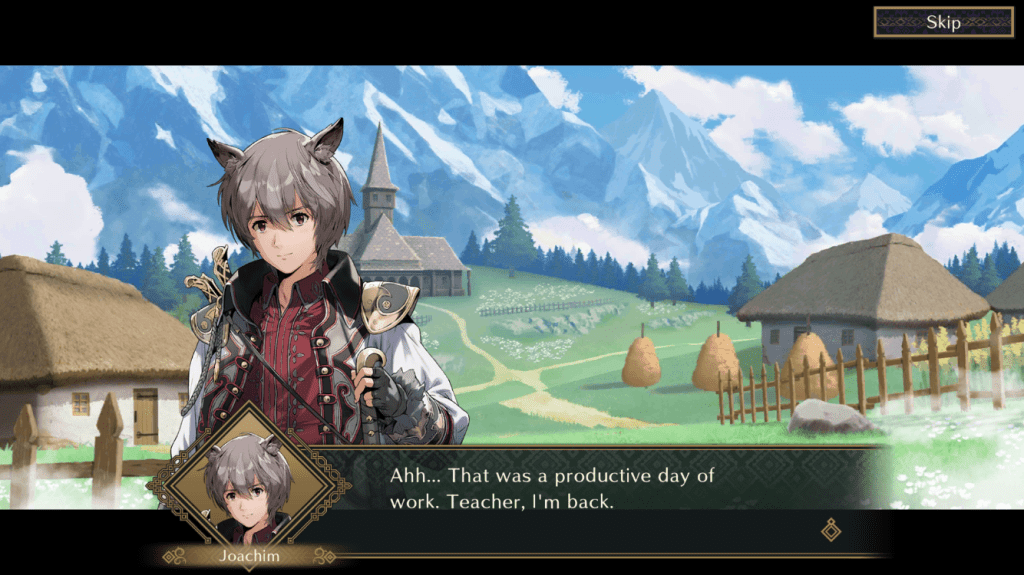
Owing to the facts that the new party’s story isn’t very interesting and that my preferred party will be narratively sidelined for who knows how long, my patience for the story’s release cadence has more or less completely dried up. I actively like the cast from Book 1. I really want to keep playing this game on the daily to follow their adventure. They’re quirky and silly and gay in a way that’s not only fun, but a really nice change of pace from normal Fire Emblem storytelling, and I want more of them. At the current pace, it seems likely that the earliest possible return to Kurt’s party will be Book 3 in who knows how many months. Surely they wouldn’t introduce a third separate cast… right?
Long-form storytelling in ongoing games is an extremely demanding task, and it requires extremely strong foresight and planning in so many regards, but besides having all of Book 1 for launch, Shadows has simply not been up to the task of delivering any semblance of a satisfying story post-launch. Even the most ardent Shadows enjoyers among us (myself included) have grasped that shit is just not moving along narratively.
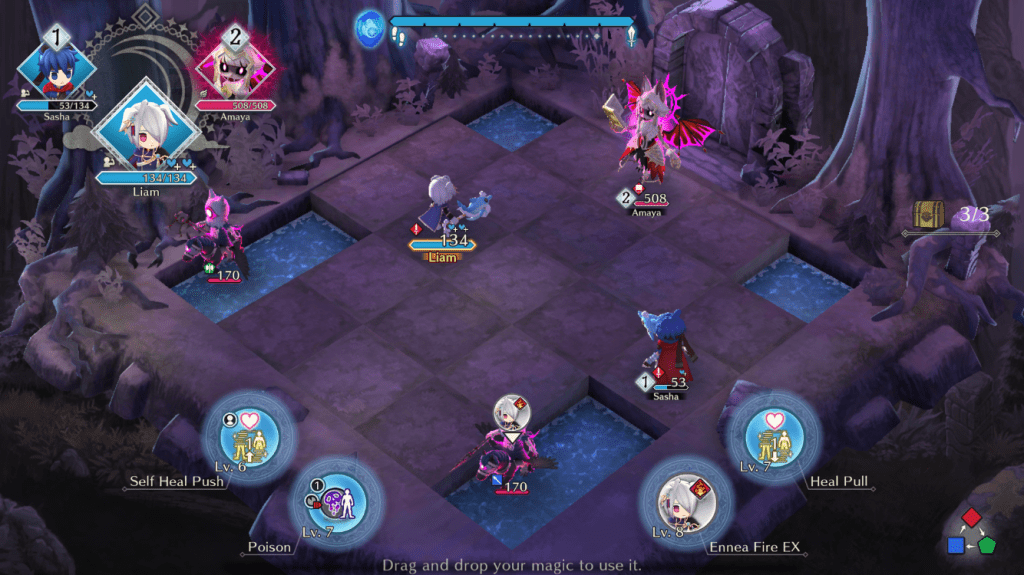
On the gameplay side of things, I actually think Shadows is better than most people give it credit for. Users bring in their lightly customized character of choice (abilities, weapons, etc) and collaborate in a “cooperative” first round against a bunch of AI enemies. During this round, light side players want to stay alive and healthy while shadow side players want to covertly eliminate the light side players. Sneakiness for the shadow side player is paramount, as any light players who successfully clock you as the traitor will receive an extremely valuable free auto-revive during the competitive second round. Light players will want to be healing each other, as their life carries over between rounds while shadow players get fully healed as part of their shadow transformation.
Within this mix, there are a ton of viable subterfuge tactics. The game’s dozens of spells and abilities offer a lot of ways to deal damage, move characters around the battlefield, and stick ailments on people. This feels very Fire Emblem-y, though it’s a very different flavour of tactical gameplay.
In a stroke of design genius, offensive abilities do not identify the ability’s caster. Did that AoE Fire spell just hit two friendlies because the third person is bad at hiding their identity as traitor? Did they opt to damage themselves to cast doubt on an innocent light side player? You’ll have to practice and get good at identifying behavioral patterns to have a chance of catching more experienced shadow players in the act.
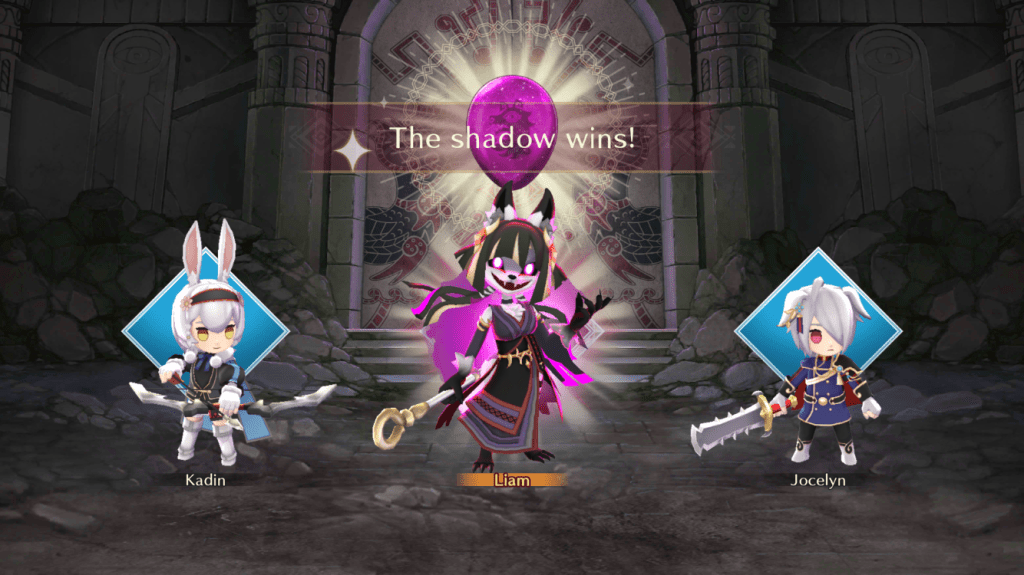
Meanwhile, healing spells have clearly labelled sources, so if the shadow side player is feeling confident, they can cast a heal or two alongside their offensive spells to build a friendly veneer of innocence. It’s deeply satisfying to perfectly clock the shadow player, and on the flip side it’s really gratifying to completely avoid detection, with the two light side players accusing each other as they lose out on their extra revive for the second round.
Meanwhile, there’s a reasonable amount of depth to things as well. For one, as long as your partners are still alive, downed characters can continue casting after being knocked out, though your ability cooldowns are doubled. After knocking a light side player out, experienced shadow players will sometimes manually count the seconds before casting to imply that they’re the downed player. On the flip side, after a single knockout has occurred, if they cast too quickly, it may be easy to clock them as the other living player. There’s a lot to take in and it takes a lot of practice and restraint to play within the framework of understanding that advanced players get to.
Restraint in not casting first can also be very important in general. Offensive spells are mostly preceded by a visible AoE marker for around two seconds, during which you can potentially cast a movement spell to rearrange characters reactively. If they’re not careful enough about their positioning, you can even swap a shadow player into their own AoE attack, which deals critical damage to the shadow player’s ego.
I’ll concede that the game’s three player format can feel very random early on, with light side users guaranteed at worst a 50:50 chance of identifying the traitor just by guessing. I don’t think people are wrong to have critiqued the game for this, and it’s a fair assessment.
I would argue that once you get past the early player levels, rounds stop being about the shadow player merely avoiding detection. They consistently revolve around the shadow player deliberately tricking the light players into suspecting each other. This is tough to execute, but it’s brilliantly satisfying as you really have to execute at a high level to pull it off right. Once you’re at that point in the game, just sneaking through won’t be enough to take on the two light players for the final round.
While I have a few complaints about the gameplay, like elemental counterpicking being very random since you can’t see who you’re up against before a battle starts, I really think that it’s a fun and breezy game. Matches form up extremely quickly (sub-20 seconds for the most part) and the two rounds pass by in a flash (maybe topping out around two to three minutes, on average). I’ve found it extremely easy to get sucked into the “just one more round” trap while working towards battle pass weekly objectives. I’ve played hundreds and hundreds of rounds of the game. I really enjoyed my time with it!
Just… after all of that over the course of three months and change, I’m very dissatisfied that there is next to no clear trajectory for the broader story, and the party of characters I actually liked have been benched indefinitely. I’ve simply stopped enjoying the story the way I did at launch, and I’m reaching a point where I’m increasingly done with the gameplay. Again though, this isn’t an indictment of the gameplay. It lasted me somewhere north of twenty hours, and I think that if the story had more gas in the tank right now, it could have lasted me another twenty, but that just ain’t how it is. It’s really enjoyable and so successful at being playable in quick bursts, but I’m just done with it. That bums me out.
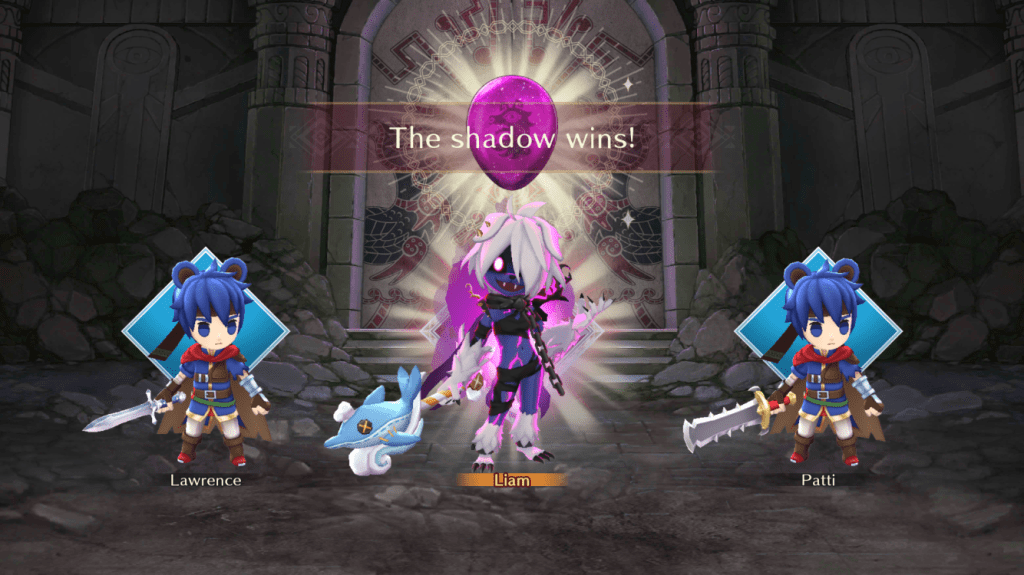
As a final thing that I can’t really overlook, the game’s battle pass structure is also the traditional bullshit hostile model where your entire pass just disappears once time has run out, which pushes me away from the game even further. I know I’ll be missing out on characters with no recourse but to wait until they hopefully rerun them. Halo Infinite solved this (I think) really elegantly by simply not letting passes expire, and allowing users to switch to whichever pass they own that they’d like to prioritize. It frustrates me that Shadows would use such a bland and hostile model for battle passes. I want to give this game credit for passing the extremely low bar of not being a gacha game, but it’s hard to praise a model that still allows players to spend for content that will disappear within a few weeks to push player engagement.
Have you ever had this happen to you with a service game? You just want to keep playing, but you lose the will to keep going because you’ve pushed all of the current content you care about to the limit and there’s just nothing else going on? You get to the point where all you’re doing is the dailies and weeklies that some project manager forces the game to have so that user retention stays high, and that burns out your feelings for the game?
That’s where I’m at with Fire Emblem: Shadows. It’s a lovely experimental game in a series that I really like, but the release cadence has been brutal given the way the narrative content has gone. I’d recommend it so you can see how neat the gameplay is and experience the awesome headlining gay relationship, but know that the good stuff will suddenly end well before you’ve gotten anywhere remotely satisfying.
Maybe I’ll have to update this post down the line. Until then, I’ll be busy not playing Fire Emblem Shadows.
tl;dr: A super tight micro-social deduction spin on Fire Emblem that (currently) suffers from a massively slow and frustrating story roll out.
 「RISINGSUPERBLOG」
Leave a comment