Publisher: Nintendo
Developer: Mages
Release Date: May 14th, 2021
Version Played: Nintendo Switch
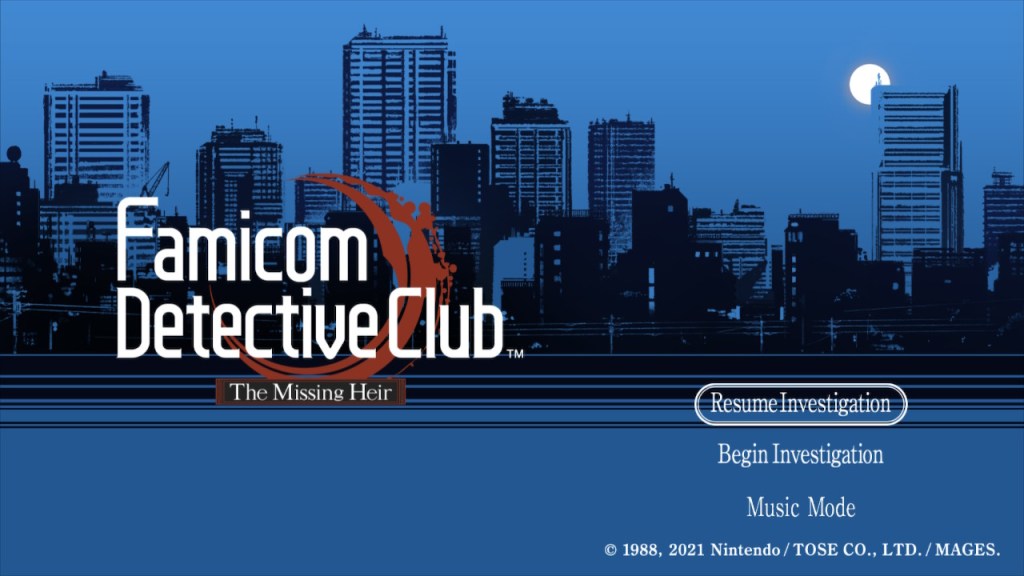
This article is the first of a three-part series on the Nintendo Switch Famicom Detective Club titles.
Click here to jump to Part II – Famicom Detective Club: The Girl Who Stands Behind.
Click here to jump to Part III – Emio – The Smiling Man: Famicom Detective Club.
Following last month’s shock announcement of Emio – The Smiling Man: Famicom Detective Club—the first new title in the series since 1998—I realized that I would finally have to get around to finishing the first two titles. They had been lovingly rereleased for the Switch in 2021, and I had bought the first game—The Missing Heir—at release. I had played it a little bit, but put it down early on due to a lack of interest. I remembered the story being plain, and somewhat uninteresting. To be honest, I was a bit worried I’d just feel the same way again.
But something about the newly announced game had me desperately wanting to be up to date for it, though. The ineffable allure of a resurrected legacy series—one that’s piqued my interest since Super Smash Bros. Melee included a trophy of the series’ main heroine—was just too great. Now, after having finished the first game on Switch, for the most part, I’m glad I went back.
The Missing Heir follows an amnesiac main character who had been hired (pre-head trauma) to investigate the death of Kiku Ayashiro, the head of the cash and land-rich Ayashiro family. After her death, family members come out of the woodwork to stake their claim, but the game’s central mystery lies in its namesake. The revelation that a missing heir to the family fortune may still be out there.
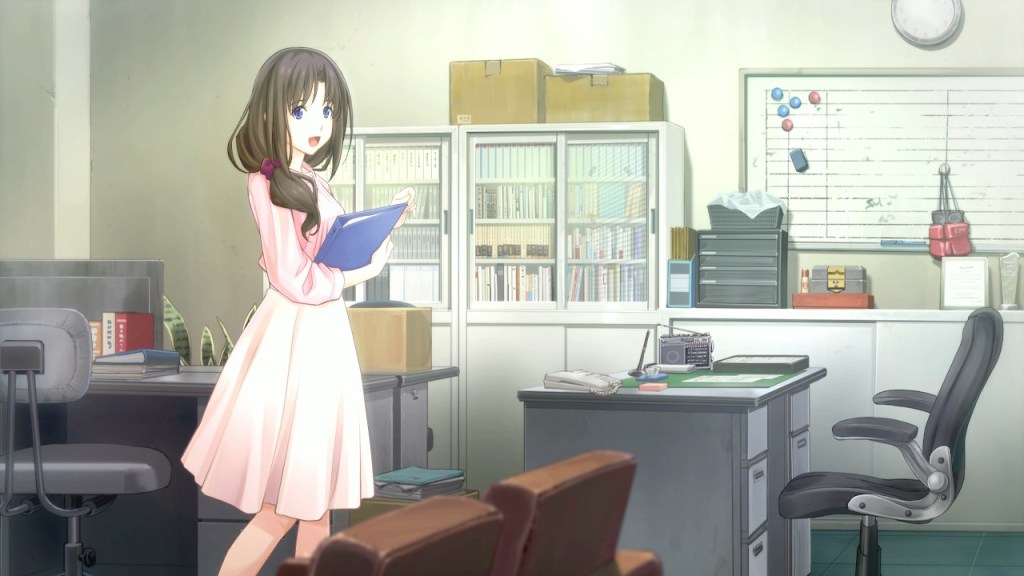
The game was originally released in 1988 for the Famicom Disc System, and based on a few YouTube videos I watched of the original (which is seriously impressive for the time, by the way), it seems extremely faithful. My Japanese is rough at best, but the story seems to be authentically recreated here—for better and for worse.
The story is, frankly, an average detective mystery of that era. One I’ve read, watched, and heard 100 times over. This isn’t to hate on a generation of mystery writers, but many stories from that era are often more straightforward (again, for better and for worse) than their modern successors, with many unbridled by more modern narrative hooks and replete with one note characters.
But as the game went on I realized I had judged the writing unfairly. A handful of central characters developed nicely, the most important emotional moments thankfully don’t miss, and the game’s big twist is both well-foreshadowed and lands satisfyingly. The story’s pace is brisk, with eleven short chapters across 4-6 hours of game, including a no-frills epilogue that wraps things up nicely.
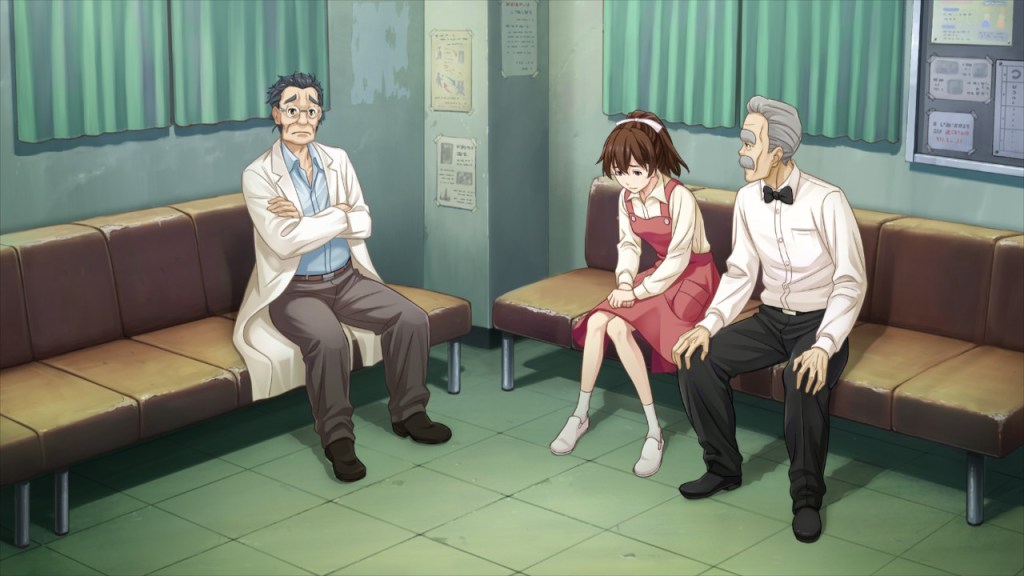
Much as I love the Ace Attorneys, Danganronpas, and Zero Escapes of the world, it’s easy to remember the late nights spent in the home stretch, where you feel too close to the end to put it down, unaware that there’s at least another hour on the way. Overall I feel extremely positive about the length and pacing of The Missing Heir, though I also feel like you could cram a better story in there.
Frankly, the story won’t be blowing anyone away. If you’ve played some of the more impactful modern narrative titles out there, the plot may feel somewhat thin. With no major hooks in play beyond an amnesiac protagonist, the writer(s) rely on raw storytelling—a skill which unfortunately doesn’t quite land them among the stars on this one. The down-to-Earth setting works well, at least. Despite these criticisms, I’d be remiss to not give it a thumbs up, but don’t expect to be shocked by the reveals.
On the gameplay side, The Missing Heir is a straightforward retro adventure game—one that I feel more comfortable using the Japanese “ADV” label to describe, rather than the Western “visual novel” one. While most of the game has you reading and advancing text, you spend a massive amount of the runtime using contextual interaction verbs (talk, move, look, show, etc.) like you would in point-and-click adventure games. Conversations tend to be on the brief side outside of key exposition moments as well, so while it overlaps with other investigation-centered series like Ace Attorney, it really has its own distinct game-feel, rooted in ADV and point-and-click adventure titles of yore. While it didn’t invent its systems, it does occasionally have fun with the interface in ways I didn’t expect, and those moments definitely stand out in a good way.
But this unique identity unfortunately does run both ways. All too often, I found myself stuck, with dozens of options and no obvious answer. When that happens, all you can really do is brute force your way down the contextual menus until you land on a new interaction. Sometimes you get there with the knowing realization that you had forgotten an important topic, but you’re equally likely to run up against the game’s occasional obtuse gameplay, such as having to talk with a character about the same topic multiple times in a row.
A great example of this was a situation where I needed to open a door with a padlock on it. I had the key on hand, so I just needed to open it. Trying the “Open” command on both the door and lock, the main character reminded me that I had the key and could get it open. Thanks, I guess? With no “Use” command in sight, I moved on to “Examine,” which gave the same result. Eventually I made my way over to “Take,” and sure enough, “Take”-ing the lock was the answer.
Now, I can begrudgingly agree with the idea that you do sort of need to hold a padlock in order to open it. But really—“Take”? I threw up my hands a little, especially since “Open” had been no good. This was probably the most obviously awkward interaction I ran into, even if it didn’t stop me for long, though it was far from the only one. The bane of classic point-and-click adventure, the dreaded “pixel hunt,” is also featured briefly in a few spots throughout the game. This has never really been a fun element to me, and I feel modern games have done away with it well, but given The Missing Heir’s origin as a Famicom title, I get it. Begrudgingly. You’ll rarely have to use the “Look” command on very, very specific background elements to find the way forward. It’s not the worst I’ve experienced, but those averse to the concept should be ready, because yes—you do need to examine that character’s pinky finger to progress.
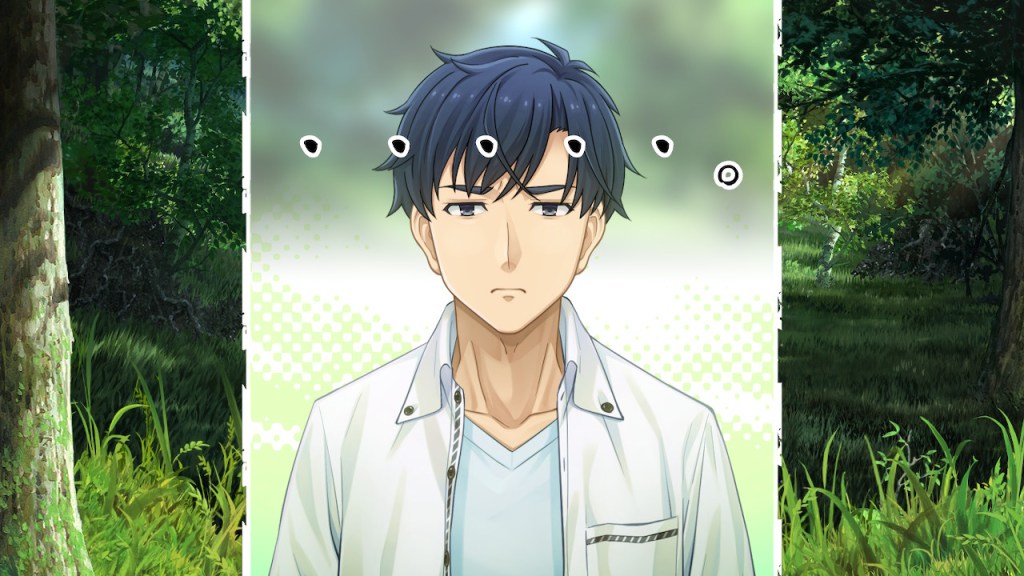
Pixel hunts aside, I admire the use of these gameplay elements in a detective setting! I like how they provide a proper facsimile of detective work, where many modern titles forgo that nuance and boil the investigative process down to simply using every talk/examine option for the story to move on. While there’s no question that The Missing Heir is similarly linear to those games, it makes a bigger attempt to obscure narrative progression behind mechanics. Navigating smoothly through a scene is satisfying, because I knew the game would stonewall me if I hadn’t figured it out.
On the other hand, this game isn’t terribly long, and I probably spent an hour or so stuck trying every option. Without those brutal periodic stops, I don’t know if I would have found my successes as satisfying. But on the other hand, those bumps weren’t exactly enjoyable, so I’m slightly mixed. I certainly hope that the next games—“The Girl Who Stands Behind” and the upcoming “Emio”—keep the good parts of this DNA, while making the play a bit more forgiving.
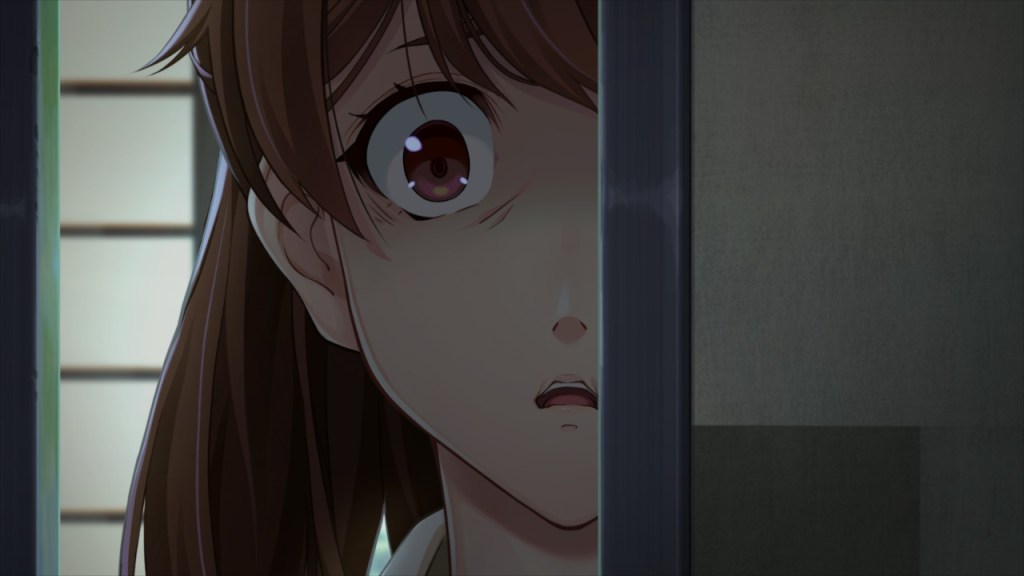
Speaking on the visuals and music, wow. Just wow. The development team at Mages are well known for their remarkable work in the ADV/visual novel space, with modern classics like the Science Adventure (Steins;Gate, Robotics;Notes, etc) series under their belt. Their titles are routinely polished to a mirror sheen visually, and The Missing Heir is no different. Characters are brought to life using the Spine animation tool and have an impressive range of emotions as a result. and even one-off animations for certain sequences as a result of this tool’s use.

Backgrounds are gorgeously reimagined from the original Famicom art, and with the newly added background animations, they can be quite remarkable at times. Some environments change depending on the time of day, or are simply redrawn from an entirely new angle, to give the same place a different feeling.
I’ve been living in Japan for the past year and a half or so, and the scenes in obviously Japanese places are as pristine and authentic as you could ask for. Tasking a team as capable as Mages with remaking two Famicom games, that have less overall combined volume than any one of their modern titles, would obviously make for a straightforward project—and Mages absolutely delivered. The game sings with excess artistic quality that goes so far and above what would have been happily accepted as a great new coat of paint.
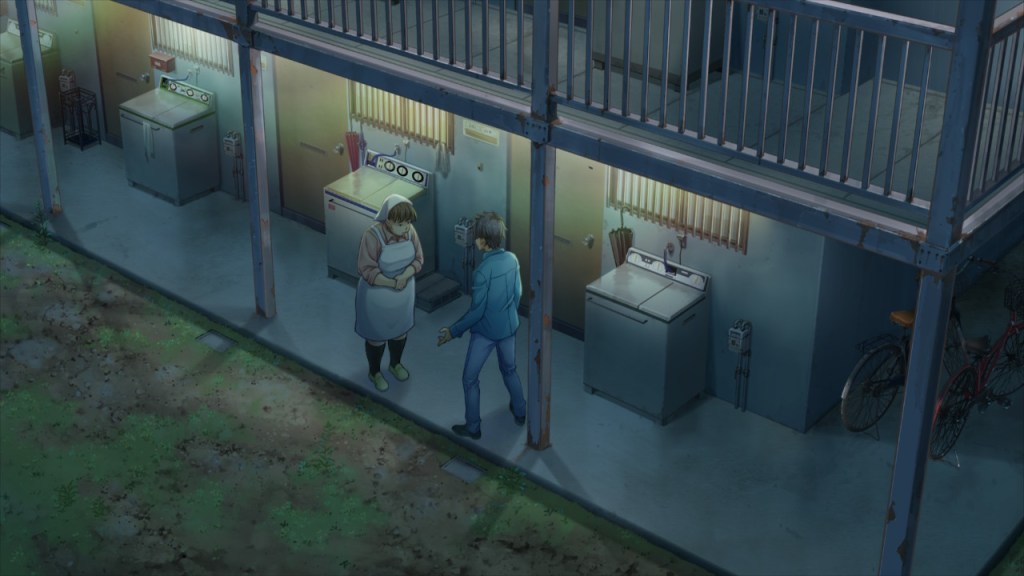
On the audio side, the updated soundtrack is lovely. The game gives you the option to swap to the original chiptune songs at any time as well, so it’s a breeze to compare the two. I have no nostalgia for the Famicom version’s music, but when I was watching videos of the original game for comparison’s sake after completing the Switch version, I was surprised that I knew the tracks so well!
Superb voice acting has also been added to The Missing Heir. I couldn’t help but smile when I realized the main character was voiced by the legendary Megumi Ogata, who voiced both Makoto Naegi and Nagito Komaeda in the Danganronpa series. (Though she’s probably most famous in the West for Shinji Ikari’s distinct voice). Danganronpa fans will get a huge kick out of her performance here. Akio Otsuka also shows up, perhaps most well known for the Japanese voice of Solid Snake, and he hams it up super well. Just A+ stuff all around.
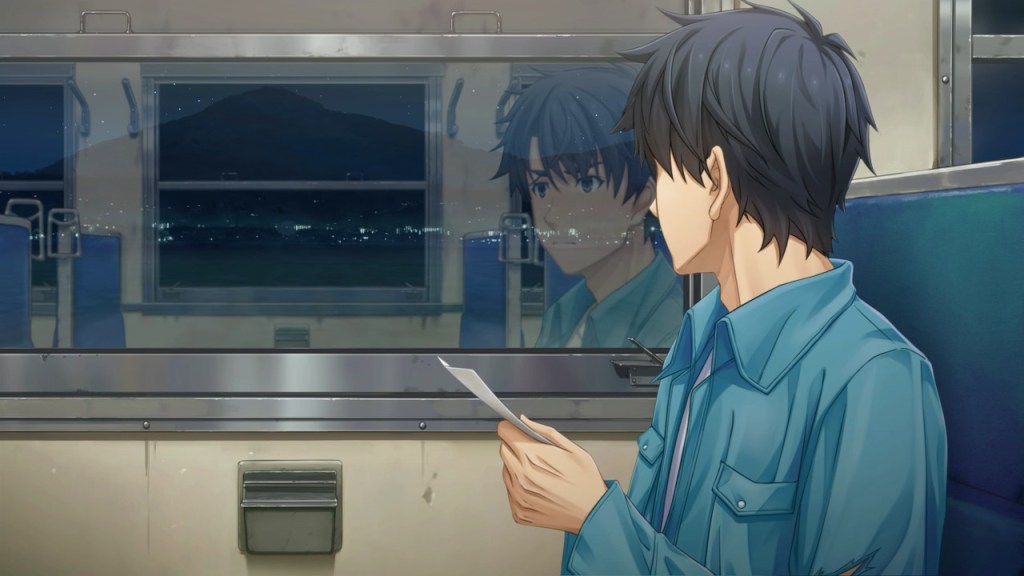
Genuinely, I have no criticism of the sound or visuals—they’re a complete home run. I can’t wait to see their take on the next game. It was developed in parallel to this remake, so I hope it’ll be similarly impressive in that regard! I’m deeply curious to see what they’ll do in Emio, a true sequel made by the same team, with decades of accumulated genre experience in-between.
Famicom Detective Club: The Missing Heir is a tough game to recommend to everyone. If you’ve played any of the most well recognized ADV/visual novel titles, you’ve probably experienced better stories. If you’ve played Monkey Island or its peers, you’ve played more mechanically interesting point and click adventures. If you’re value conscious, the USD $60 asking price for the two-game bundle might leave you disappointed. It’s still a fun title, and a quick one too, so if you have more money than time it might be up your alley as an authentic remake of a historically significant Nintendo game. Just keep your expectations in check I’d say.
tl;dr
A solid and breezy mystery, presented at the absolute highest levels of quality—just be aware of the genre and era you’re walking into.
This article is the first of a three-part series on the Nintendo Switch Famicom Detective Club titles.
Click here to jump to Part II – Famicom Detective Club: The Girl Who Stands Behind.
Click here to jump to Part III – Emio – The Smiling Man: Famicom Detective Club.


 「RISINGSUPERBLOG」
Leave a comment