Publisher: Capcom
Developer: Capcom Development Division 1
Release Date: June 1st, 2024
Version played: PlayStation 5
I’d forgive you if you missed 2019’s Shinsekai: Into the Depths. Published by Capcom as an exclusive launch title for Apple Arcade, Shinsekai was an awesome 2D adventure set deep undersea. You navigate your unnamed, silent protagonist through a deep sea cave system with a pressurized suit and suitably pressure-inducing challenges. It was eventually delisted entirely from iOS, which sucked for me since I hadn’t finished it yet, but it’s since been rereleased digitally on Switch, where I did complete it (great port, by the way).
Shinsekai marked the directorial debut of longtime Capcom staffer Shuuichi Kawata, whose first credited role at Capcom seems to be back on Resident Evil 4 in 2005. Impressively, he’s pulling double duty nowadays—serving as both Director and the Art Director on Shinsekai and Kunitsu-Gami. The parallels between the two games are extremely strong, and only two games in, he already appears to have a strongly established visual and storytelling style truly unlike anything he’s worked on before. Shinsekai was a solid game with arresting art direction, but Kunitsu-Gami is a modern masterpiece through and through.
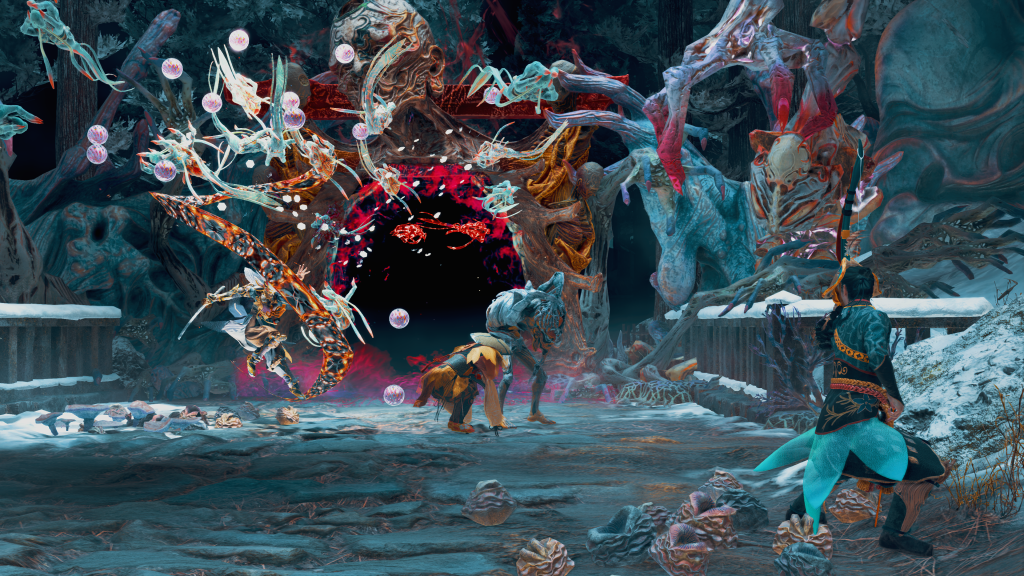
Let’s start off with the genre. Kunitsu-Gami’s is very unique: broadly speaking, it’s a combination of light exploration, third person combat, and tower defense, but the actual nuances of it are way more interesting. It’s a Pikmin game, but it’s also an Odama. It’s an Overlord, but also a Bloons TD 6. There’s some Army Corps of Hell here, but also some Harvest Moon. It’s a gamer’s game, anyways, that’s for sure.
You control the main character, Soh, as you explore the various levels, purifying various points of interest and saving villagers from the corruption invading their mountain home. Soh is also no slouch in combat, as he has a very well considered moveset providing perfect counter options to various enemy types.
Oh their own, however, Soh can’t hope to finish their quest. The only way to properly purify an area is through a ritual carried out by the maiden, Yoshiro. Soh can highlight a path (the titular “Path of the Goddess”) for her to traverse the level on. Once set, she’ll slowly and ritualistically dance her way through the stage until she reaches the goal. Her movement is intentionally quite slow, which interacts nicely with the timer the game operates on: once day gives way to night, the second half of the main game loop appears.
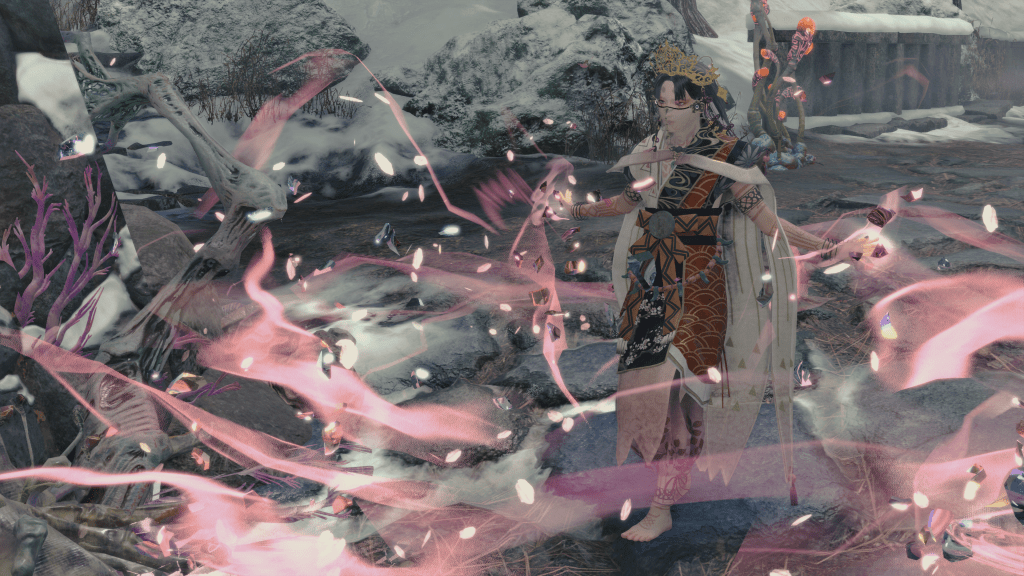
As night sets on the mountain, the Seethe appear. These nasty corruption monsters will try to stop and kill Yoshiro at all costs, so you’ll be playing bodyguard during the night and claiming an important currency—crystals—from their corpses. Yoshiro will halt her movement completely during the night, staunchly holding her place on the path of the goddess. Enemies will emerge in waves from corrupted torii gates you may have spotted during the day, and they’ll make their way towards Yoshiro. Soh is just one dude at the end of the day, so you’ll need more. Enter the last piece of the puzzle: the villagers.
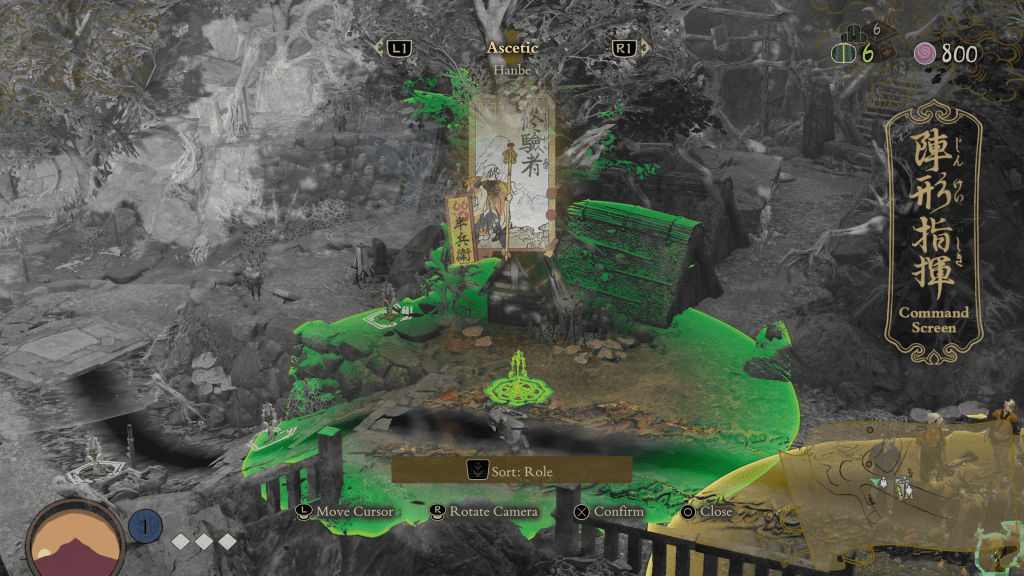
When you’ve saved a villager from corruption during the day, you’ll then be able to assign them a role by spending crystals. There are twelve in all, from the humble archer to the AoE-capable sumo wrestler, and they offer a wide range of abilities to take advantage of. Choosing a role isn’t a huge commitment, either, as you can always change them later on in the level for a few more crystals.
Once they’re kitted out, you can freeze time by opening the Command Screen and move a cursor around to assign villagers spots on the map. As you’d expect from a tower defense game, placement is key. Anticipating enemy movement and preparing with the ideal allies makes a huge difference—you can absolutely clear levels without Soh’s melee combat getting involved at all if you’re clever enough.
There’s a tantalizing rhythm to the gameplay in these main levels, where you feel a sense of urgency during the daytime exploration, and then a completely different sense of caution at night. It’s a powerful gameplay loop which across my play time has yet to wear out its welcome at all.
As a quick aside, I have a lot of respect for combat designers who choose to develop characters with such small move lists. The tightness of Soh’s melee moveset reminds me of games like the original Streets of Rage, where the main attacks are so straightforward and each serve such a necessary purpose that you can’t remove a single one without leaving a gaping hole in their attack list. Despite the fact that it literally takes more labor, it can be easy to design a bloated movelist with plenty of overlapping techniques that neither appeals to this clarity of purpose, nor the massive freedom of a Devil May Cry, so I applaud Kunitsu-Gami’s combat designers for building Soh’s moves out with such a strong vision.
As the game progresses, you get access to more villagers get more roles, multi-objective stages appear, and you gain the ability to reconstruct level traps and gimmicks to your advantage—, so your tactics will naturally evolve over the course of the adventure.
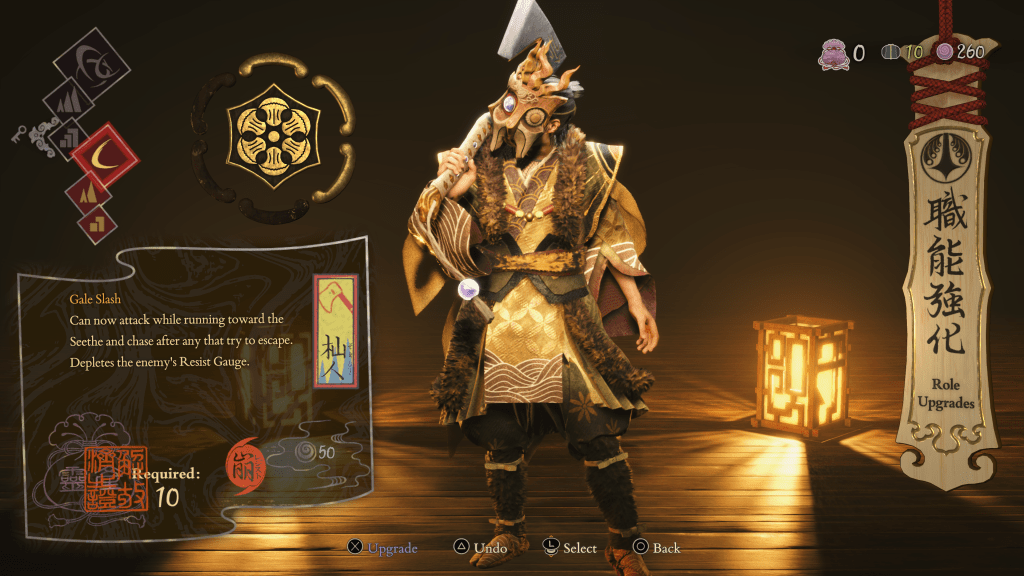
One extremely smart gameplay element that I absolutely have to praise is the currency cap on your crystals and healing items. The game (as far as I can tell) has no real ceiling on how much of these two supplies you can hold, but there is a soft-cap in place. If you finish a level above the soft-cap, everything in excess of it will be discarded, so it strongly encourages you to actually use healing items and spend crystals, rather than hoarding them for future use. It’s a very smart move that greatly benefits your gameplay experience, since it trains you so effectively in not holding back with your resources. This has great and obvious knock-on effects, as not holding back on your resources almost always means you’re actually performing closer to your best and you’ll be overall more effective at clearing your objectives. I think other games should liberally steal this idea.
Overall, I find myself blown away by Kunitsu-Gami. The game is absolutely bursting at the seams with new ideas and gameplay scenarios, and there are new bosses introduced almost every other level. I don’t want to give everything away, but I was particularly impressed with an early level where you actually can’t use Soh for combat at all, and need to rely purely on villagers once the night falls.
Missions also feature optional objectives and missable chests, whose valuable rewards do an excellent job incentivizing replaying stages, since those permanent upgrades go a long way to enhancing your troupe’s overall power. The designers clearly threw a lot of ideas at the wall on this one, and it’s amazing how many of them stuck.
The other main gameplay section is the village gameplay. Between missions, you can return to any of the villages you’ve saved and help the villagers reconstruct by delegating tasks. You can also visit Yoshiro in her tent, where you can choose from a huge array of unlockable gear, upgrade the various villager classes (and Soh, once you’ve progressed far enough)—and even serve Yoshiro beautifully rendered traditional Japanese desserts as the village’s hierarchy of needs are progressively met. Rewards for rebuilding the village are plenty and powerful, with unique equipment, new desserts for Yoshiro, permanent upgrade materials, art, and vital currency cap increases on offer. There’s a powerful sense of tranquility to these village segments, contrasting the chaos of the action levels, and it helps complete the game’s immaculate vibe.
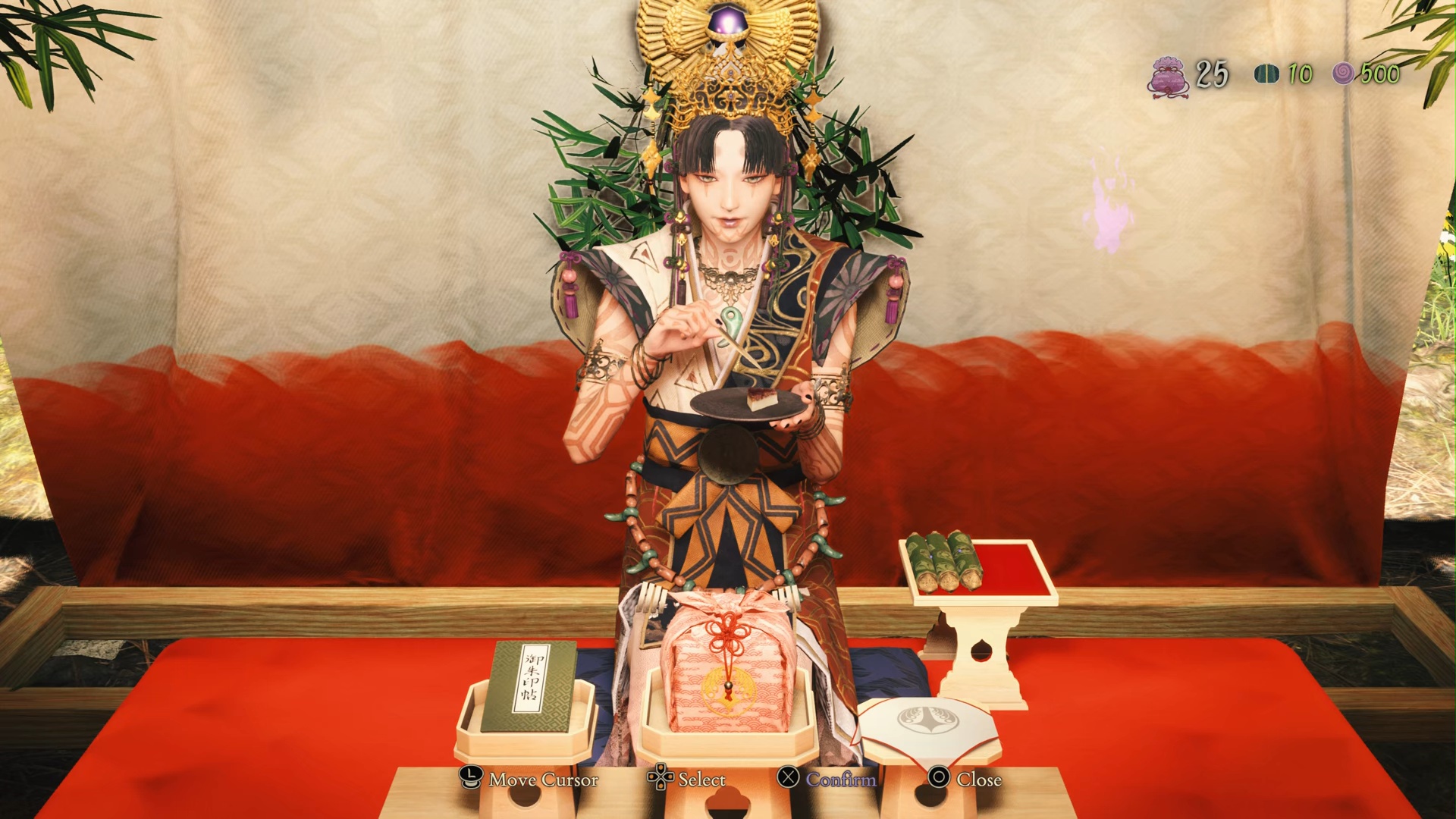
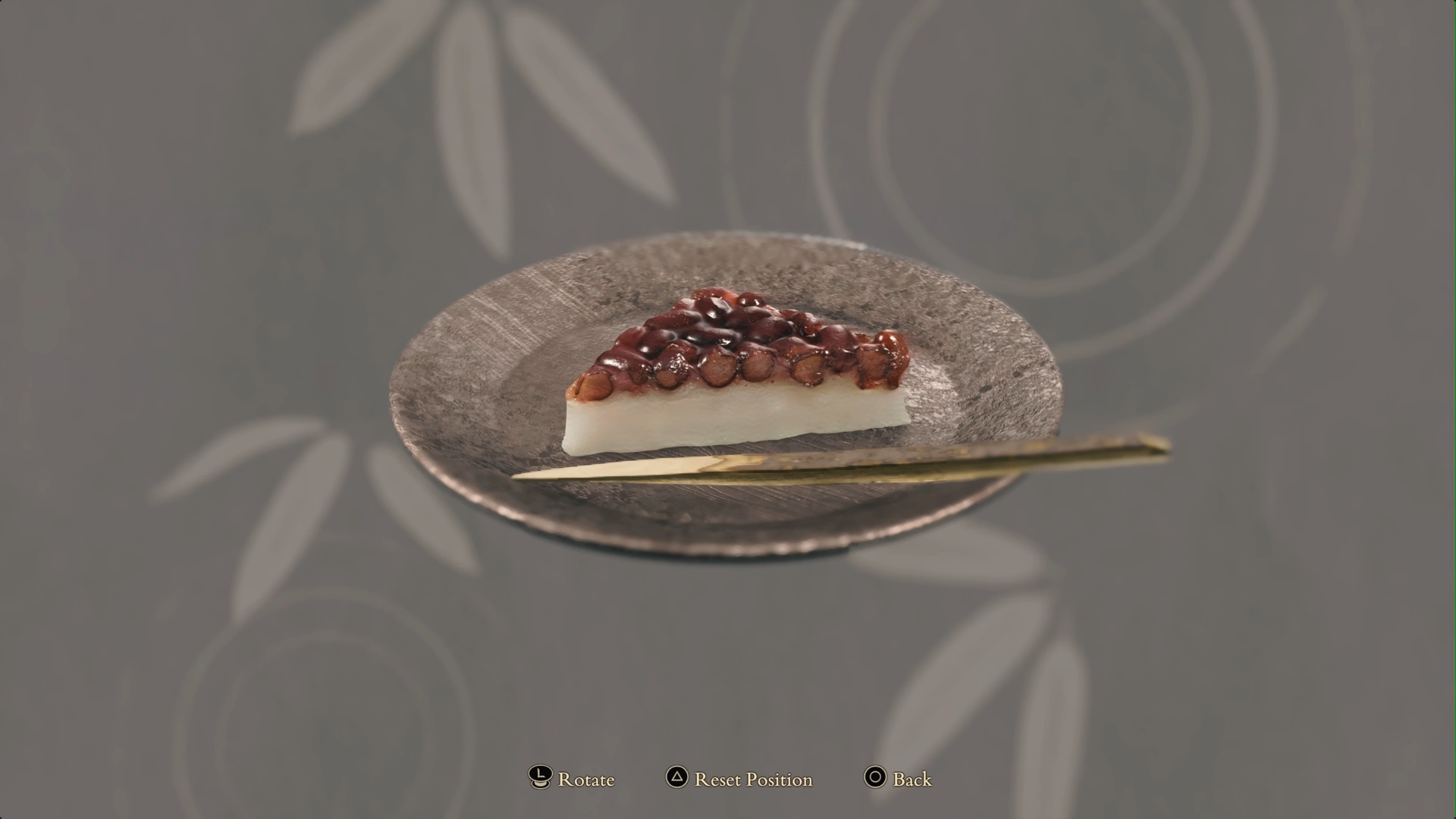

Speaking of vibes, let’s hop into the art. Like Shinsekai before it, the game portrays a beautiful natural world, under invasion by the metaphorical “other.” The forested mountain of Kunitsu-Gami contains a solid variety of environments, such as lakes and caves, but you’ll mostly spend your time in some combination of the many forest/village areas: first during the mission, when it’s overrun by corruption, and then during the day, where you work with the villages to recover and rebuild. Purifying the goop covering a level (plus the villagers and local wildlife) through combat, then rebuilding the town through all through your own actions strongly supports a central theme of recovery that runs beautifully through the whole game.
This theme ties well with the cooperative nature of the gameplay, as well. The Pikmin series has always done a tremendous job portraying a heavily stylized (but ultimately very authentic) representation of survival in nature. It relates well thematically to how the Pikmin—weak individually, but strong together!— are made to harvest the corpses of their enemies to survive. You feel the pain of watching their tiny souls flit into the ether, but the enemy creatures are ultimately—like the Pikmin and the captain—just doing their best to survive.
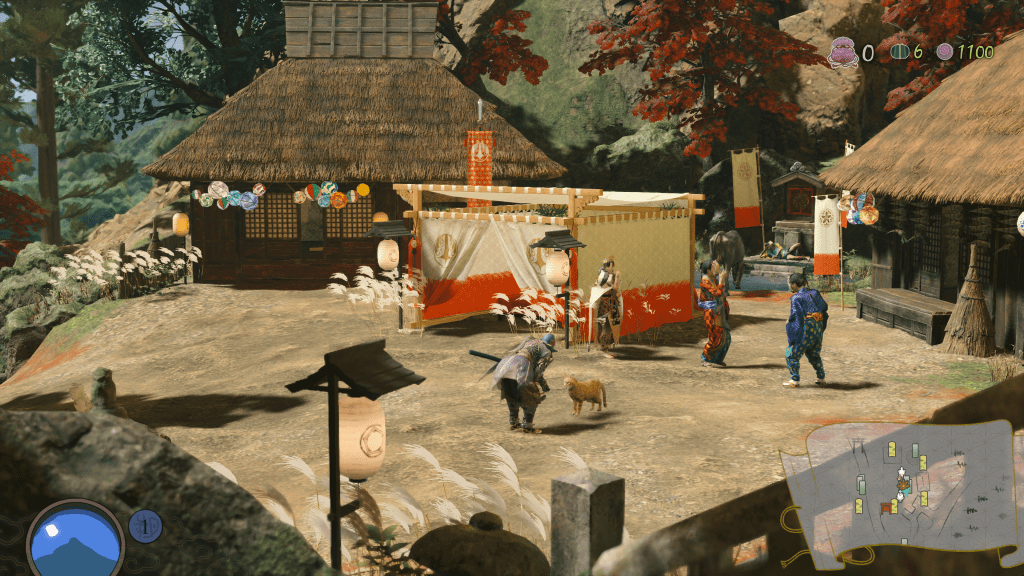
In Kunitsu-Gami, Soh can’t save the mountain alone. Soh can’t rebuild the villages, or walk the path of the goddess alone in any way that matters. Soh, Yoshiro, and the villagers all need to partake in this beautiful cooperation to have any chance of pushing back the Seethe’s darkness. And the same goes for the Seethe, who individually have no hope of corrupting the mountain.
Not every game that puts you at the head of an army manages to land that all-important emotional connection to your troops and the world around you, so I’m really impressed by how well Kunitsu-Gami rises to the occasion.
The actual graphics themselves? God, they’re so good. As with all of Capcom’s big-budget RE Engine titles, Kunitsu-Gami leans heavily on Quixel Megascans to create a high-fidelity realistic world. The sights and sounds of nature are all dead-on and look great. Aside from Yoshiro, all humanoid characters wear wonderfully designed wooden masks, and the Seethe have tremendously cool designs, all borrowing heavily from traditional Japanese art. Really, the world is basically a pseudo Japan with some slight changes here and there, and it lands perfectly. The authentic feeling of traditional wooden architecture lends to the overall sense of serenity in the villages. Snappy cutscenes appear surprisingly often, interrupting to briefly show off new environments, features, and foes.
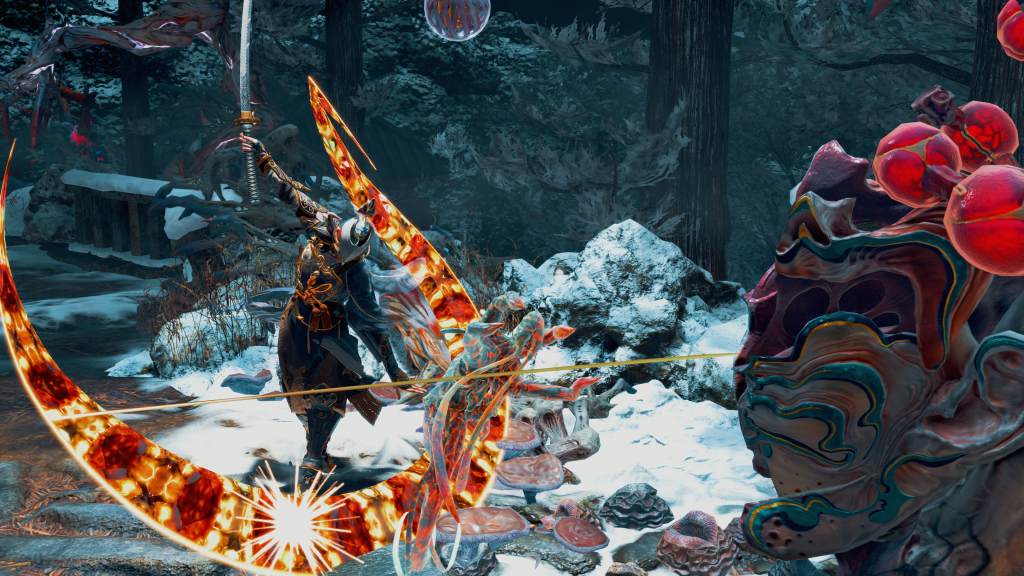
Acoustically, I have little to say. Music’s great, sound is great. Maybe the parry sound effect could be a smidge better, but all around 10/10 stuff. The most interesting thing here is the lovely, mostly silent world. The game does have voice acting, but it’s subdued and used sparingly. Yoshiro will wish you well when you leave her tent and cry out for help when she needs it, but by and large the game is purposefully designed around the absence of voice acting. Shinsekai, if I recall correctly, featured zero voice acting, so I consider this part of the director’s style at this point.
All in all, if you value unique games at all, I really think Kunitsu-Gami is hugely worth your time. To be completely up front, I’m only about 10 hours deep into Kunitsu-Gami. I still haven’t finished the main story, let alone the dozens of chapter challenges that I have every intention of going back for. Nonetheless, this is a rare title that I’d recommend to anyone who likes video games and is remotely into action stuff. You really shouldn’t miss it if you can help it! Fans of Okami perhaps even moreso, as the game features an array of Okami art you can toggle on at will!
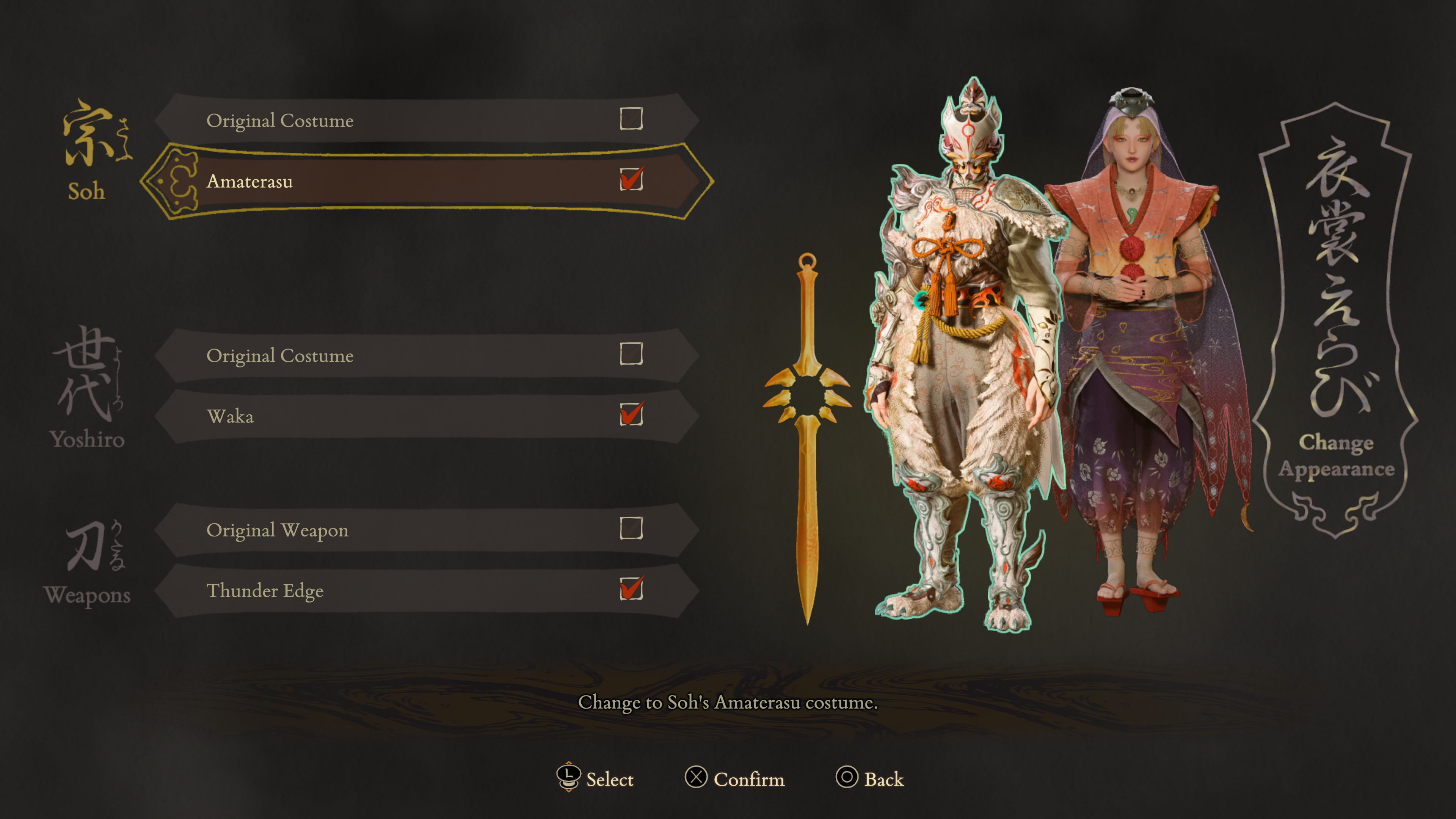
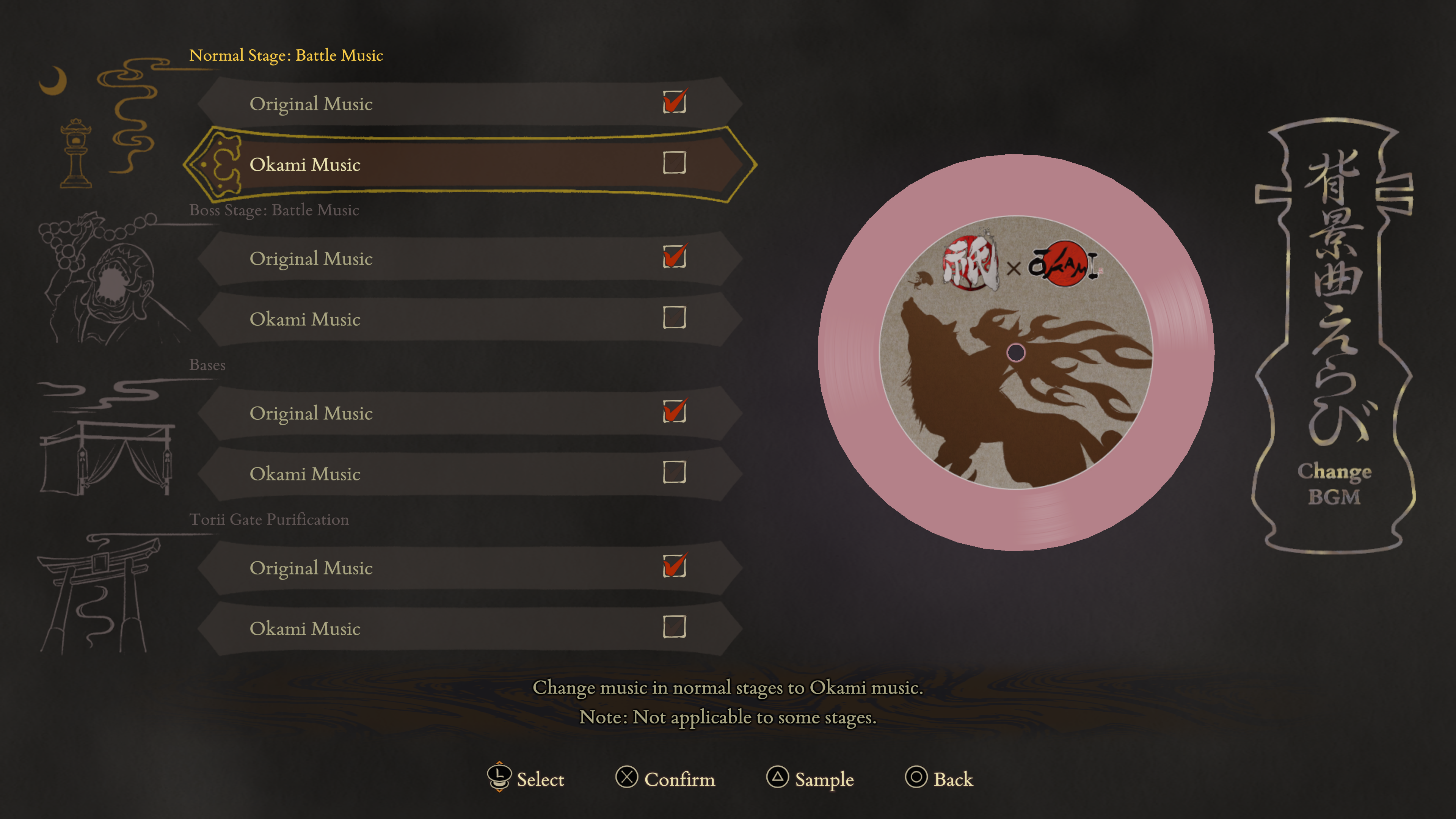
If you’re still on the fence about Kunitsu-Gami, firstly, get down from there. You’ll hurt yourself! Second, there’s a demo available that includes three levels and a boss, with their order slightly rearranged from the main game. Fully clearing the demo and all side objectives took me close to two hours, but you can save and reload if you need to break it up. It’s a pretty luxurious sample of the game with only one big flaw: your progress won’t carry over to the full title. My advice is to try it out, but if you feel like you want to play the full game, drop the demo early. No sense in having to play more than you need to if you’ll just need to restart anyway!
I’ve seen many suggest Kunitsu-Gami is “the kind of game we used to see on the PS2.” Honestly, I kind of get it. Big companies don’t regularly make new IPs with this type of creative game design, let alone at this level of polish and finesse. After Shinsekai, and now Kunitsu-Gami, I sincerely hope Shuuichi Kawata will be able to lead a third game. It would be a huge shame for something like this to flop, so please give it a look if it interests you!
tl;dr
A truly unmissable game that will remind you why you play games in the first place. Its captivating art will draw you into its unique blend of action/tower defense gameplay.


 「RISINGSUPERBLOG」
Leave a comment