Publisher: Nintendo
Developer: Mages
Release Date: May 14th, 2021
Version Played: Nintendo Switch
This article is the first of a three-part series on the Nintendo Switch Famicom Detective Club titles.
Click here to jump to Part I – Famicom Detective Club: The Missing Heir.
Click here to jump to Part III – Emio – The Smiling Man: Famicom Detective Club.
Over the years, I had heard that The Girl Who Stands Behind was the better of the two main titles. The one where they find their footing and it all comes together. In one extreme case, it was even sold to me as “the good one.” I don’t consider myself an authority on many things, but having seen the first two games through now, I’d like to throw my hat in the ring!
In my (perhaps controversial) opinion, I think these two games… are really about the same. In fact, I’m not even sure I liked this one more. Unfortunately I also can’t deny that my judgment was probably colored by years of expecting a stronger game. I don’t mean this in a bad way, either! I think both games are reasonably good… but not much more than that!

After finishing The Missing Heir, I decided to wait a week before moving on to The Girl Who Stands Behind. I thought the space would help me keep the two games separate in my head for this writeup. Besides, I had lengthy plane rides bookending two weeks of visiting family coming up, so the scheduling worked.
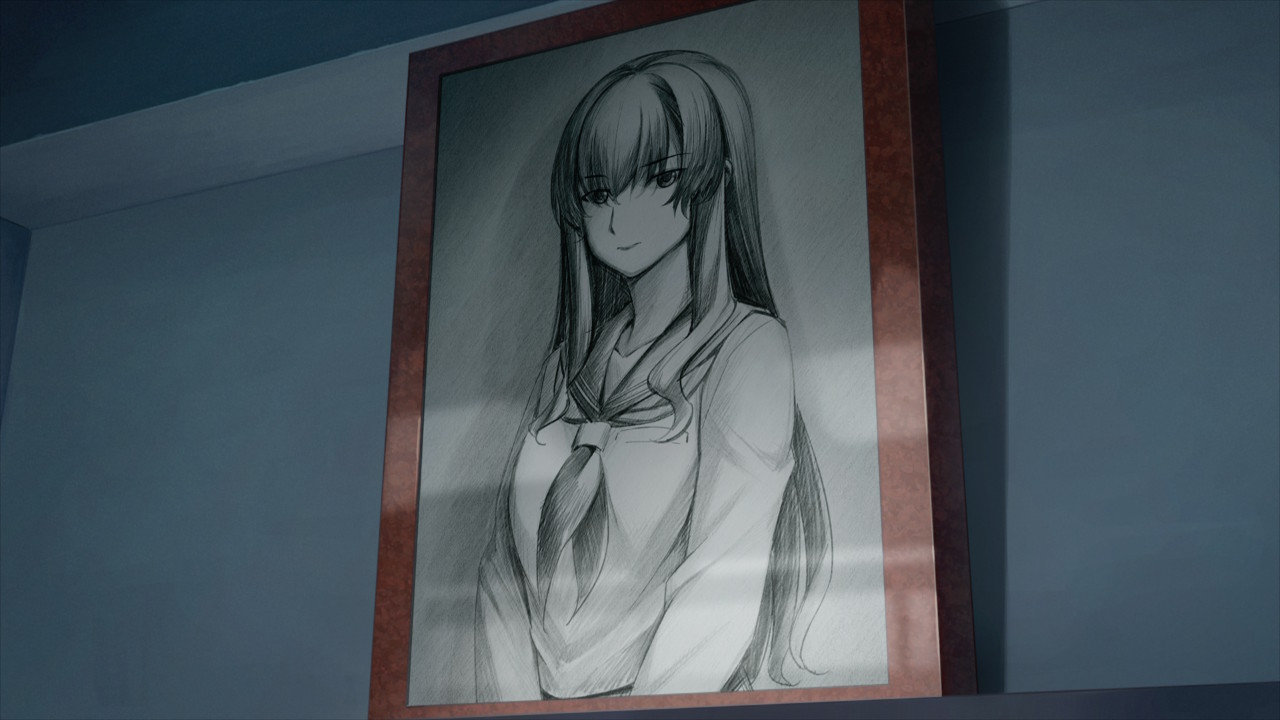
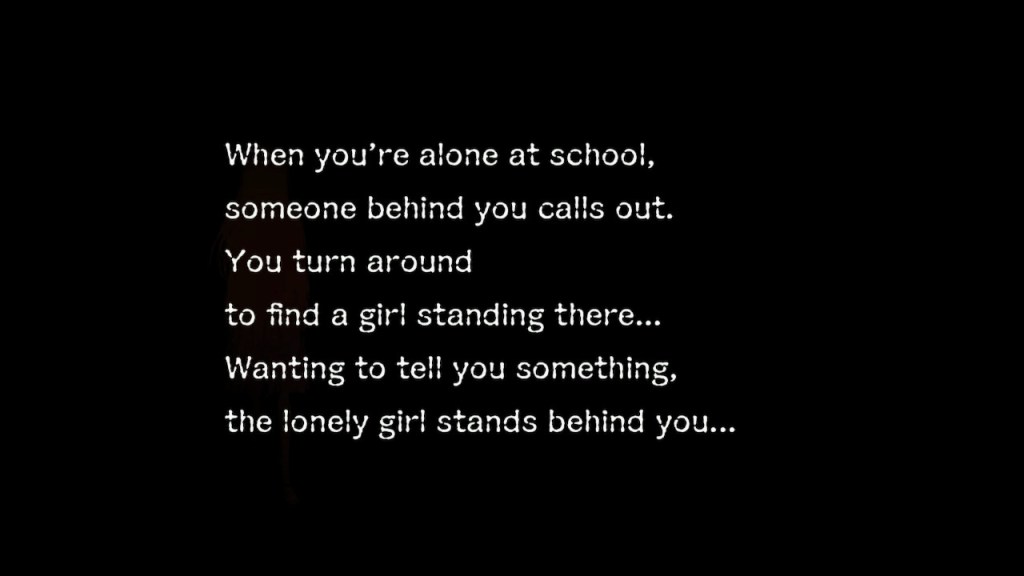
Out of the gates, The Girl Who Stands Behind starts strong! The sudden and mysterious death of a student prompts an investigation, largely set in and around a local high school. Initially unknown to the player, the many adults of the school are still grappling with another student’s death from years before. This death had led directly to the slow creation of the school’s urban legend; the titular “girl who stands behind.” Students and teachers have experienced various versions of a mysterious girl appearing behind them, accompanied by haunting whispers. For those who may be unaware, the concept of school urban legends or hauntings in Japan is a notable cultural element that’s pretty different from what we had in Canada. Myths about steps you need to skip over or haunted bathrooms were apparently in vogue at some point or another, and The Girl Who Stands Behind’s school legend feels right at home in that space.
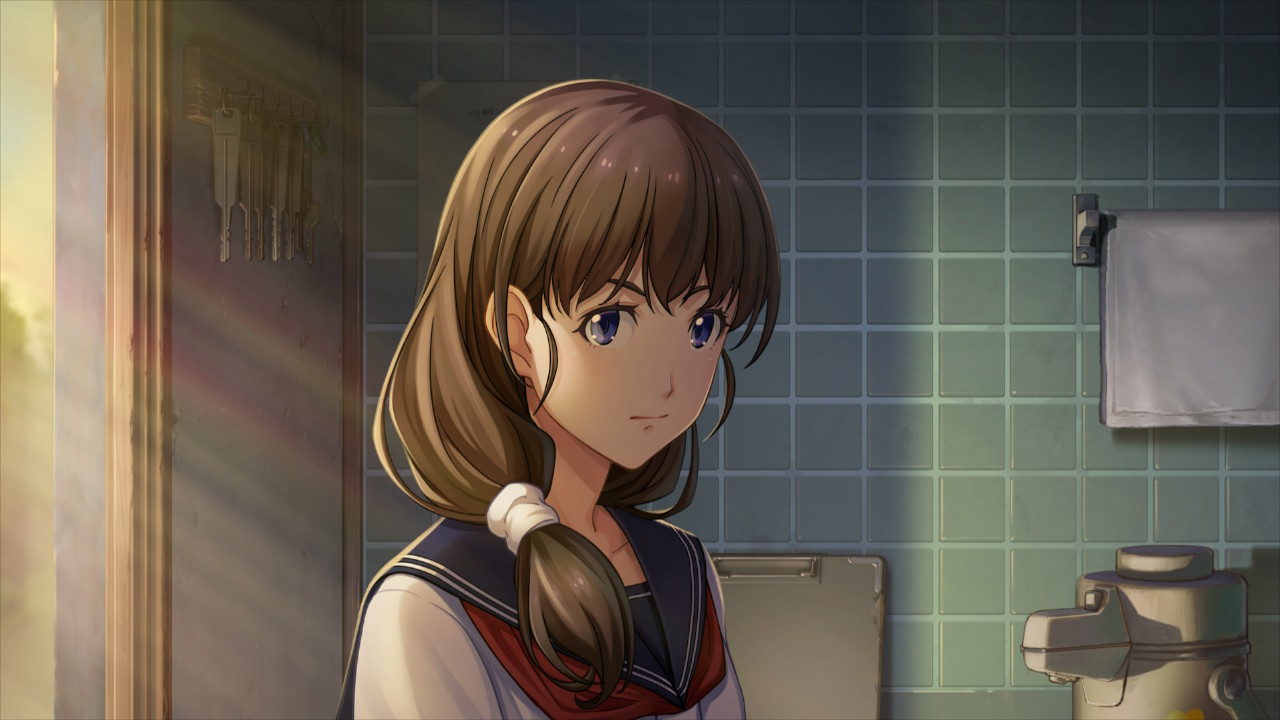
The setting really helps distinguish the game from The Missing Heir’s grounded estate dispute setting. Also unlike The Missing heir is the frequent presence of a co-investigator; Ayumi Tachibana, who is currently a member of the school detective club, and who finally gets to do some real detective work! Ayumi Tachibana is, in a lot of ways, the star of the show. Her close friend and fellow detective club member is the victim in this case, so she’s instilled with a powerful desire to see justice done. Ayumi is smart and capable, ignoring the main character’s early game pleas to distance herself from the investigation for her own safety. She collects legitimately useful information and even betrays the player at one point to get closer to the answers she seeks. Overall, I was very impressed with her as a character, and they did a good job elevating her from the borderline receptionist figure she felt like in The Missing Heir. I have to confess that I too understand the admiration that The Girl Who Stands Behind diehards have piled on her over the years. She’s great, and she gets the job done! I understand well now why she got such a nice trophy back in Super Smash Bros. Melee!

And really, it’s not just Ayumi. In general, I think the characters are a positive change from The Missing Heir. Where you spent most of that game talking with generally serious adults, The Girl Who Stands Behind swaps in an almost obnoxiously large cast of students. It goes to great lengths to deliver a wider emotional range, including a surprisingly large amount of jokes. The main character’s youth is often mocked by the students, who frequently refer to him as “Tantei-kun”—implying he’s more of a junior detective than the real deal. Some of the students you meet will do nothing but mock you before allowing the game to move on, tacitly acknowledging the reality of interviewing a school’s student body.
There were a few particularly memorable students in the bunch. A kid from Kansai unleashes a barrage of jokes on the player that frankly just aren’t landing. The delinquent-coded Hitomi-chan recurs throughout the game, occasionally sporting a disguise, but always giving their all to help out—before tearing up over the loss of their friend. These more personable students do a lot to elevate the experience, even if they don’t actually know anything useful about the case in the end. The simple act of simulated human interaction really works when it all comes together.
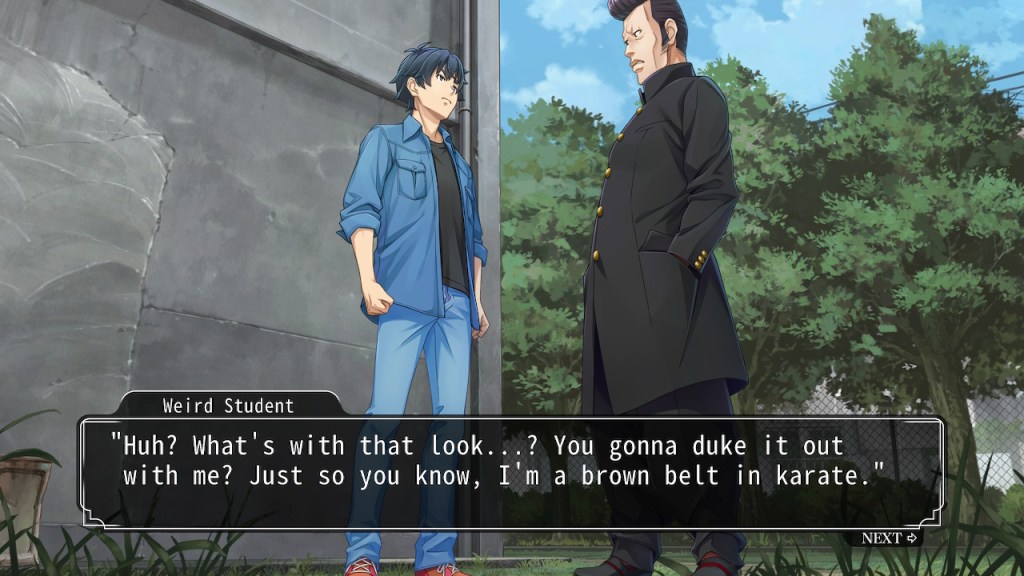
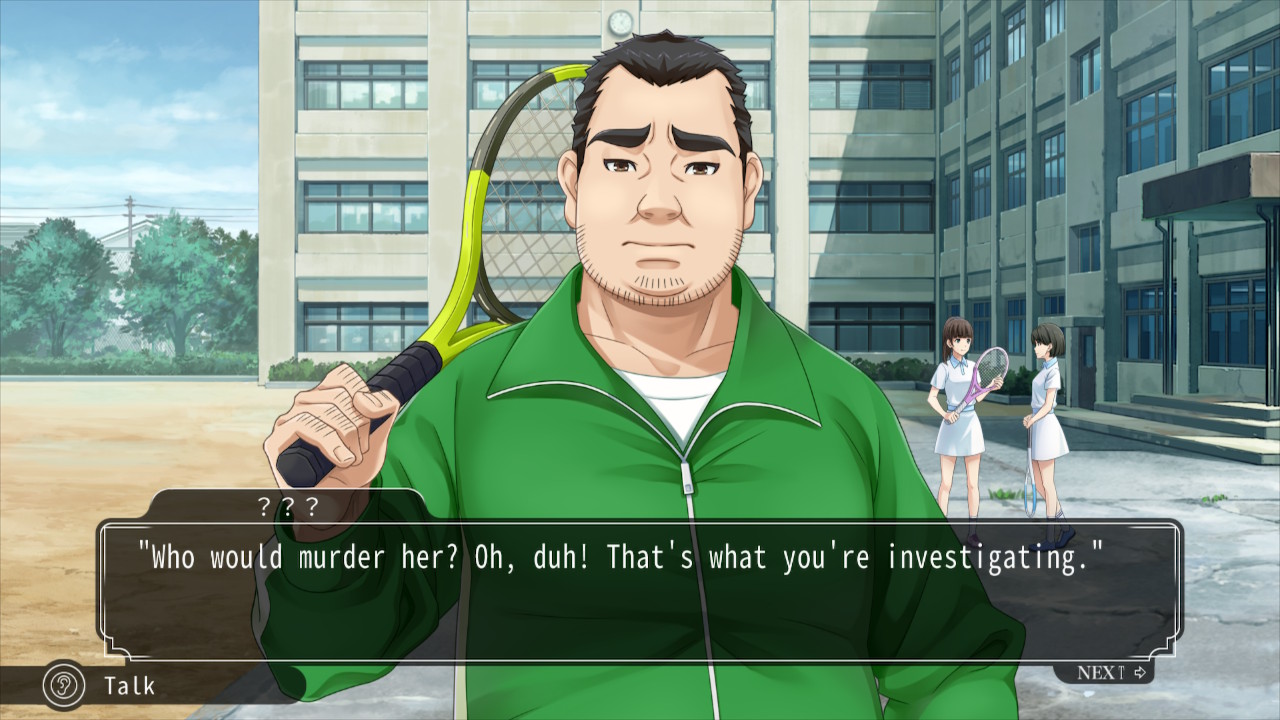
Although Ayumi and the student body can be very strong at times, narratively speaking, I sadly think the main story itself can be quite lacking. The game takes a big swing by more or less tying three major mysteries together and slowly revealing the ties that bind them, which sounds like there would be a lot of good material to get through. Sadly, I felt too many chapters went by with only the barest of meaningful narrative progress made. Sometimes a lot would happen, but it just wasn’t all that interesting. The last chapter or two are left to do a lot of heavy lifting that should have been spread out better before leaving us on the final few reveals, not all of which are winners in my book. It all made sense, sure, but it didn’t surprise me in a way that I found particularly interesting.
I think The Missing Heir may have actually impressed me more in that sense, with its logical story concluding alongside very solid twists. It didn’t go as big on the mystery, but I think it landed each element better in the end. I feel like The Missing Heir overall impressed me a bit less, but at least landed very well. The Girl Who Stands Behind really just fails to land everything as strongly despite a stronger showing elsewhere. I feel like how much you like the answers at the end of The Girl Who Stands Behind may be the determining element on which game you’ll like better.
When it comes to art and music, well, you may as well just refer back to my heaping praise for The Missing Heir. Produced in conjunction, the two games share a borderline flawless take on their target look and sound. I’m not 100% sure, but I think The Girl Who Stands Behind features more elaborate animated sequences, which sometimes blend in and out from the adventure gameplay in nice ways. Big shout outs to the game for not only offering the original Famicom soundtrack, but also the Super Famicom soundtrack from the first time this game was remade! Very cool that they could cater to people’s nostalgia for either version!
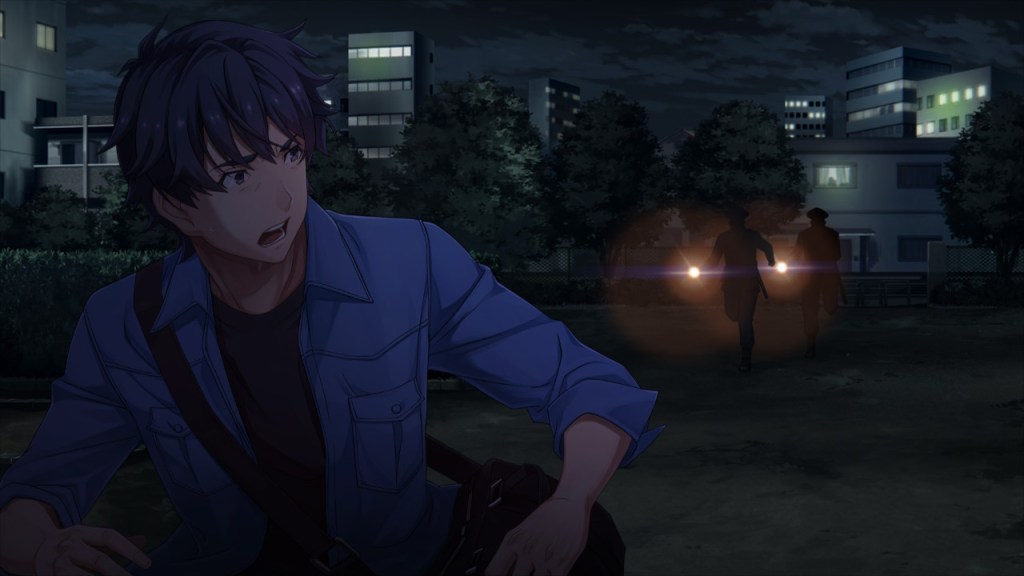
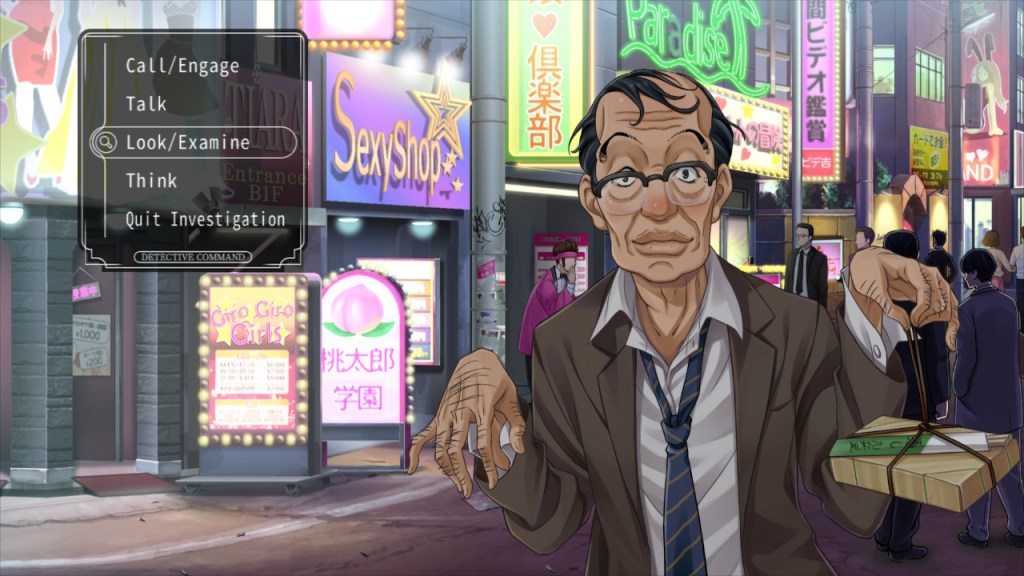
Similarities to The Missing Heir sadly cut both ways, however. Some of the more awkward or frustrating interactions in the last game make their return in this title—I had hoped these would be smoothed out, but no such luck. In one sequence, where my character was very obviously supposed to say something, I was puzzled after all of the available “Talk commands weren’t yielding the result I needed. After opting to brute force the way through, the “Think” command got the protagonist to actually say the thing I wanted them to say. That really didn’t feel fun! To reiterate this complaint from The Missing Heir, these moments are annoying, and I felt like I had even less patience for them this time around.
As a quick aside, I saw something funny on Twitter related to this the other day! Recently, another classic adventure game of the era was remade as well. The Hokkaido Serial Murder Case, written by Dragon Quest’s Yuji Horii, just came out on Switch and the original is a well regarded title in the genre. I saw some people talking about the remake in Japanese on Twitter, referring to the game as a “brute-force adventure game” in an affectionate way. It made me wonder if they’d refer to Famicom Detective Club in the same way, or if I’ve mercifully found games that do require brute force but fall short of their brand of flattery. I guess I’ll never know, but I sure would hate to play worse than this!

Anyways, back on track! At two points, The Girl Who Stands Behind slowed the narrative to a crawl by presenting you with characters who refuse to let you leave their presence and are happy to tell you as much. The idea of these characters physically blocking your character in a game where you really need to be elsewhere is strong, but I didn’t feel the gimmick paid off as well as it could have, especially since one of them (a legitimately random drunk fellow who accosts you when you venture downtown) had zero significance to the main cast or larger story. I feel slightly at odds with this criticism, as I earlier praised how talking with the various students could feel rewarding even if they weren’t moving the plot along because the simulated human experience worked well enough. However, in this case you aren’t the one engaging them in conversation—they’re the ones accosting you, and the stakes are as low as they come. The lack of perceived control in these extremely unimportant situations just didn’t land for me, and it almost felt like they were squeezing a situation for all the runtime they could get. It’s a critique that still doesn’t sit perfectly with me, so I’m sure I’ll be thinking about how they could have improved it for a while yet.
This feels like an awkward place to leave a duology whose games are, well, certainly good, but in my opinion struggle hard to compete with more modern narrative titles. The second game not being a resounding improvement in my mind makes me sympathetic for those who must have played the two and thought: “oh, I guess that’s it, huh?” It’s challenging for me to wholeheartedly recommend these games over their contemporaries without knowing if the newly released Emio – The Smiling Man retroactively makes it more worthwhile, because I do think they’ve been surpassed in almost every regard (certainly the new coat of paint is top-class by any standard). In that sense, it’s a little comforting to know the games are no longer a duology (putting aside the oddball third title on the Super Famicom). I’m still excited to dig into Emio next week, so here’s hoping that the decades between have given the series a proper chance to take aim at the top!
tl;dr
A good sequel that does a lot to differentiate itself from its predecessor, but struggles to fully eclipse it, despite strong steps forward.
This article is the first of a three-part series on the Nintendo Switch Famicom Detective Club titles.
Click here to jump to Part I – Famicom Detective Club: The Missing Heir.
Click here to jump to Part III – Emio – The Smiling Man: Famicom Detective Club


 「RISINGSUPERBLOG」
Leave a comment