Publisher: Konami
Developer: Konami
Release Date: August 27, 2024 (original release August 25th, 2005)
Version Played: Nintendo Switch
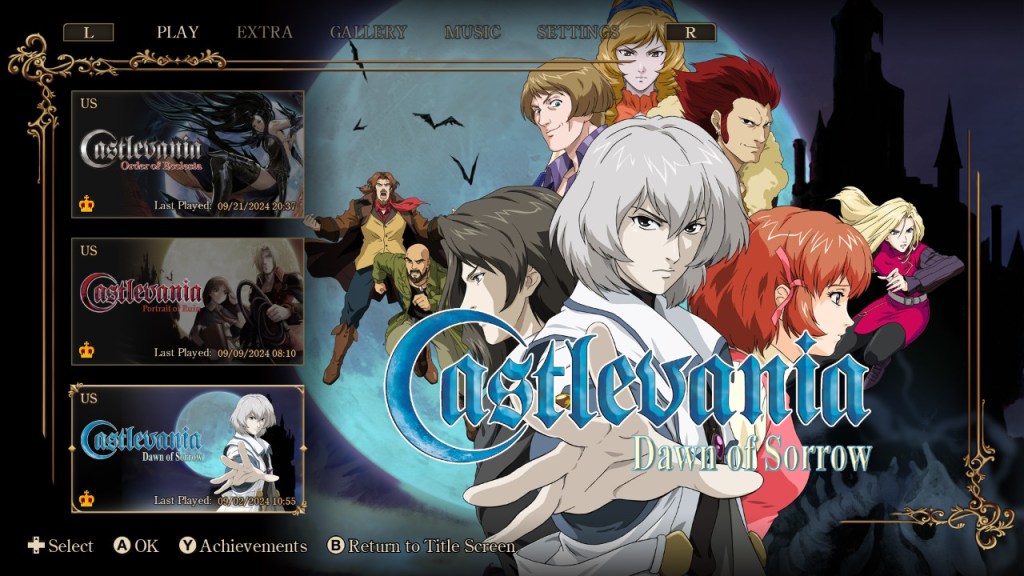
This article is the second of a four-part series on Castlevania Dominus Collection.
Click here to jump to Part I – Castlevania Dominus Collection.
Click here to jump to Part III – Castlevania: Portrait of Ruin.
Click here to jump to Part IV – Castlevania: Order of Ecclesia.
Out of all of the Castlevania games Koji Igarashi directed, this is the only one I never actually owned as a kid. A close friend of mine who I often swapped games with loaned it to me shortly after release, and I played it back to front. I felt a little snooty returning it to him, asserting that while Dawn was okay, it still couldn’t quite reach the peaks of its predecessor, Aria of Sorrow.
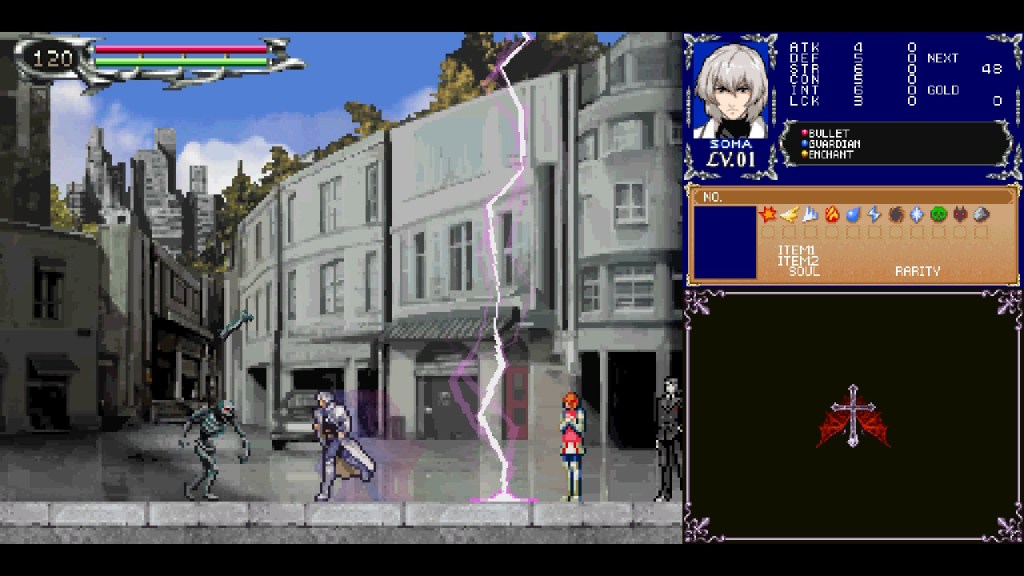
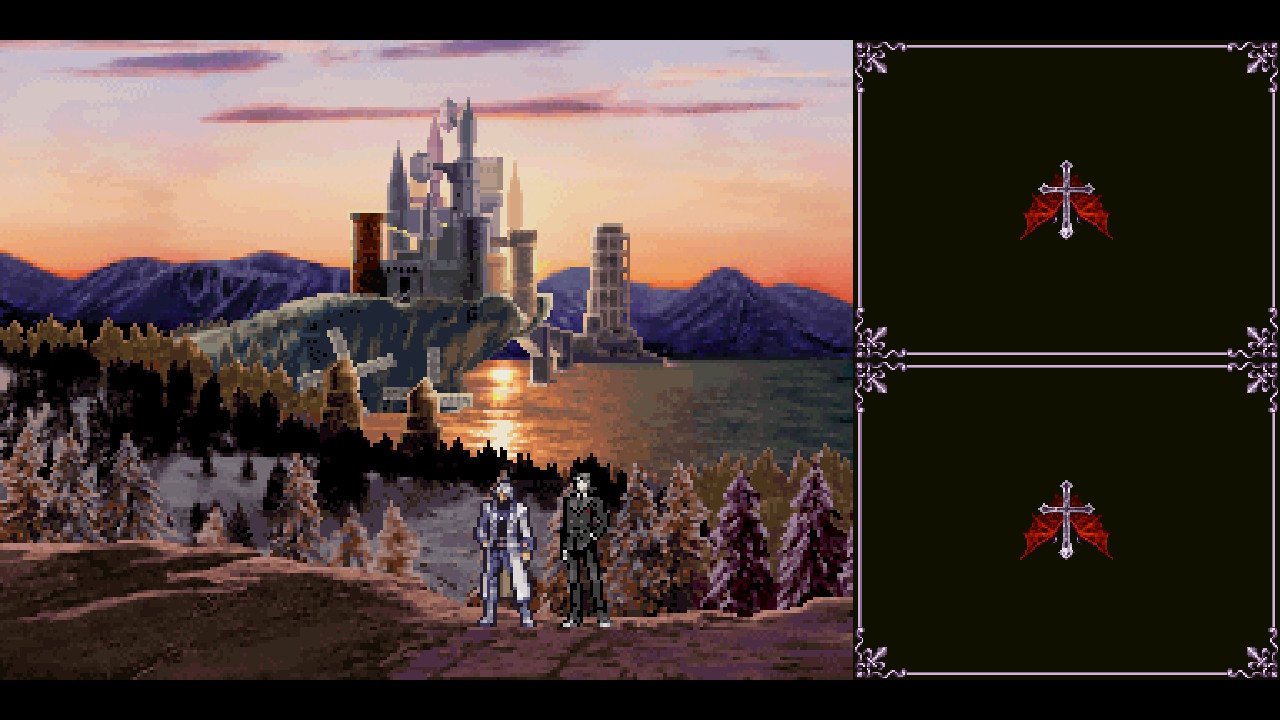
The biggest gripes I recall having were with the game’s art and story. Dawn of Sorrow directly follows Aria of Sorrow both mechanically and narratively, so my expectations were very high at the time. Right out of the gates, a big miss with Dawn was the move away from Ayami Kojima’s character art. To suit her schedule (and to try hitting a younger audience better), the game adopted an, uh, more generic anime art style. There’s really no kind way for me to say it; I think.the character art is serviceable, but a massive step down aesthetically. Thankfully the game’s 3D and pixel art follow up on Aria in superb fashion, so no complaints there. On the story side of things, I actually think it’s worse than I recall from my teenage years, with large heapings of mediocre dialogue reawakening complaints that weren’t even on my radar. On the gameplay side, I remember generally thinking it just wasn’t as good. Not to spoil things too much, but my mind definitely changed on the latter element.
Despite the relatively brief cutscene runtime, Aria actually had an awesome story. Your protagonist, Soma, is whisked away to a mysterious castle where he encounters a surprisingly robust cast of mysterious characters, about half of whom have legitimately solid secrets in store. The whole finale revolves around a well executed and strong twist that feels very much earned. In retrospect it’s a very simple tale, but the mysteries unfold in satisfying fashion and few scenes go by without leaving you with new information, all while the cast hit their emotional beats splendidly.
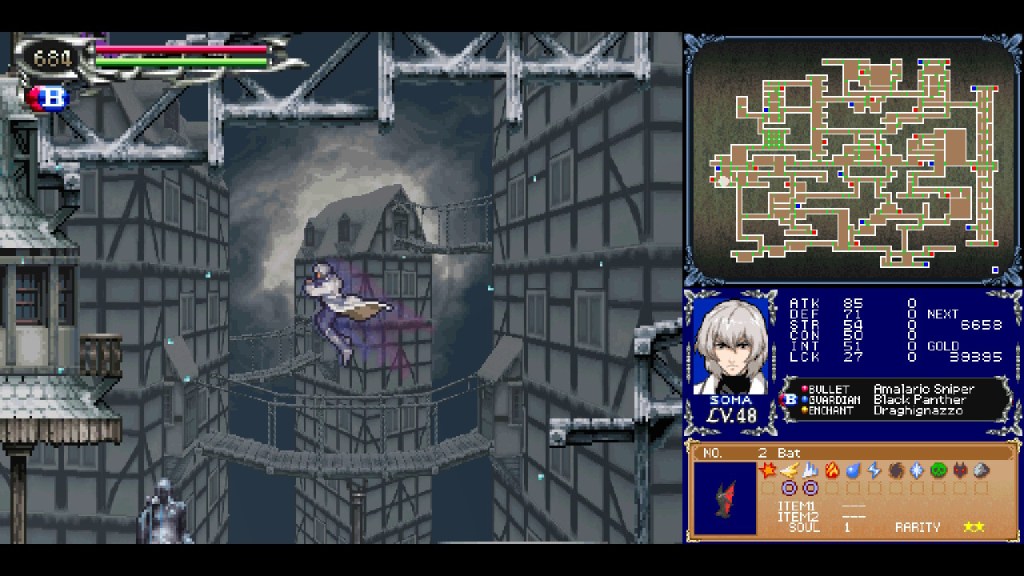
Dawn fails to recapture this entirely, in my opinion. Soma enters a new version of Dracula’s Castle alongside four returning characters, who are all friendly from the get-go, their secrets having been unmasked in the previous game. The dynamic between the characters and Soma is now toothless, and fails to go in interesting directions. I’m not sure if my memory is playing tricks on me, but I was really surprised with how much Yoko talks about Soma’s relationship with Mina, and how often Hammer comments on Yoko’s appearance. While I’m not averse to Soma and Mina’s relationship, I don’t love it being relegated solely to the other woman in the party, who feels like she has very little to say otherwise in her newly relegated role as a shopkeeper. Largely, returning characters feel like they lack meaningful new elements and in general feel flanderized, which really sucks. The new villain trio sadly never landed for me, and that has not changed. They’re very forgettable on the whole, and in my opinion don’t compare flatteringly to Graham in Aria.
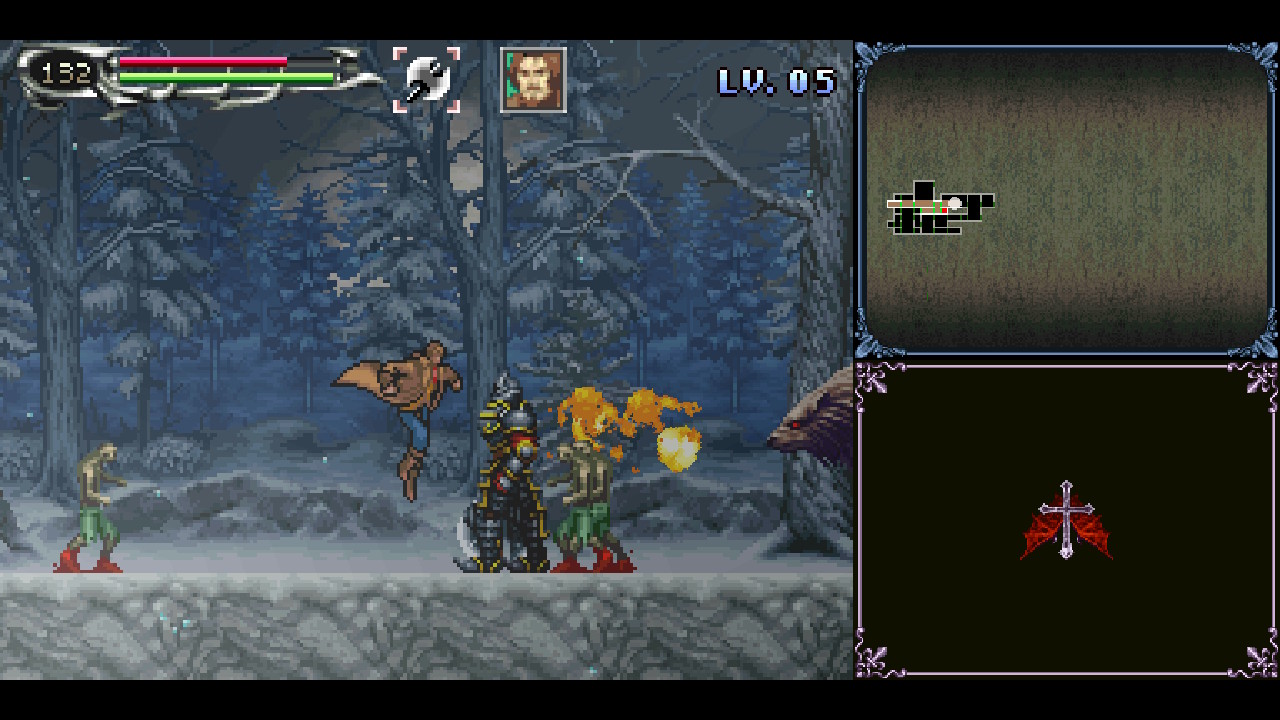
While this is really not a flattering start to my assessment, make no mistake, Dawn is still a great game. The platforming and combat is still top notch, being that it’s responsive, easy to play and offers the same high skill ceiling you get in any other Iga-era Castlevania. Igarashi has often mentioned that a key part of his enemy design is that you shouldn’t have to take any damage from even a single obstacle if you’re good enough, and that careful dance is always really fun to work towards as you improve your skills through the game alongside actual mechanical ability growth. If you’ve only ever played the classic non-RPG Castlevania titles, the Iga games in general have a faster pace without dialing back how brutally oppressive your foes can be, and that’s maintained perfectly in Dawn.
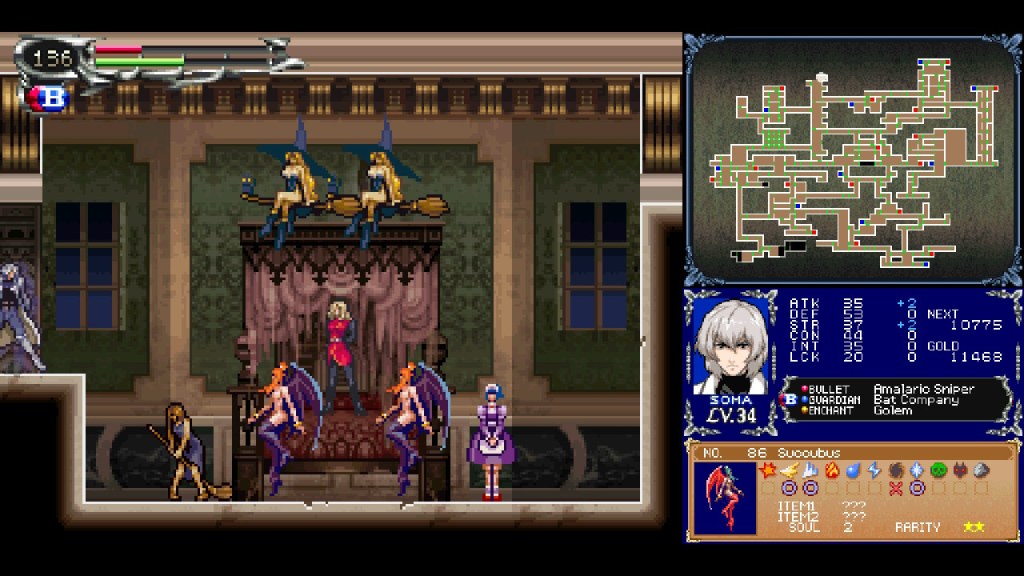
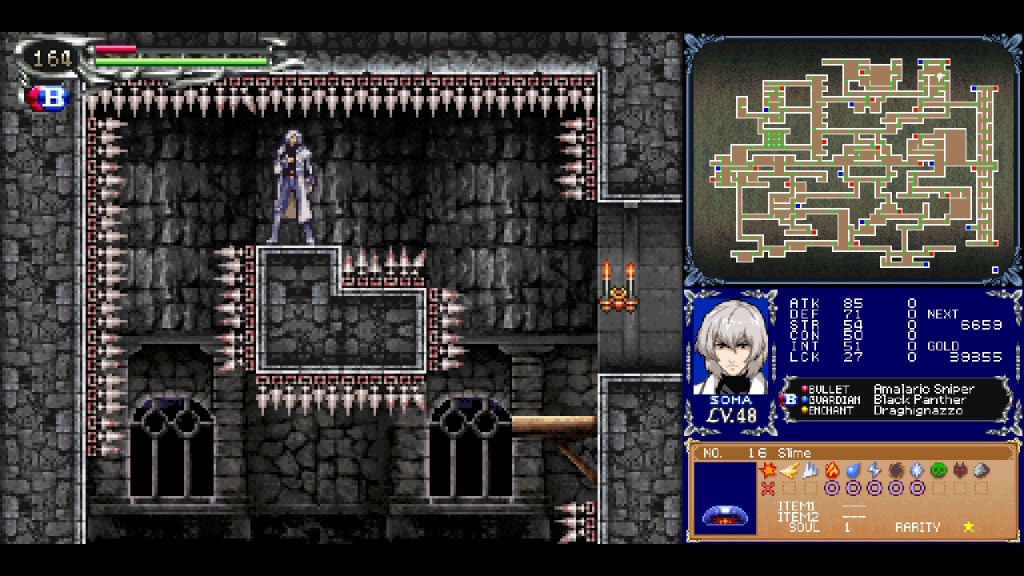
The Incredible Tactical Soul System also returns, meaning that every single enemy in the game has a unique ability for Soma to snatch through incredible violence. This allows him to gain abilities as simple as throwing bones or summoning a bat, to huge long-term advantages like the ability to see breakable walls or regain life by sitting in the many chairs around the castle. This system was a monumental breakthrough in Aria, giving players meaningful possible rewards for every enemy they came across, and thus making every enemy type a worthwhile thing to spend time on. In general I think that’s Igarashi’s special sauce for Castlevania combat and exploration, as we’ve seen these elements return in some way in all of his Castlevania games post Aria of Sorrow, plus Bloodstained. Dawn now allows for souls to be upgraded as you collect duplicates of them, which is a great idea, but in practice I think it’s very unlikely you’ll end up having many upgraded ones in a standard playthrough, let alone many that are viable for regular use. Grinding away on an enemy to get their soul in Aria or Bloodstained can be tempting and enjoyable, never truly knowing exactly what you’re going to get. Grinding enemies for many copies of their souls gets tedious. You already know what the skill is, you’re just blowing time on upping the variables a bit. I did not find this system enjoyable enough to interact with, and I wish there were a Soul-related currency you could use to upgrade skills rather than having to grind copies.
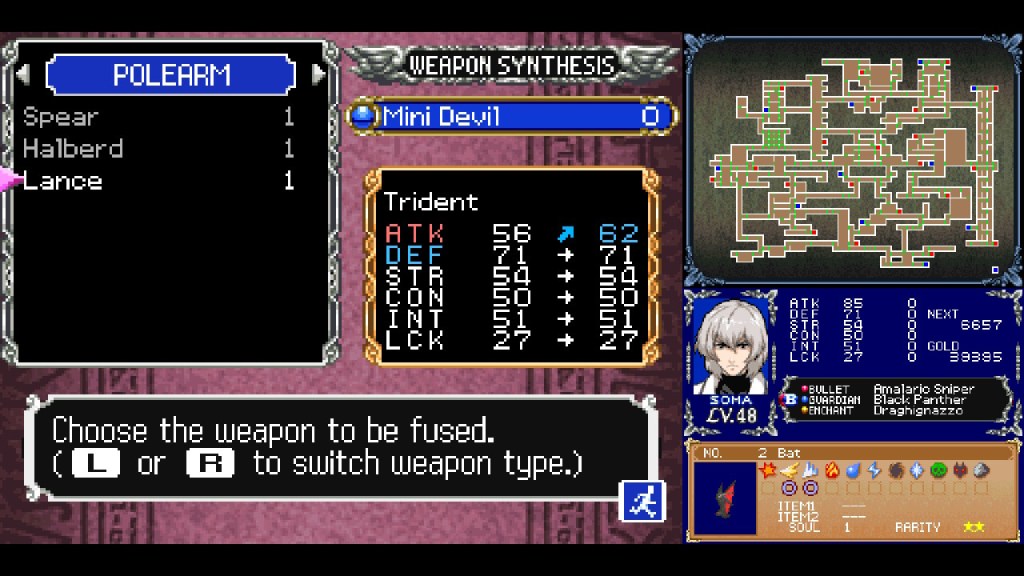
Weapon upgrading is another new element brought to the table, where you can give Yoko a weapon and specific souls in exchange for a new weapon. This also slots naturally into Aria’s systems, but sadly the upgrading is far too linear for anything interesting to happen within it, so you end up just bumping your stats repeatedly. Branching weapon upgrade paths would have elevated this system a lot.
A new technique called the Critical Art occupies the DS’ A Button, allowing you to spend MP to perform a slightly more powerful version of your regular attack. A very small list of weapons have notable Critical Arts, so I found that this system felt a little undercooked mechanically. It’s occasionally useful, but I found that I more often felt it was better to spend my MP on offense-oriented Bullet Souls.
In case you feel like you’re seeing a pattern here- you absolutely are. There are a lot of good mechanical ideas over Aria in this game, but I really feel like they’re mostly half-baked or underconsidered. This results in the game feeling like the still-excellent core gameplay from Aria with a bunch of less good new stuff stapled to the side of it.
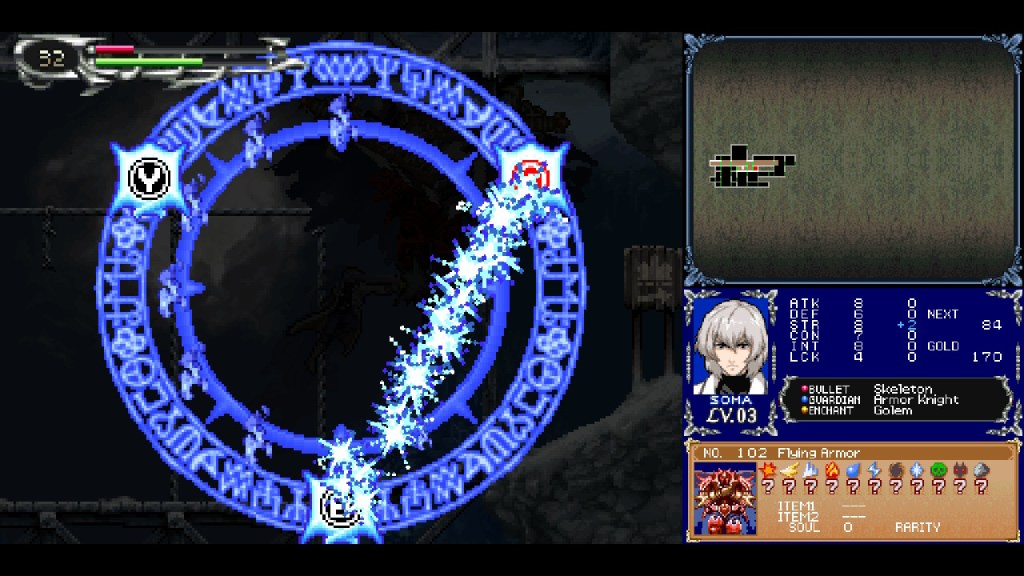
Often criticized for it, Dawn of Sorrow also introduced many touch mechanics. These are mostly fun to use, but the oft-criticized Magic Seal system does still rear its ugly head. The idea is that the user needs to find and memorize symbols, then draw them at specified points during boss fights in order to deal the finishing blow. Failing to draw the symbol correctly restores a healthy portion of the boss’ life. I still think it’s a pretty cool idea, but I generally agree with the critique that it just gets in the way, and that it’s not really fun to bungle the Seal at a critical point. Maybe an original IP, or a different protagonist could get away with it, but in Soma’s Castlevania I find it doesn’t feel great, and I think it probably would have went over better if they had used it as a powerful gimmick for a smaller quantity of bosses, or one focused completely around it. While Magic Seals remain completely intact, there are now button mappings for the various strokes you’ll make when drawing a Magic Seal, so while you still need to remember the pattern, you can actually now play like a traditional controller based QTE. This is a great change, because I strongly think that having to use the on-screen pointer when playing with a controller would have been barely acceptable.
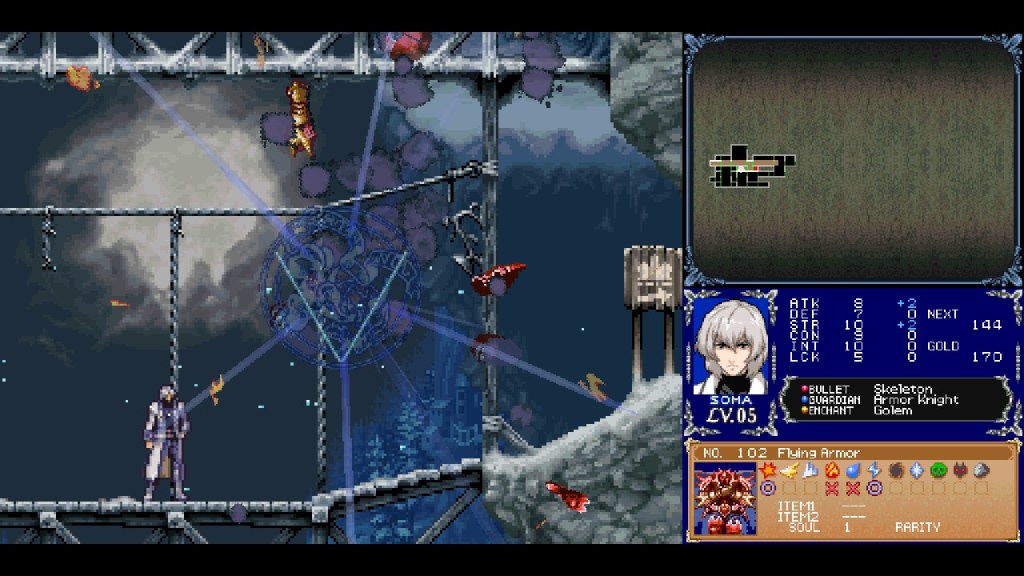

One quick thing I absolutely must compliment is that Dawn introduces 3D elements to the game’s art, with the DS much more suited to the task than GBA was. On replay, I was shocked at how well the 3D held up, even when rendered at a much higher resolution than the title was originally displayed on DS (sadly, there’s no way to force that lower resolution if that’s something you care for). Some of the environments pretty much fully use 3D for the backgrounds and I had completely forgotten how good these look. Though a few 3D enemies do have a different look from the sprite-based ones, I think the integration of 3D art was largely pretty seamless. Big thumbs up the art team!
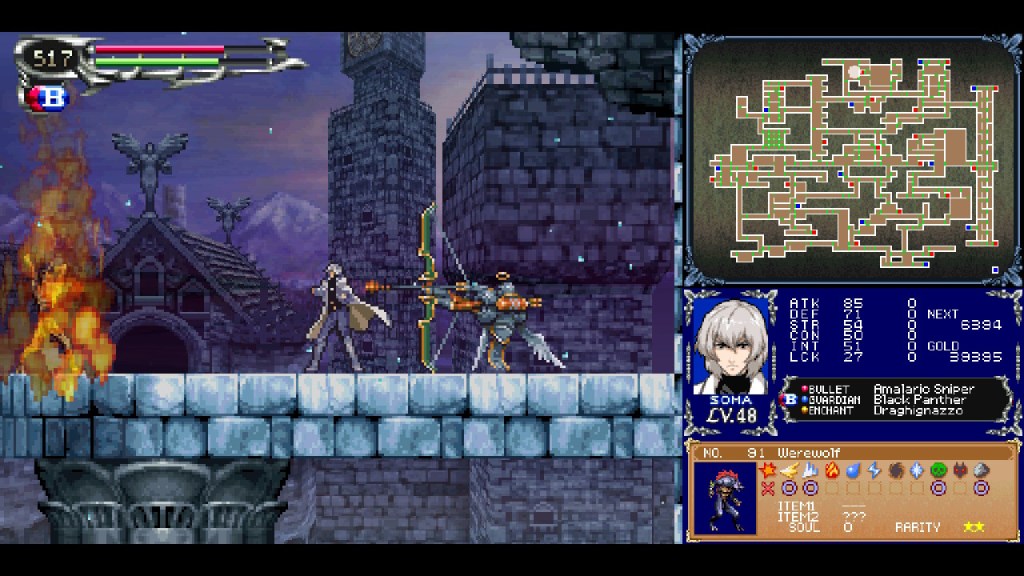
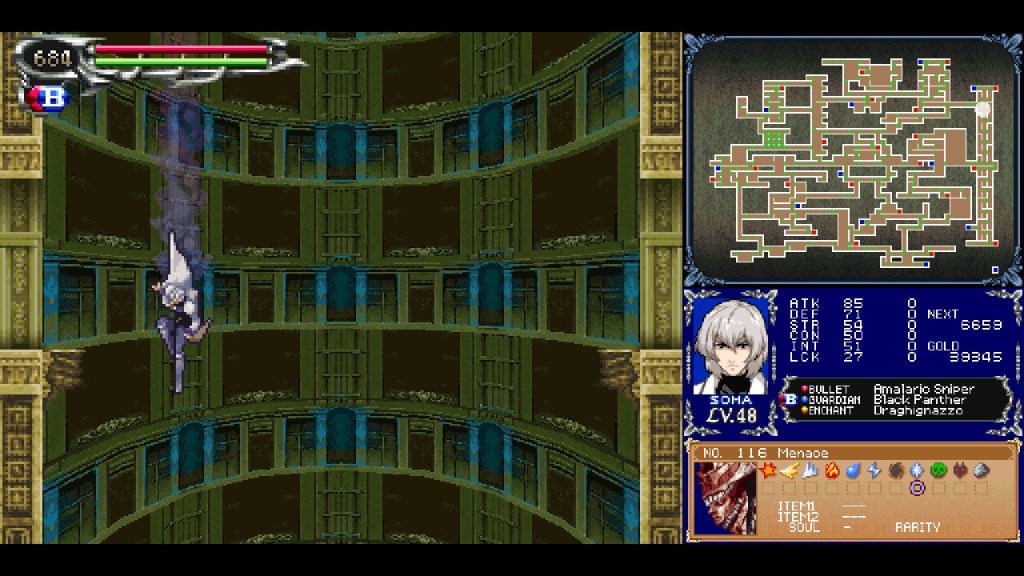
At the end of the day, I think titles like Aria and Symphony of the Night still edge out Dawn, but it definitely remains a strong contender in the Igavania tier list. If you like that flavour of Castlevania, you’d be missing out if you skipped Dawn, though you’d be missing out even more if you neglected to play Aria first. Aria’s story is extremely fun to see unfold, and Dawn will more or less spoil the whole thing. Don’t miss Aria, but feel free to skip Circle of the Moon and Harmony of Dissonance if you find yourself buying the recent GBA Castlevania collection and you’re not into them; Aria is the real star of the show.
I think this revisit has me feeling that it was still better than I remembered in a lot of regards. Though the new systems fail to really evolve the game in meaningful ways and can occasionally actively detract, Aria’s core gameplay and systems are still enough to support the game in spite of itself. The story and characters are significantly weaker, so unfortunately I really can’t recommend it on narrative merits, but it would take more than that to ruin the game for me.
tl;dr:
Despite the writing and new mechanics being somewhat disappointing, Aria of Sorrow’s baseline qualities empower Dawn of Sorrow to be a fun romp with mostly top notch art and sound.
This article is the second of a four-part series on Castlevania Dominus Collection.
Click here to jump to Part I – Castlevania Dominus Collection.
Click here to jump to Part III – Castlevania: Portrait of Ruin.
Click here to jump to Part IV – Castlevania: Order of Ecclesia.


 「RISINGSUPERBLOG」
Leave a reply to PKSomething Cancel reply