Publisher: XSEED Games
Developer: Too Kyo Games, Media.Vision
Release Date: March 28th, 2025 (original release February 18th, 2025)
Version Played: Nintendo Switch

Since posting this article, I’ve actually written a full review on the game! If you’d like a more complete overview, check the review out instead!
I come to you today with a humble but earnest request; don’t let The Hundred Line pass you by. I recently had the pleasure of playing through the recently released Switch demo and while I was already fully sold on the game (I had already pre-ordered an imported copy from Canada) the demo has cemented the game as quite possibly my number one most anticipated game. I’ll do my best to explain without spoiling the fun, because boy, there’s a LOT of fun stuff going on in this game.
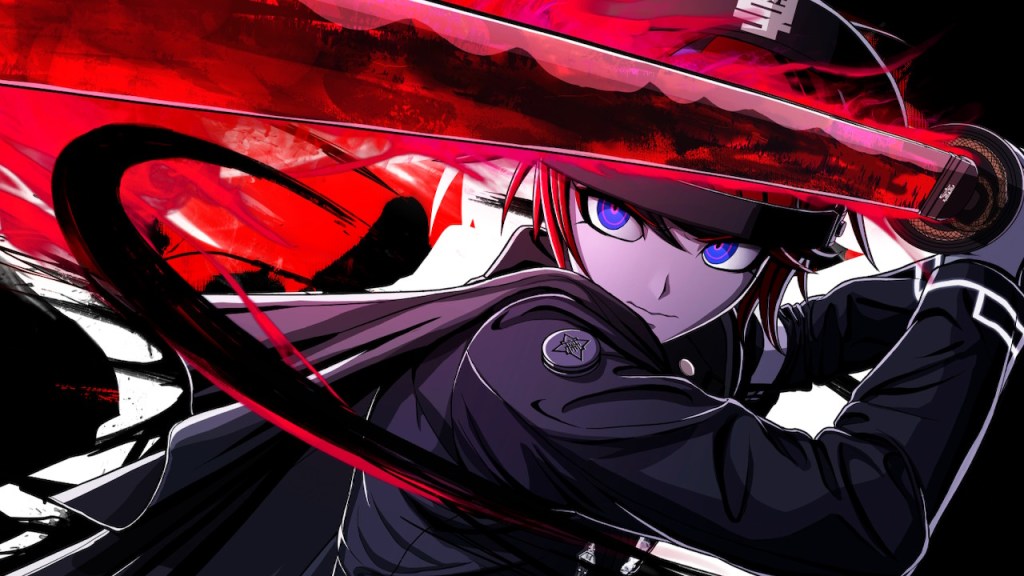
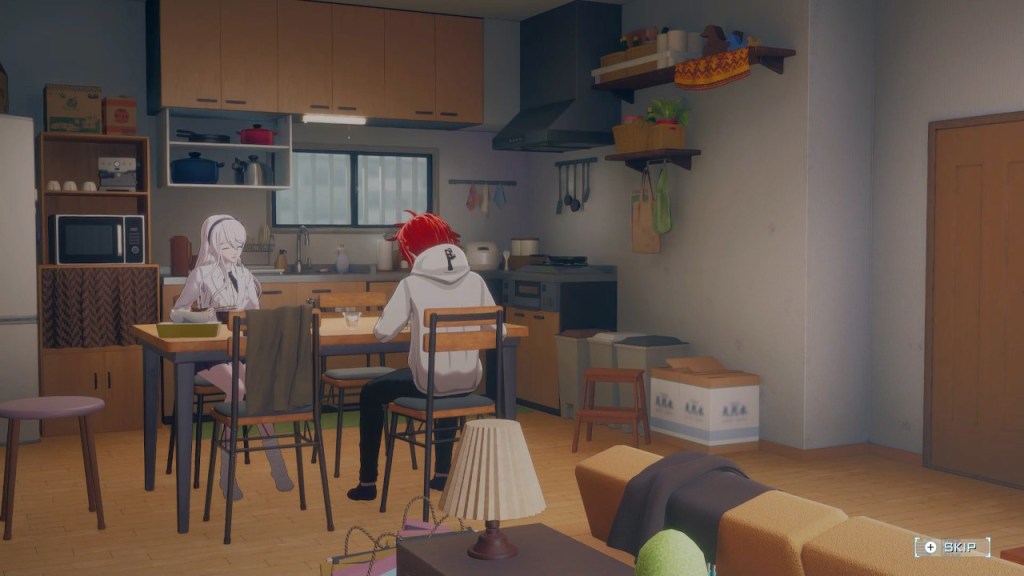
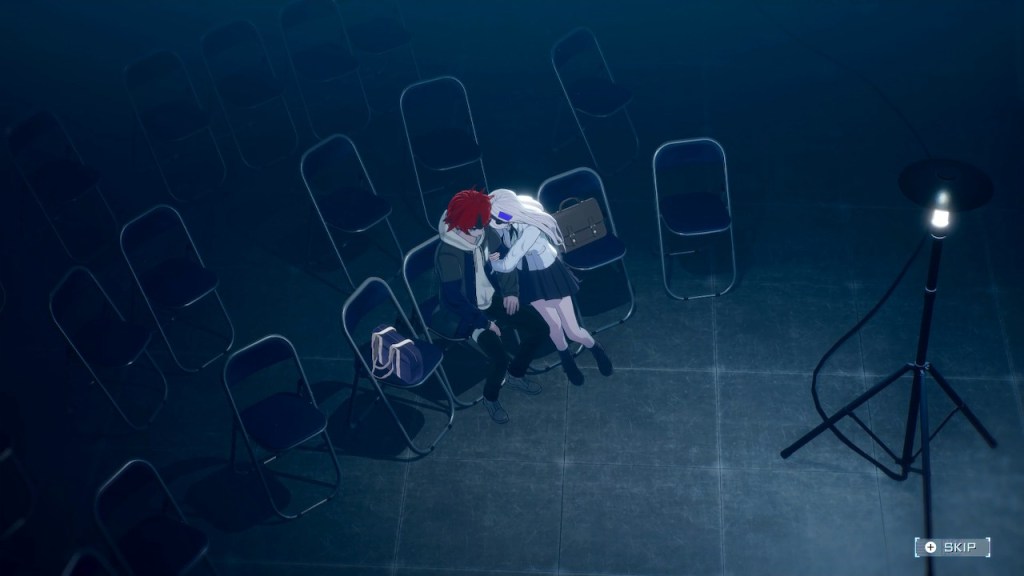
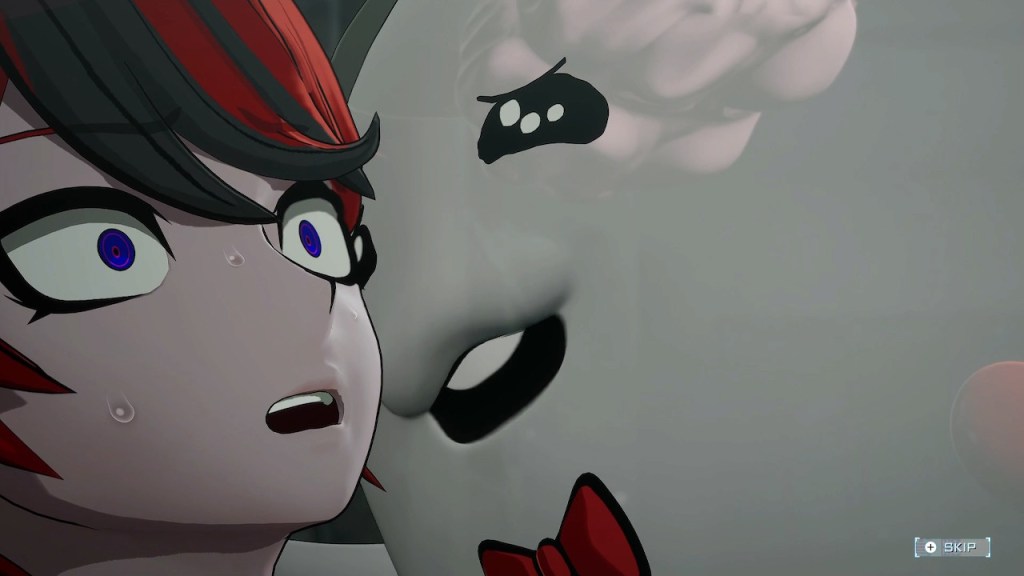
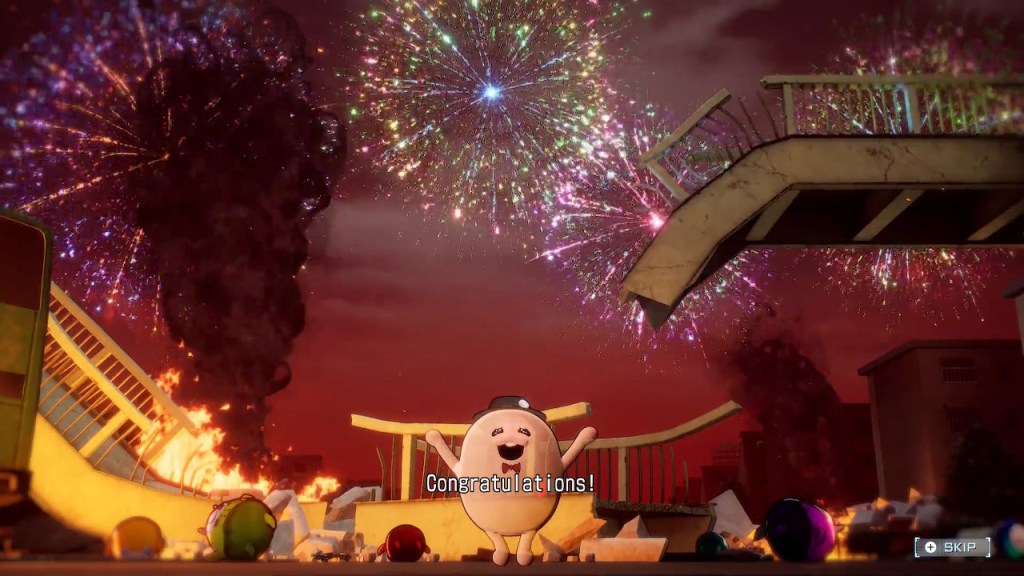
The Hundred Line was written collaboratively by Kazutaka Kodaka and Kotaro Uchikoshi, with Kodaka seemingly taking the lead on main setting, scenario, and characters. For the unfamiliar, Kodaka was the dude in charge of Danganronpa, and Uchikoshi was the fella who did Zero Escape, both under Spike Chunsoft. Since then, they left Spike Chunsoft to form their own company, and they’ve been pumping out cool adventure games ever since. I’ve read a lot of commentary online about how their newer titles have struggled to reach the peaks of their former work. Gems like Danganronpa V3 and Zero Escape: Virtue’s Last Reward feature such staggering highs that it’s hard to reasonably expect anyone to ever manage to reach them again. Personally, I haven’t felt that they’d managed in recent titles like World’s End Club, Master Detective Archives: Rain Code, or AI: The Somnium File, but for the first time, I feel like The Hundred Line really could make it all the way.
I don’t want to get too ahead of myself here. The Hundred Line’s narrative appears to be set up following a 100 day story, of which the demo only presents the first seven (a figure that I believe I read Uchikoshi describe as being perhaps only one percent of the full game). I’ve clearly played precious little of it, but what I have played feels toe to toe with the Danganronpa games in the best possible way. Actually, let’s dwell on that a bit as we get into the story. The Hundred Line begs for the user to come into the game thinking “oh, this is like Danganronpa”. After an extended opening sequence setting up the world, your main character wakes up in a high school classroom. The windows are blocked out by metal shutters, and an equally bewildered cast of classmates begin to rouse around you. The game teases your death game-addled brain cells into making assumptions, before introducing a character, Darumi, who is just obsessed with the idea that this is clearly a death game, and oh how wonderful her life would be if she finally were able to partake in one of those. She’s a great little reality check in a scenario that’s still set to go absolutely crazy in its own way.

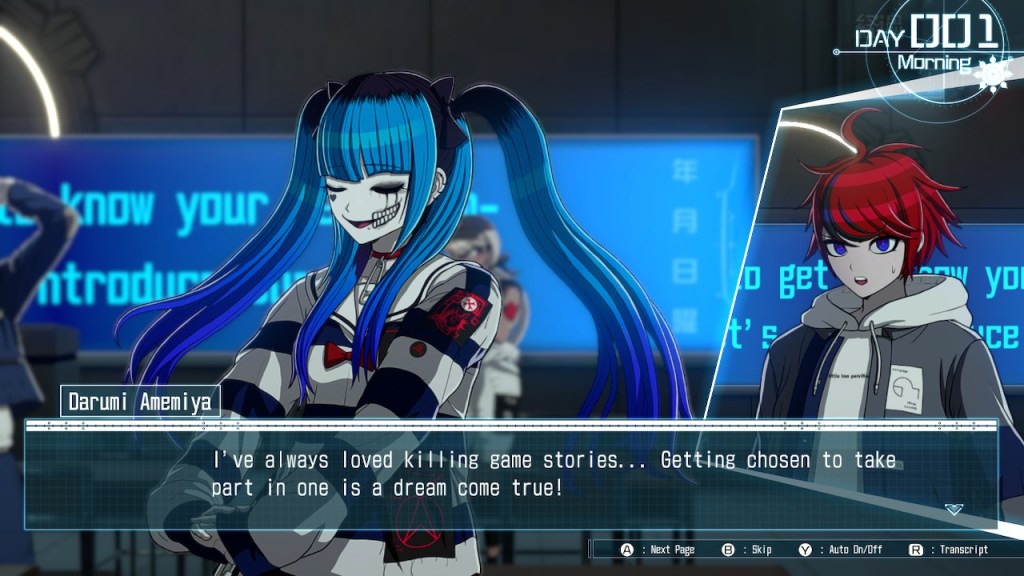
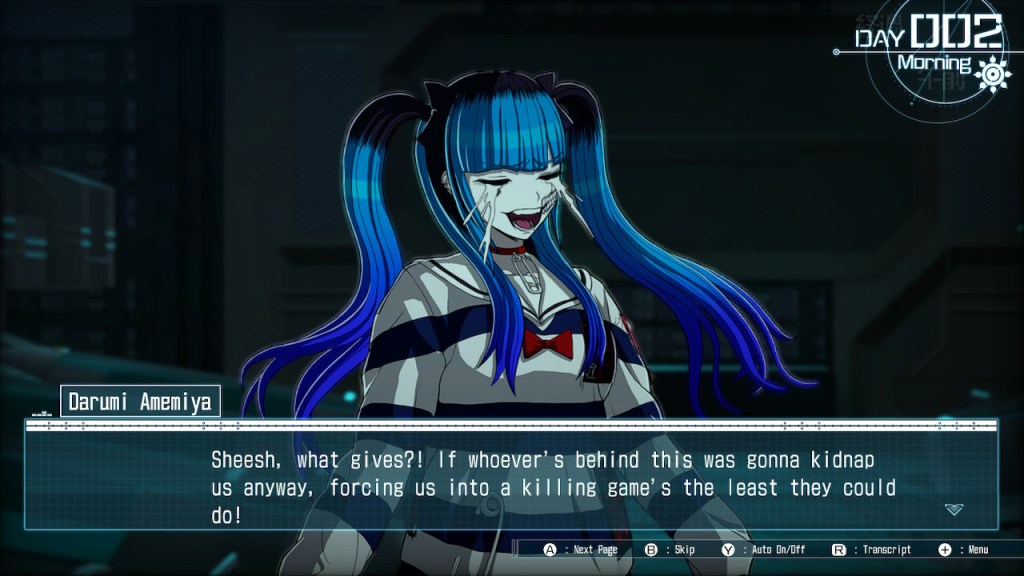
Your “teacher” prompts the class windows to open wide and insists you take a look, and you’re prepped for your actual place in the story. It’s suddenly clear that the death game girl is firmly the weirdo of the class, and maybe you’re the weirdo as well for assuming that this had to be a death game. For what it’s worth (as with any cast written by Kodaka) everyone is a total weirdo, so don’t feel too bummed about being one too. Where the Danganronpa series routinely referred to a mysterious “biggest, most awful, most tragic event” having already happened sometime, someplace offscreen, it feels like The Hundred Line has already let you have a real peek at its equivalent during the opening. Though the full scope of it is largely still obscured, the rules and the world feels more clear than in earlier titles, and Danganronpa’s somewhat disappointing never properly answered mystery of just what the hell happened out there already feels quaint with The Hundred Line ready to put down names and facts.
At this point, the cast also receives a sliver of clarifying info on the literal monsters they’ve recently seen, as you’re introduced to the school invaders. These tastefully-designed critters seem to want to eliminate humanity (or at least, something hidden deep within the school), and it becomes your job to stop them. With a class full of child-soldiers-to-be, this shouldn’t be too rough, right? Well, things go sideways fast. Only four students in the whole class have any willingness to fight from the beginning of the game, and it falls to them to keep the others- and the school building itself- safe from harm. It’s a pretty standard setting from a distance, but up close, it’s full of entertaining and charismatic characters, and there are plenty of little clever story twists that I’m trying really hard to talk around.
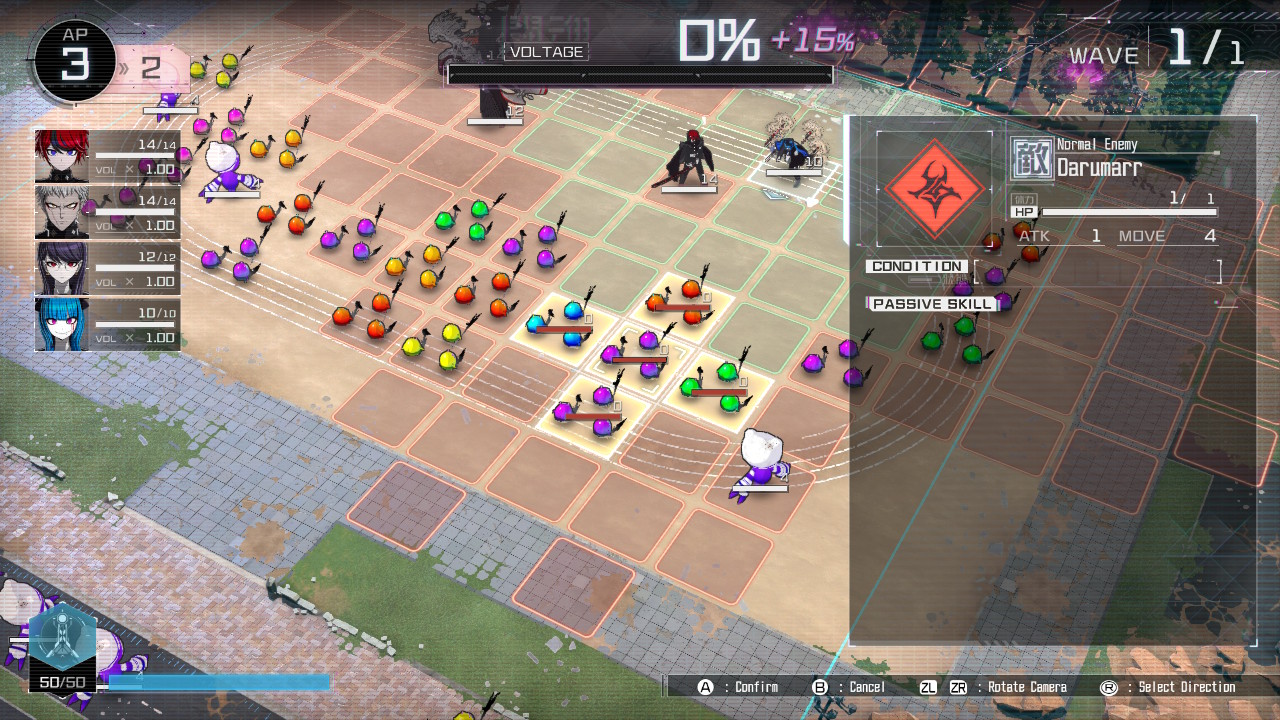
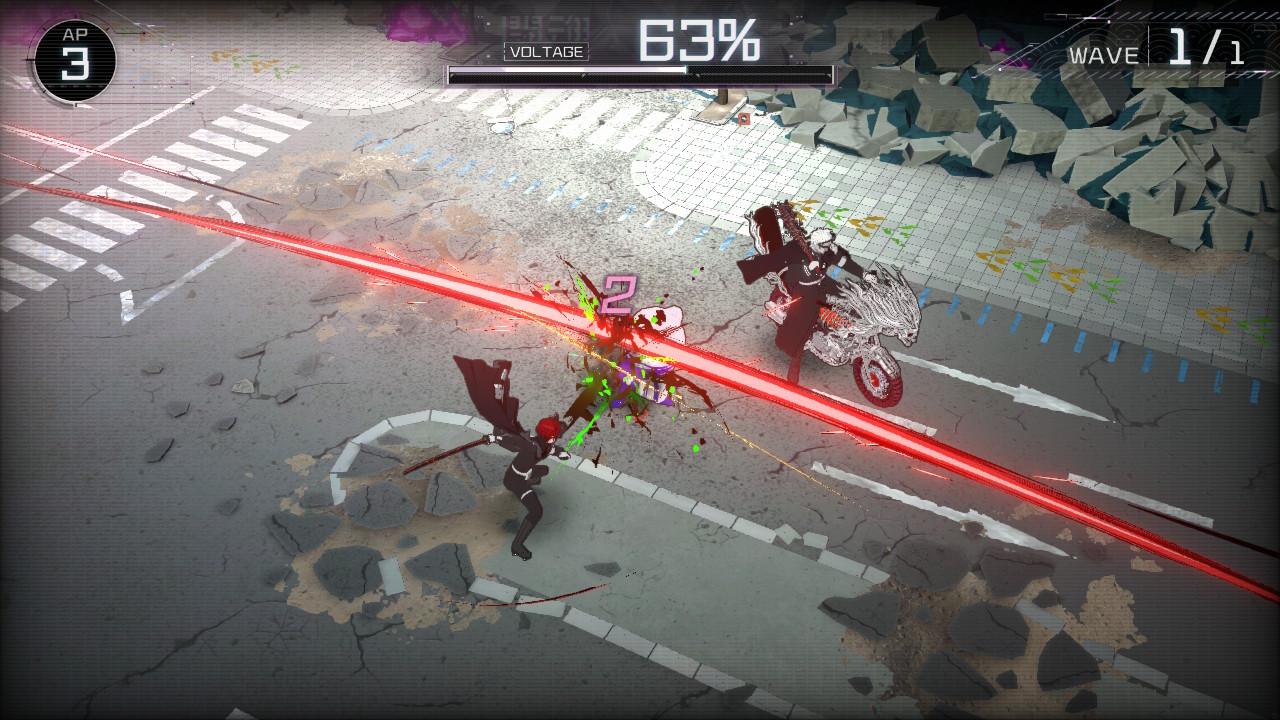
The game soon transitions to combat, where you’ll find yourself staring at a pretty traditional grid-based tactical RPG, but with defense usually your primary goal. During your turn, you can spend resources (AP) to perform a move and action with one character. As long as you have AP, you can keep moving characters, and leftover AP carries into the next turn. If you so choose, you can spend more AP to keep using the same character, though they’ll be fatigued and have their movement heavily reduced if they’ve already acted that turn. Enemies swarm in as large, dense groups of weaklings, with stronger enemies peppered in to keep you on your toes. The stronger enemies also offer an extra point of AP when you defeat them, so you can extend your turns quite dramatically if you focus your characters on the bigger guys and opt to deal with the chaff later. It’s no exaggeration to say that you’ll frequently be facing fifteen or more enemies on maps that are frankly rather small for the genre, so it’s all very claustrophobic and stressful in a good way. Once conditions have been met, subsequent waves of enemies will usually arrive, and the battle continues.
It’s pretty standard stuff so far, but the details really elevate the combat sequences. First and foremost, the pacing is oh-so breezy. Characters move and act quickly, but not in that “Fire Emblem combat animation feels a little less cool at fast game speeds” kind of way. They were built for this speed, and the lack of transitions to combat scenes helps the pace immensely. Enemy turns operate excellently as well, with all enemies moving simultaneously before swiftly performing their attacks in turn. Even with huge mobs of enemies, the game overwhelmingly succeeds at keeping enemy turns trimmed down to a fraction of the length of player turns, so you’ll always feel very engaged with the combat.
Enemies often cover large chunks of the map with their large group sizes, and the game relishes in offering mainly AoE attacks to the user. Indeed, across the five playable demo characters, only one attack on offer (if I recall correctly) targets only one tile. The majority of the time, you’ll be considering how best to place your attacks’ huge splash zones to maximize enemy casualties. With most enemies in the demo being total weaklings, you’ll often be able to wipe out three or more enemies per strategically placed swipe. There are some really nice design ideas on show in this process. Instead of picking “move” and then an attack afterwards (like in Fire Emblem or equivalent), you just pick the attack. From there you move your cursor over the valid spaces to choose a spot to move to, and the game will attempt to automatically figure out which direction you intend to perform your attack in. This works surprisingly well, and when it doesn’t guess quite right, you’ll find that the right stick is mapped to manually choosing your character’s direction. Even when it doesn’t guess right and you have to manually correct, it’s still quicker than the traditional TRPG turn flow. I think this little rethink of traditional action flow is some really sharp design.
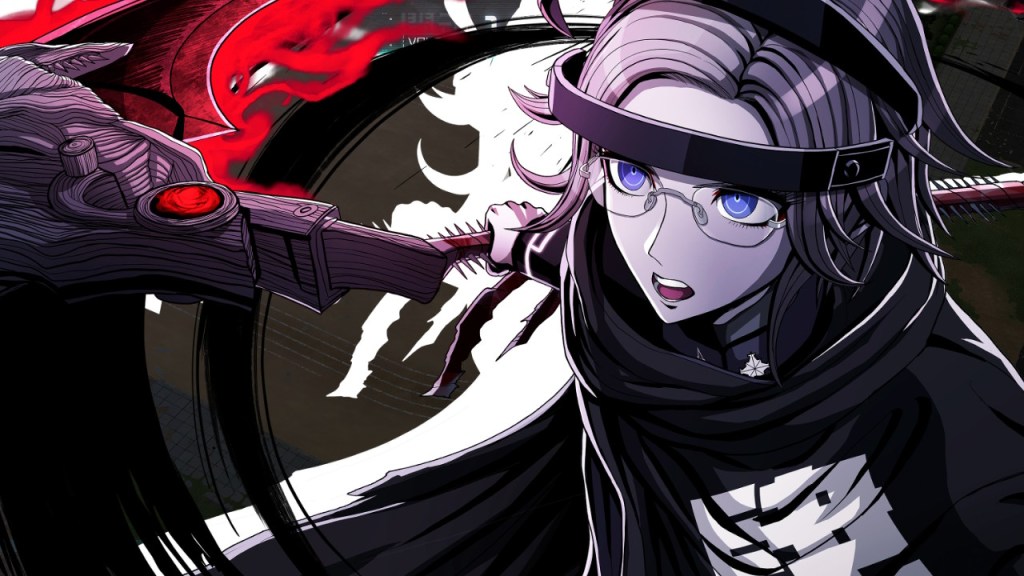
Characters each possess a unique Specialist Skill, basically a passive ability that kicks in when conditions are met. As far as the five characters present in the demo go, they’re pretty good. The main character’s is actually a bit of a wash, as it’s just a bit of narrative context for being able to use a retry button from the pause menu, but otherwise they’re good. My favourite one was probably Darumi’s, which made it so that her attack became buffed when she gets fatigued after taking a turn, but when she lands the buffed attack it returns to normal and she becomes unfatigued. This allows her to take a third turn with full movement speed again! Given that she can keep alternating as long as you’ve got AP, plus has a handy attack boost on the fatigued version, Darumi can be quite versatile! Class meathead Takemaru’s ability is much simpler, but also very fun- for every tile he moves in a turn, he gets one point of armor until the end of turn. His attack hits the eight tiles surrounding him, so the Specialist Skill encourages you to zip him across the map (he rides a motorcycle, and can move quite far) and surround himself with enemies, before hitting them all at once. The huge armor boost will keep him safe when the turn swaps! I’m legitimately very keen to see all the other abilities on display as I get new characters.

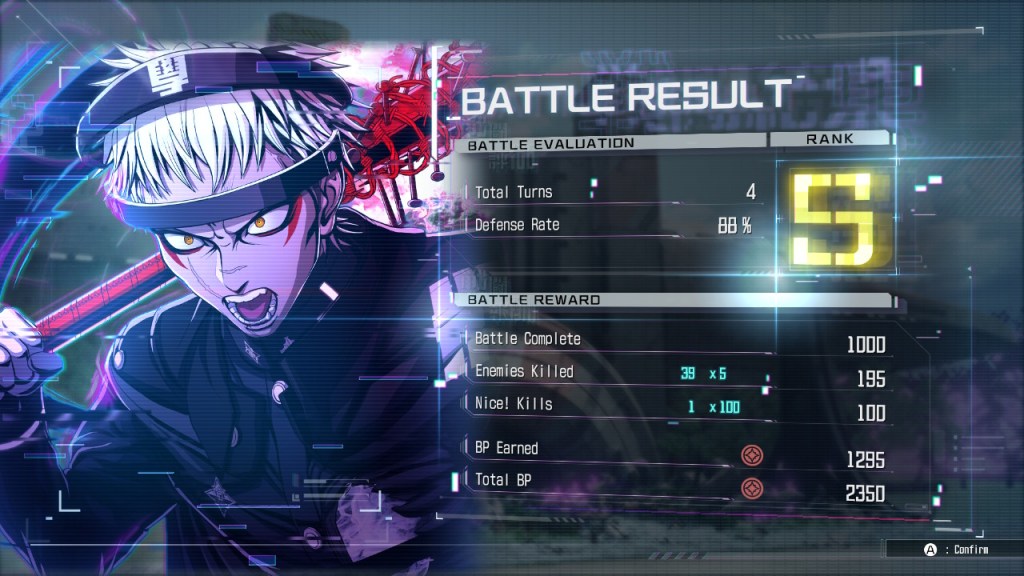
When it comes to enemy turns, your many foes will descend upon you fast and hard, and if you leave a character in a bad spot they’ll quickly be surrounded and wiped out. In perhaps a surprising twist, the game actually doesn’t feature permadeath, with a mechanical coffin swooping in to collect their corpse for later. However, there are fun wrinkles surrounding how death plays into combat. For example, there’s a resource you’ll gather mid combat that you can spend to temporarily buff your teammates or to perform super strong special attacks (so strong that the chosen character is penalized with skipping the next turn). When a character’s HP drops below a certain point, you’ll be given the option to perform that attack for free at the cost of their life (a tactic that even provides a boost to your post-combat score). Seeing as your characters aren’t subject to dying permanently, offering the user the ability to perform such big sacrifices creates a very fun level to level dynamic. Think you can handle the rest of the stage with less characters? Why not throw out a massive finishing move. Fun stuff.
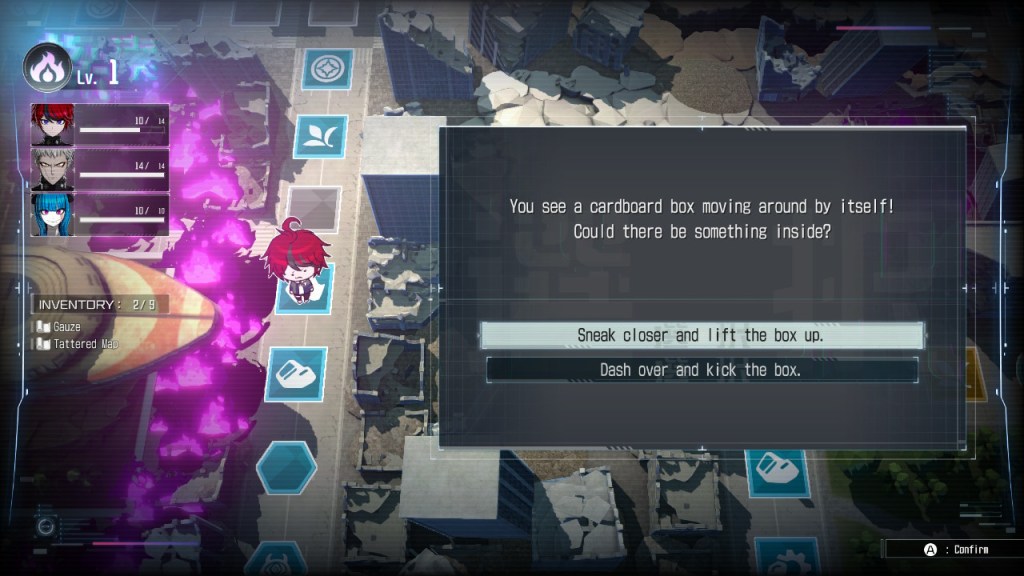
In the back half of the demo, you’ll get to venture outside the school, exploring the surrounding wasteland. I wasn’t sure how this was going to be presented, but let me tell you this; I did not have board game style world exploration on my bingo card for this game. You’ll explore the world by using randomly distributed numbered cards to explore, and landing on different tiles offers the opportunity to collect items and fight enemies. There are plenty of traps as well, so you’ll surely take some damage along the way if you’re not careful. Your life is maintained from battle to battle in these scenarios, so exploring a lot will whittle you down if you’re not careful.
Real quick before we conclude, I’d like to talk about the particulars of the Switch version. It’s no secret that the Switch can get the short end of the stick on a lot of multiplatform releases when it comes to performance, but I’m actually really impressed with their work on The Hundred Line’s Switch port. While I regret to inform you that I am not Digital Foundry, to my eye the game appears to run at the Switch’ full native resolution in both docked and handheld mode, with a surprisingly good adherence to what appears to be a 30FPS cap. With quick load times and surprisingly high quality pre-rendered cutscenes in tow, the game is a looker even on Switch, and it’s very clear that a lot of work went into getting it just right.

While Master Detective Archives: Rain Code (which was about unraveling murder mysteries) is well-described as being a (the?) successor to Danganronpa, The Hundred Line somehow manages to feel even more like a successor while doing something completely different. While Rain Code mostly matches Danganronpa in terms of gameplay concepts, actually running around in 2D environments and talking to cardboard cutout characters in The Hundred Line has even more of a Danganronpa feel, for my money. The Hundred Line is Danganronpa, but it is also, crucially, very much its own thing. It’s a fast paced TRPG, a little board game, and a punchy story (so far), all in one.

Any fan of Danganronpa would be remiss to skip this game for the presentation and storytelling style they know they already love. Any fan of TRPGs would miss out on the freshest take on the genre since 2018’s Into the Breach. Anyone who likes both elements will be missing out on their latest hyperfixation. To loop back to my opening sentence, no matter what you do, just don’t let The Hundred Line pass you by. It feels like a truly special game, and I felt so overwhelmed by its quality that I truly needed to let you all know, too.
tl;dr: A blindingly sharp TRPG coupled with the best Danganronpa-successor vibes that have ever existed. Any fan of either should not let the demo pass them by.


 「RISINGSUPERBLOG」
Leave a reply to madsinzero Cancel reply