Publisher: Square Enix
Developer: Alim
Release Date: October 28th, 2021
Version played: Nintendo Switch

This article is the first of a three-part series on the Voice of Cards titles.
Stay tuned for parts two and three!
Like many Yoko Taro fans, the announcement of a small card-based RPG off the heels of NieR: Automata caught me somewhat off guard. I’m a big proponent of devs getting to do whatever the heck they want though, so I welcomed it with open arms. Also like many Yoko Taro fans, I dutifully added Voice of Cards to my wishlist and let it sit until it gathered digital dust. Posers, the lot of us!

Over the following two years, Voice of Cards would grow into a small trilogy of standalone games, which I would continue to vocally support and not buy for some reason. Time? Money? A lack of glowing user response? Probably all of the above! I recently realized that the whole trilogy plus DLC was going on sale at half price often enough, and that it had been that way for a while with no sign of a deeper discount, so I took the plunge. At around $43 pre-tax dollars (Canadian, of course) you end up getting each game for $14-ish dollars, which is a great discount from their eye-watering individual $40 price tags (with no DLC included). The set makes for a great deal over buying the games individually, but are they all actually worth the price of entry? I don’t know! I haven’t finished them all yet! Why are you asking me?
Actually, though, since you’re asking, I did finish the first game recently! Let me talk about that one, at least. And thanks for asking, by the way!

At first glance, Voice of Cards: The Isle Dragon Roars appears to be a card game, or at least card-based in some way. I’d like to clear that up by clarifying that in no way is the core gameplay of The Isle Dragon Roars actually a card game. These are very straight laced RPGs, through and through. No decks, hands, or otherwise card game-y mechanics in sight at all. There is a mini game you can play that’s undoubtedly a card game (I’ll talk about it a bit later), but it’s not necessary to even play it a single time if you’re not inclined.
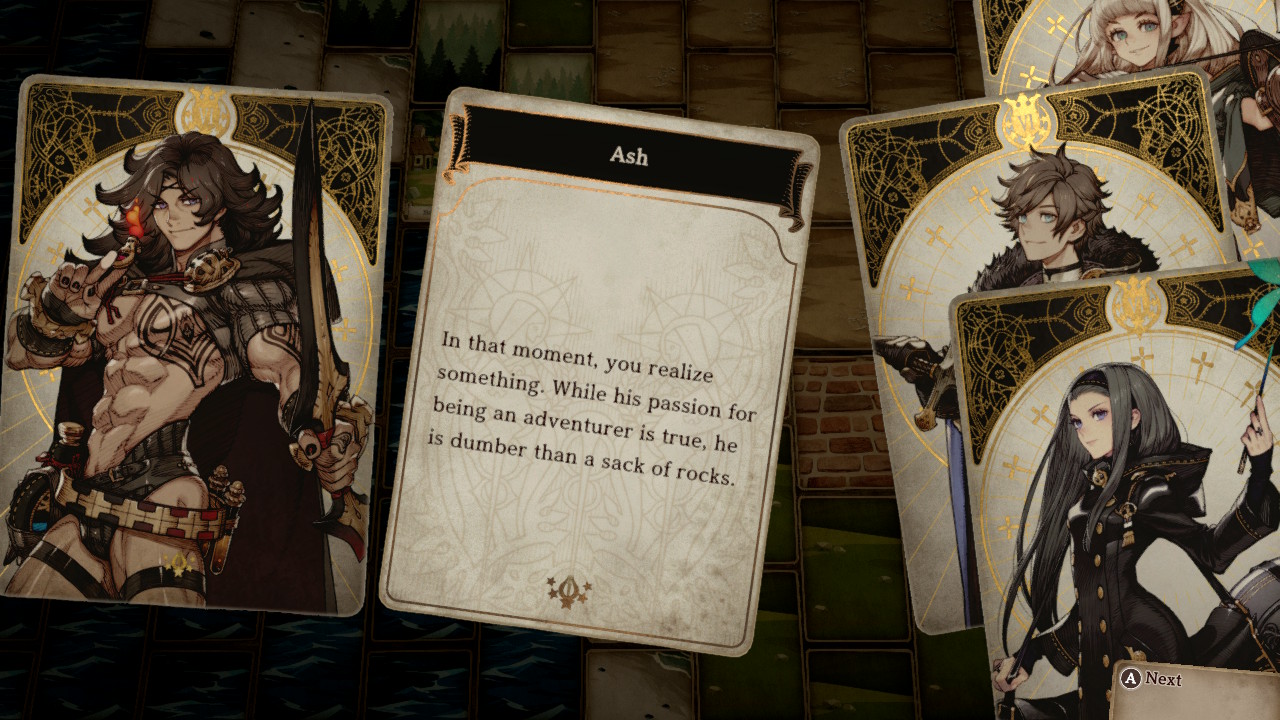
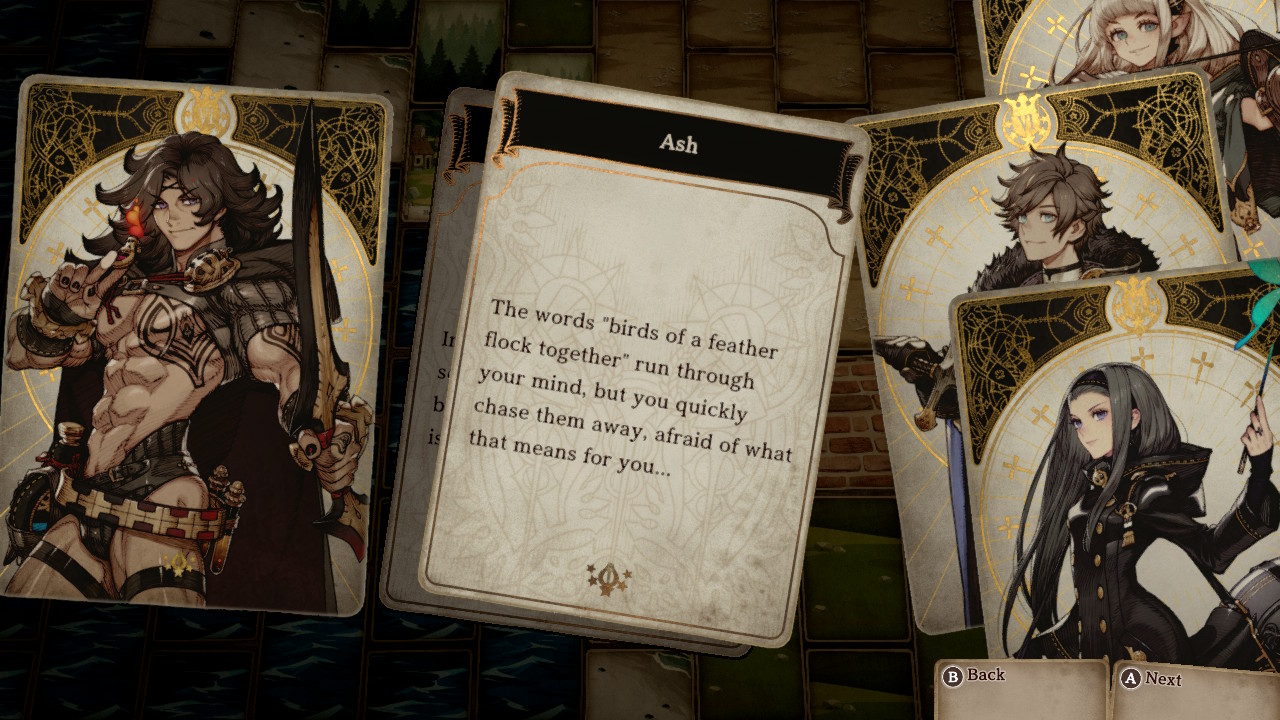
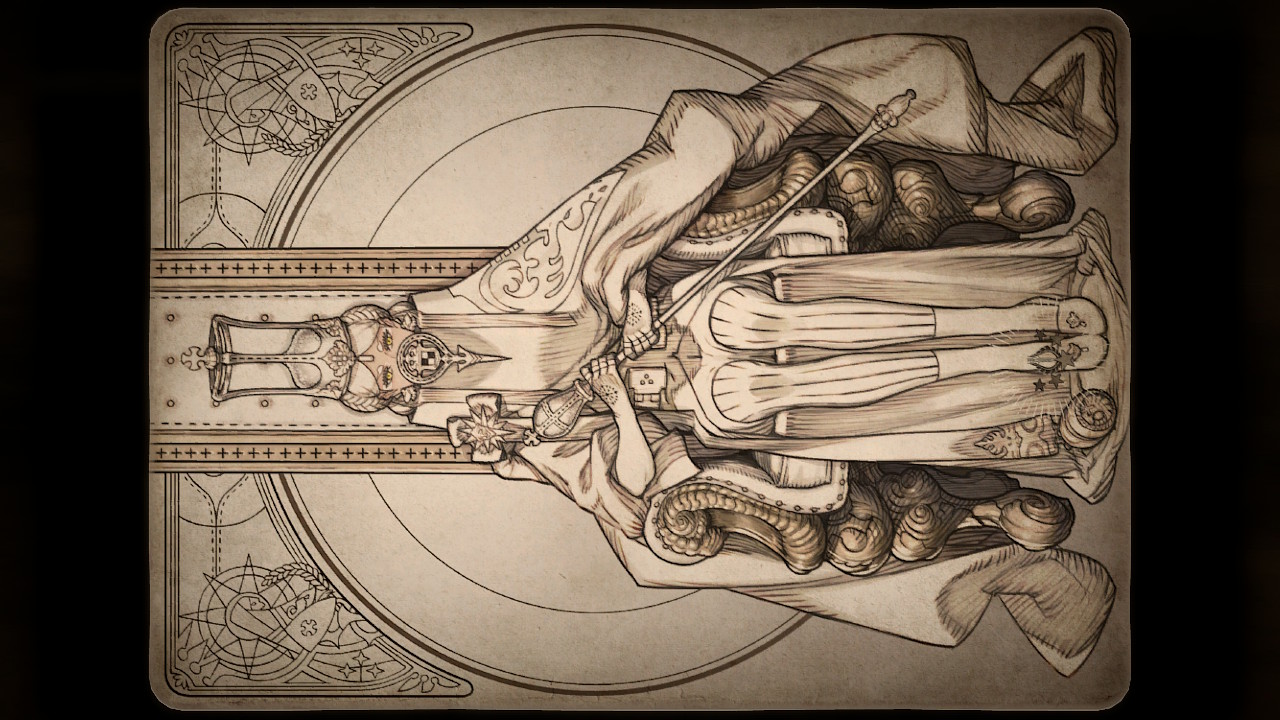
Despite the fact that the card game presentation is nothing more than an interesting aesthetic take, I must compliment it nonetheless. Shit looks good. From the stage maps, organized like a retro RPG’s tiles, to the combat scenes set up to look like a card game duel (which coincidentally looks an awful lot like a JRPG, now that I think about it) the game looks brilliant. The whole game takes place on a table, cards are used to decide the narrative choices you make, dice are rolled for any element of chance, and your player piece moves with your input. Even if the gameplay has very little to actually do with cards, there’s a strong commitment to the look, and the art team nailed it. To continue heaping the praise on them, I really love how well the cards are animated in combat and certain cutscenes. Character cards leap and spin convincingly according to your chosen commands with surprisingly nice VFX lending to splashy impacts. As I played through the game, I was quite surprised how many animations there were and how lively things could sometimes get, even if they’re all just variations on sliding cards about.
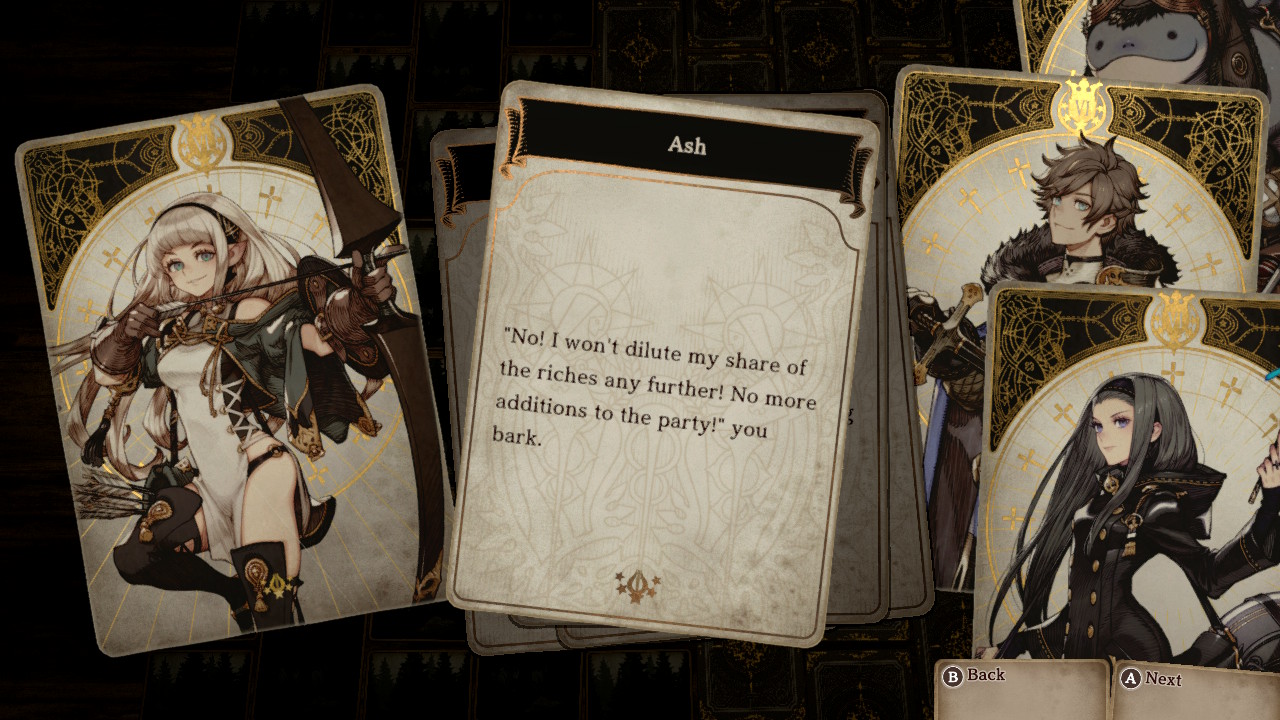
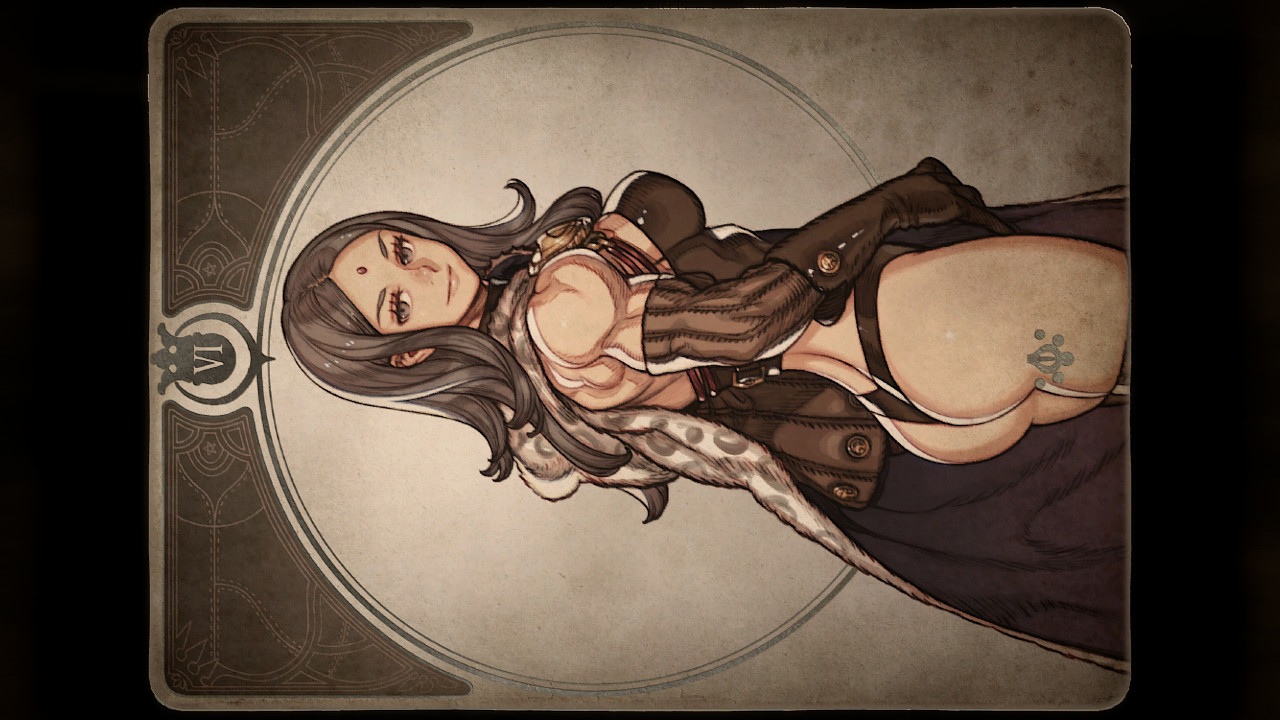
Longtime Yoko Taro and Mistwalker collaborator Kimihiko Fujisaka returns on character and monster design, delivering both a cast of characters who wouldn’t look remotely out of place in a Drakengard title, and a cast of monsters who nail the “standard fantasy RPG“ look (slimes, goblins, orcs, dryads and so on). Seeing all the new designs as they came up was a real high point of the game, and they keep delivering even as you hit the end of the game. The 14-track OST, composed by Keiichi Okabe and his fellows at MONACA doesn’t quuuuite live up to the NieR titles, but the high quality you’d expect is undeniably present.
I think that aside from the story, that’s where my gushing praise ends on this one. Don’t get me wrong, the game isn’t bad (I was certainly entertained through the ten hour runtime), but when it comes to actually playing the game rather than just taking in the sights and sounds, it often struggles to excel. Let’s start with the combat.
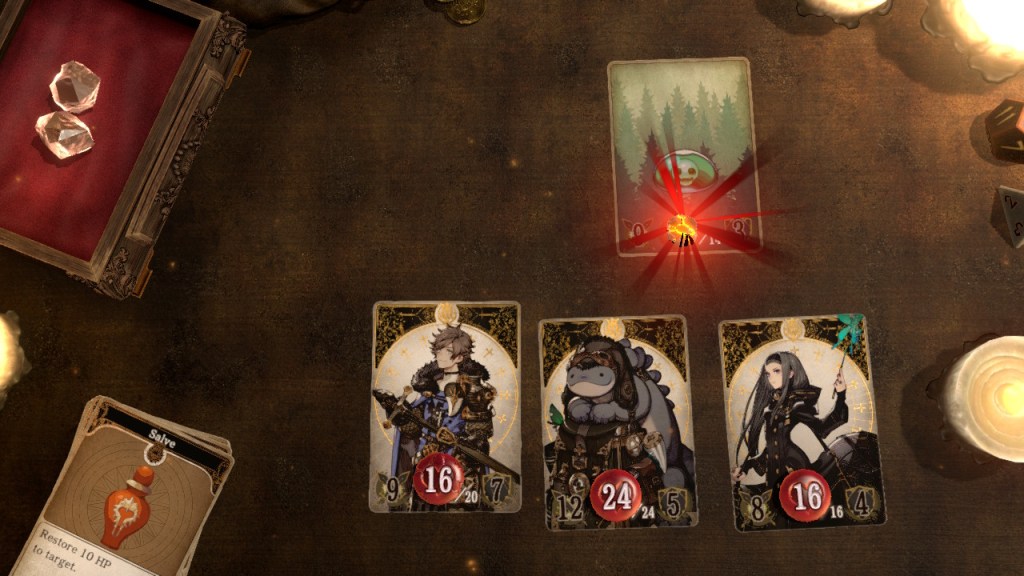
If you’ve played any “traditional” JRPG before, you’ve played this before. I’m not sure the game has any really unique mechanics going on at all, and it doesn’t do much that’s novel with the ideas it didn’t invent, either. The most interesting mechanic is probably your shared combat currency, gems (think of it like MP). You begin every battle with zero gems, and every time a character’s turn starts you get one more gem (up to a maximum of ten). There are items and a skill you can use to get more gems, but by and large you’ll be charging one per turn as your main method. Besides the most basic of commands, you need to spend gems to perform battle actions. Rationing your use of gems between characters and across turns works well and feels well balanced through to the end of the game. Gems are a high point mechanically, and they do a lot to carry the battle system.
Each character can equip four skills at a time, and all combat participants take their turns in order of their speed stat. Damage is calculated based on your attack minus your opponent’s defence, and elemental strengths and weaknesses are in play. You’ve got a few buffs and status ailments you can apply, and that’s it. It’s a battle system that delivers what feels like just above the bare minimum and survives off the gem system’s resource management. The random encounter rate is rather high, so depending on your patience with random battles and willingness to engage with a frankly only-just-adequate battle system, you may end up bouncing off the game well before the credits roll.
Difficulty is sadly largely nonexistent. You could potentially take an early death towards the beginning while you’re coming to grips with the battle system and don’t have many resources, but by and large you’ll coast through the game. Status ailments are easy to inflict and fun to use, but an early go-to skill with a 50:50 chance of freezing enemies trivializes a lot of combat by skipping their turns. Unlike some RPGs, you can inflict status ailments on bosses, so you’ll find poison remaining an indispensable ally for even the biggest bads. With money plentiful through the whole experience, I kept the main party well-geared and breezed through the entire game up until the finale. The last chapter or two provides a small but welcome difficulty spike, and the last boss can actually put up a fight. Though, to give credit where it’s due, the game does actually have a postgame super boss who is legitimately tough. I only game over-ed once across the whole game, and it was this superboss who did it. I only barely managed to eke out a win on the second try with some party optimizations and a bit of luck, thankfully.

Although your party grows to a crew of five by the end, I found myself sticking with three specific characters quite early on. The protagonist wields the first healing abilities you get, and his move set is rounded out nicely in the late game by two extremely powerful attacks. Your party’s “black mage” character is a bit of a glass cannon early on, but her damage, ailment access, and elemental attack range are second to none. Rounding out my party was an archer archetype character with incredibly strong single target attacks, access to poison, and light group healing. The other two characters felt more like tank/defender/monk roles, with less interesting attack options and access to more healing and buffs. I was a bit bummed to bench those two so permanently, but I really never felt the need to use them. At times where I pulled them off the bench in an effort to discover their worth, I always found them underwhelming or unexciting to use. Maybe that speaks more to my wants in an RPG character, though! Character locked combat trials would have been a very welcome feature, as it never felt like I really needed to use either of my benchwarmers in any particular situation. In a game with such a small cast, I was surprised those two didn’t provide more clear hard counters to certain enemy types, and I feel like my ease in breezing through most everything without them is pretty indicative of their weak sense of combat mechanical purpose.
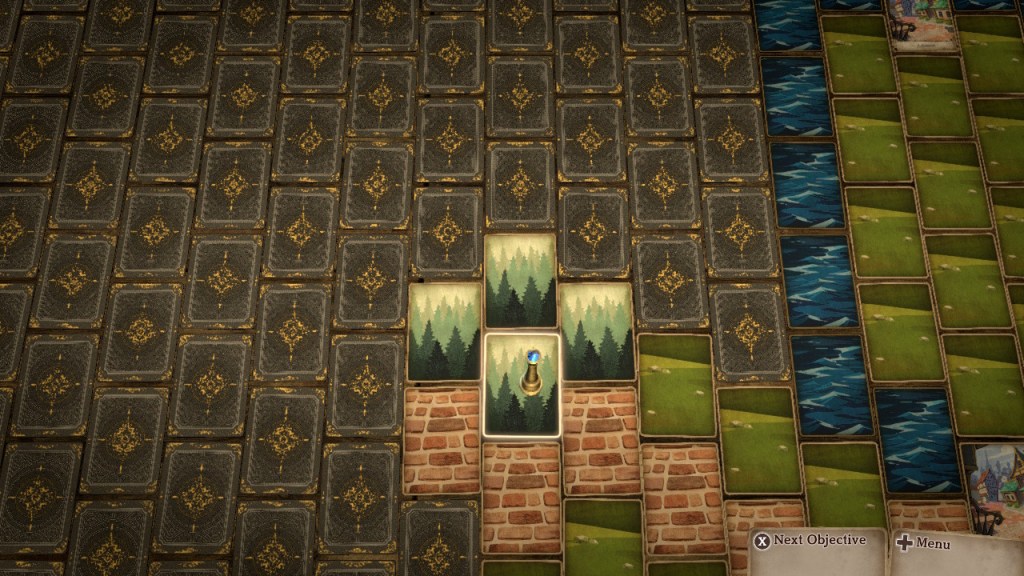
Exploring the world can be fun, with a fog of war system in place for the friendliest of towns and the most hostile of dungeons. Seeing every map through doesn’t take terribly long, and the world maps have a handful of repeated side activities with small rewards, so I think this worked out pretty well. Seeing every map edge-to-edge and finishing the game (plus postgame) superboss took me about 10 and a half hours, for reference. I feel like completing some Xenoblade series maps fully can take about five to ten hours on their own, so the compressed world map size was quite welcome. I do find it amusing that for world exploration, a “less is more” approach really worked for me despite that being my main critique of the game’s combat.
What I found a bit less welcome was the compressed feeling of the dungeon maps. To be blunt, they’re too small and too plain from start to finish. Dungeons will often have one single gimmick (if any at all) and never mix in any others for more than a single room, if at all. For example, the first time you encounter a floor-based damage trap (spikes) is literally the very last dungeon, and that final dungeon is largely defined by having spikes and not much more. There’s a tower you’ll explore that plays with falling down into lower floors, but the maps are so small that it’s not really that interesting. Dungeons largely underdeliver, and are comparable in design to decades-old titles that underwhelmed in their era as well, though the boss encounters are usually compelling enough in this game at least.
A handy tool the game offers is the jump feature. Players can pan the camera using the right stick and pick any tile they’ve explored to jump to at any time. This means you can explore a dungeon room tile by tile and hop back to the hallway without having to walk back over. You can also use this in towns to hop between stores, or on the world map to basically fast travel at any time. If you’re playing on Switch or mobile, you can also use the touchscreen for this, which feels very natural. Actually, I’d recommend the handheld Switch experience on the whole, as having both button access and touch screen access lets you mix and match for both precision button navigation and faster map movement and menu navigation. Since the game was made with mobile in mind from the start, everything in the game works with the touch screen, and in my eyes that’s a huge plus for the playability of the Switch version.
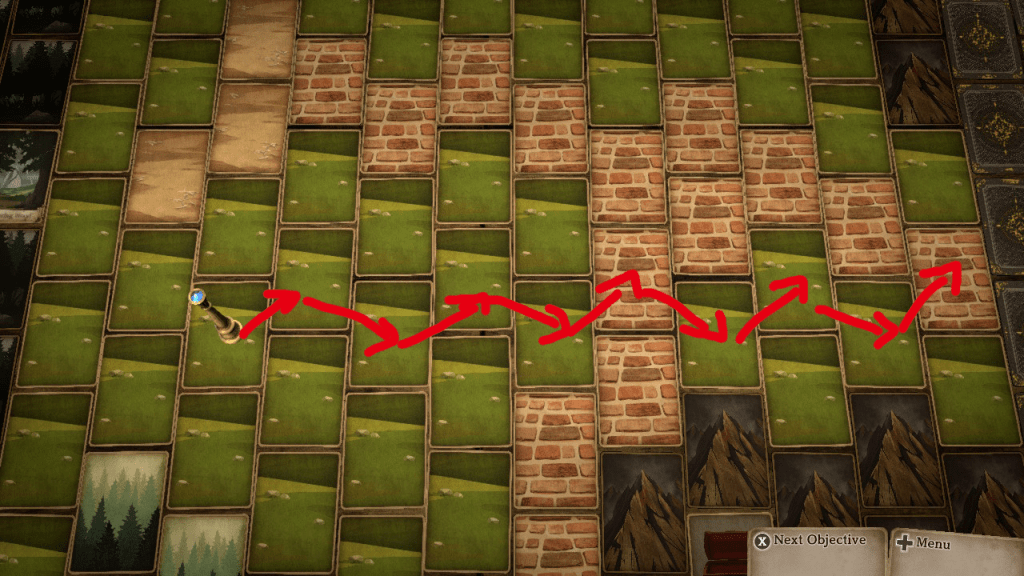
One complaint I have related to world map navigation is that button controls don’t always behave exactly as you’d expect. With touch, you tap a space and move to it, and with the stick you can tilt it in the direction of the card you’d like to move to, but buttons on the world map expose a little design oddity. Dungeons and towns are laid out strictly as grids, which work perfectly in all cases, but the world maps are designed with every other column offset. This lends the world maps an undeniably different feel that I like, but when using buttons to move horizontally, you end up doing a little up/down zig-zag across the map, and you won’t always move exactly where you want if you don’t remember if your last move was a zig or a zag (which can happen often if you mix in touch screen movement, or after events). I don’t think it’s a huge deal, but I promise that you’ll notice it multiple times as you play through the game if you’re a d-pad kind of person. It’s a little quirk you’ll just have to deal with. Have a look at this picture if you’re having a hard time imagining what I’m describing.
While exploring the world is mostly decent, the game has a slight rewards problem in regards to money. Through the game, unless you’re gearing up benched characters fully as well, you’ll be comically overfunded on your quest. There is one single truly expensive item in the game, but even so, I was able to buy it late on my adventure. By the time the credits rolled I had collected all that money back and more through normal play, with nothing more that I really needed to buy. Given how linear weapon and armor progression is and how much cash you have on hand, I think having a way to dump gold into upgrading or customizing your gear’s stats would have been a very welcome addition.

Besides items and cash, side quests and activities can sometimes reward you with a mysterious set of numbered cards as you play through the game (all ten of which are necessary to see the game’s best ending). It’s kind of fun to stumble into these cards, and it’s not hard to get all of them casually (I had them all by the end of the game without having to look anything up), but they do lack a real connection to the game’s story in regards to how exactly they’re able to get you another ending. It’s no big deal, though. We’ve all spent many hours maxing out gear in Drakengard and NieR to see real endings for equally mysterious reasons, so hey. It’s whatever. There are four endings, by the way! Unlike NieR, and Drakengard, though, there’s a clear “most good ending”, so I didn’t feel compelled to finish the last boss fight three additional times to see the worse ones. With spoiler-y context I’m sure many wouldn’t disagree with my choice to skip three whole endings.
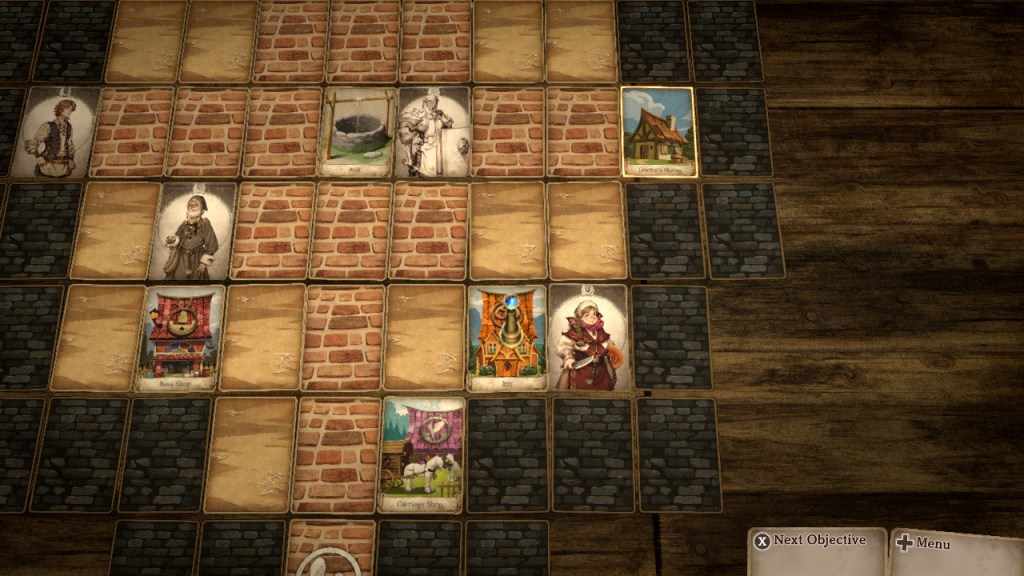
Towns can be a bit dull and overly homogenized in terms of interactions. Though they mostly each have their place in the story, like many RPGs the shops repeat exactly in a way that’s somewhat repetitive, and usable items are confusingly split between the potion selling Apothecary and the combat item selling Item Shop. The game actually has cool narrative ideas surrounding an incredibly powerful faction called the Ivory Order, who supply and control the world’s potions and healing items. I found it odd that the Apothecary was run by some lady instead of the Ivory Order, which would have played into the story well and supported a mechanical shop separation between healing potions and other items.
Speaking of which, the last major area I have left to talk about is the story and writing. Man… they really wrote some good stuff! The broad strokes are standard fare- there’s a dragon terrorizing the land and your party of mismatched mercenaries are after its head for financial and personal reasons. This standard start is enriched somewhat by the omnipresent narrator who reads out the character’s actions like a diligent dungeon master, and who addresses you directly as the controller of their fates. Where the game really succeeds narratively is in the minutiae, the solid plot development, and a surprisingly good last act twist.

From the start, there’s a secondary main party of characters working for the Ivory Order who are also after the dragon. Early in the game you’ll be shown just how powerful these guys are, and after a very pathetic fight against them, you’ll get your ass beat and are promptly kicked to the curb. Throughout the game you’ll encounter these characters as you follow in their tracks, and you even get chances to lob pathetic insults at them, though they never stoop to your level. It’s fun to be the party of losers, and although the runtime is short on the whole, the writers packed in some pretty pathetic and funny things you can have your party’s leader say and do. Though the choices up until the finale don’t have any real bearing on the story’s progression, it’s pretty amusing,and it had me laughing at times. The characters all have nice little reveals as you play through, and the game’s big reveal actually means a lot for the cast and the game’s world, accompanied by a suitably cool delayed title card drop. I’m hopeful that the follow-up games can land the story as well as this one did.
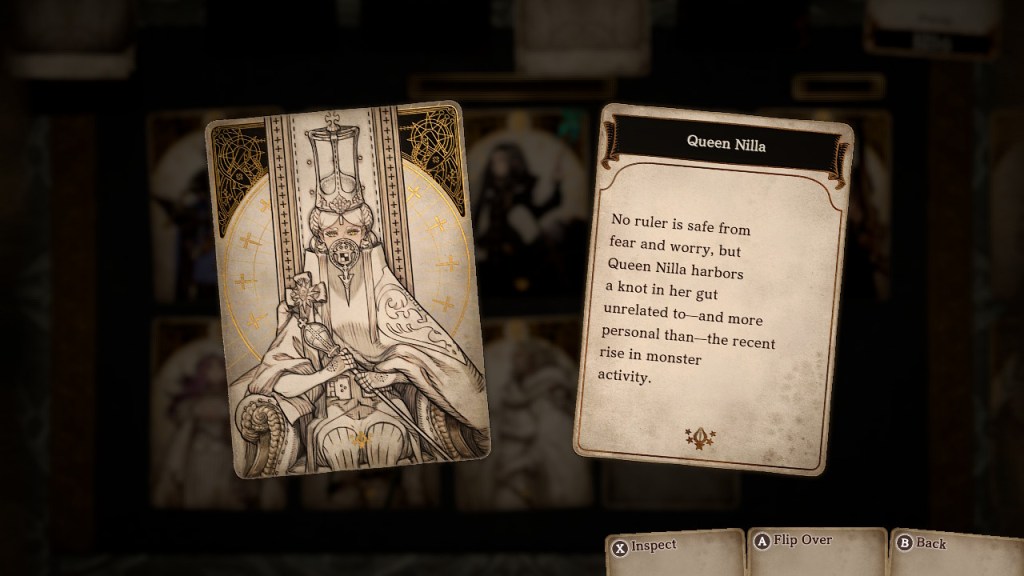
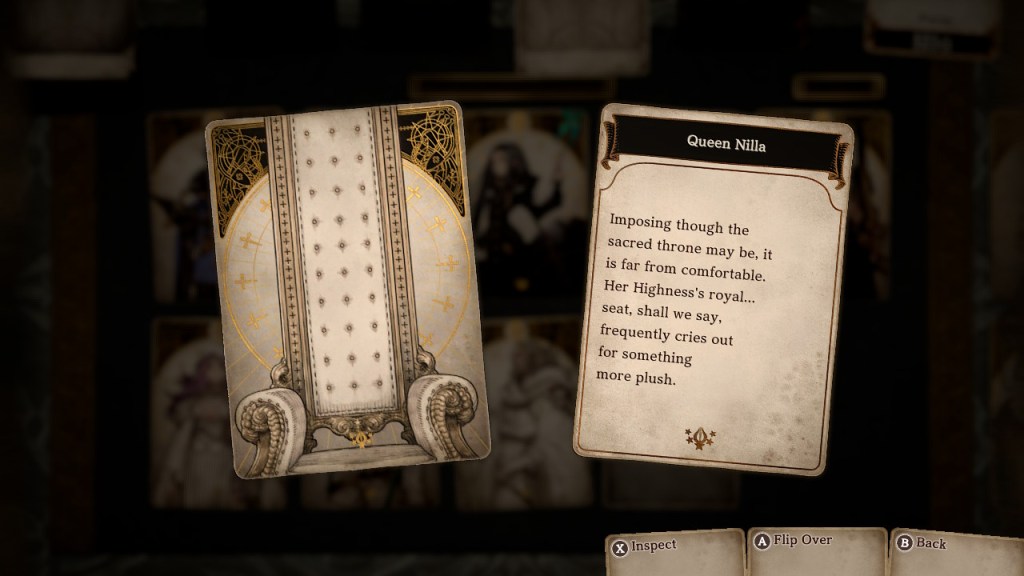
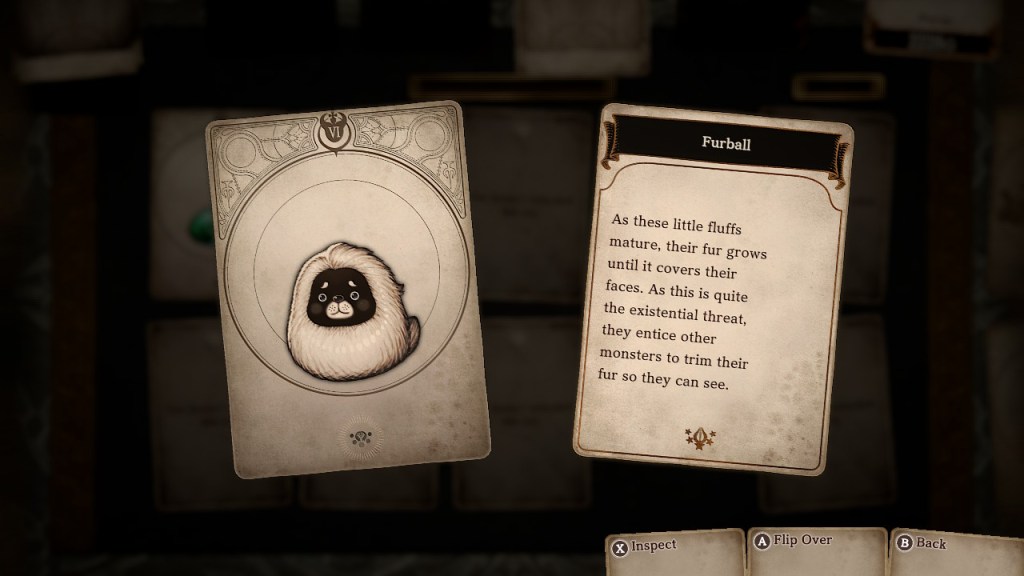
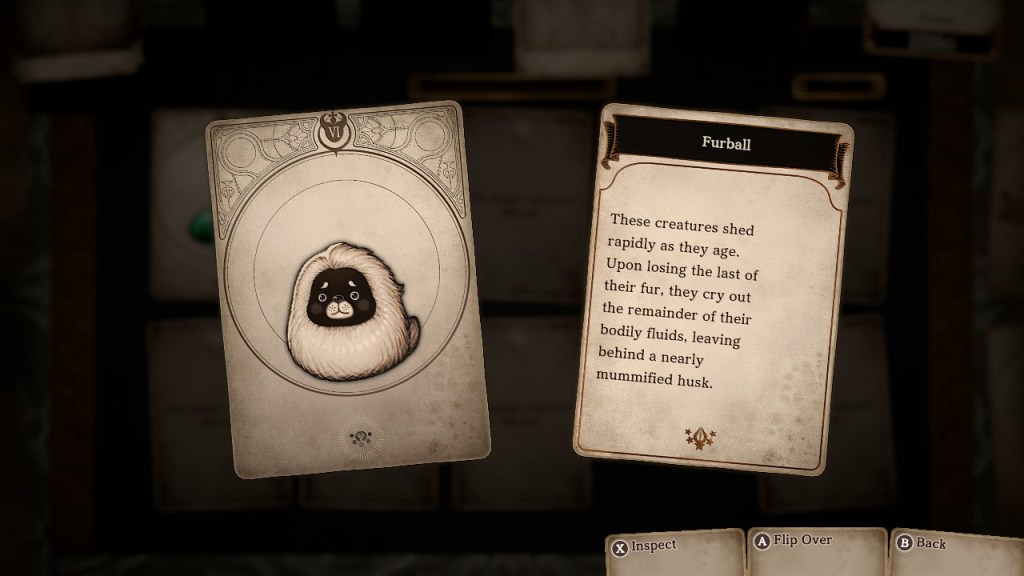
Another fun narrative touch is your database of monsters and characters. They each have a charismatic little narrative blurb, followed by an unlockable “flipside” blurb you’ll obtain later on. These are comparable to weapon stories in the NieR and Drakengard series, though as two part pieces they have to work harder to cram their stories in. Nonetheless, they succeed in delivering a lot of dark and funny snippets, and I found myself wanting to read them as soon as I’d unlocked them. Sadly, the menus underwhelm a little here, with no markers indicating unread/new cards and no way to jump directly to a card after the game informs you of a narrative unlock. Using the touch screen in menus expedites this process greatly, as without it the slow scrolling with buttons is downright tedious. Actually, that really extends to all menus in the game; gear, story, and so on. Use the darn touch screen, I promise you won’t regret it.
Before I wrap up, I have a few random thoughts and complaints. The first act of the game is really heavy handed with tutorials in a way that borders on unnecessary, and the game’s ever-present objective system can sometimes hand you goals so plainly obvious that it sort of feels like a waste of time to stop me just to introduce the next one. An example of this is a character telling you to visit a dungeon, then the UI going through a slow objective update process, reiterating that visiting the dungeon is your goal, then once you enter the dungeon the game stops you again to tell you that your goal is now to explore the dungeon. I was a bit annoyed with how frequently it interrupted gameplay.
I touched on it briefly before, but the game can be quite slow on its default speed setting. Thankfully, the developers had the opportunity to patch in a “High Speed” mode that accelerates everything in the game, which I fully recommend activating (it can also be toggled by holding the Y button while exploring a map). The game has a little warning message accompanying the setting, informing you that it could cause strange behaviour. Having played through 95% of the game with it, I think I only noticed one thing, which is that for some attacks that have longer animations with multiple sound effects, the sound effects can fall behind the animation speed and play a bit out of sync. I’m glad they had this warning, but thankfully the negative effects really aren’t that bad in my opinion. I have to imagine the warning only exists because the game wasn’t originally made with this in mind and they perhaps found a fringe issue or two, but I’m just glad they did it. Hopefully the little sound effect issue I noticed is cleaned up in the sequels.
There’s another option in the settings that allows you to toggle shadows (between “Display All” and “Turn Some Off”), which mentions that performance may improve if you “Turn Some Off”. I haven’t played the unpatched version of this game, and I played the vast majority of the time in handheld mode, but I didn’t really feel there was much of a need. I played mostly with them on, and had them off for the last few hours, and it felt about the same. There are framerate imperfections, for sure, but nothing I’d even remotely call bad. The game generally looks very sharp on Switch as well, which is nice.
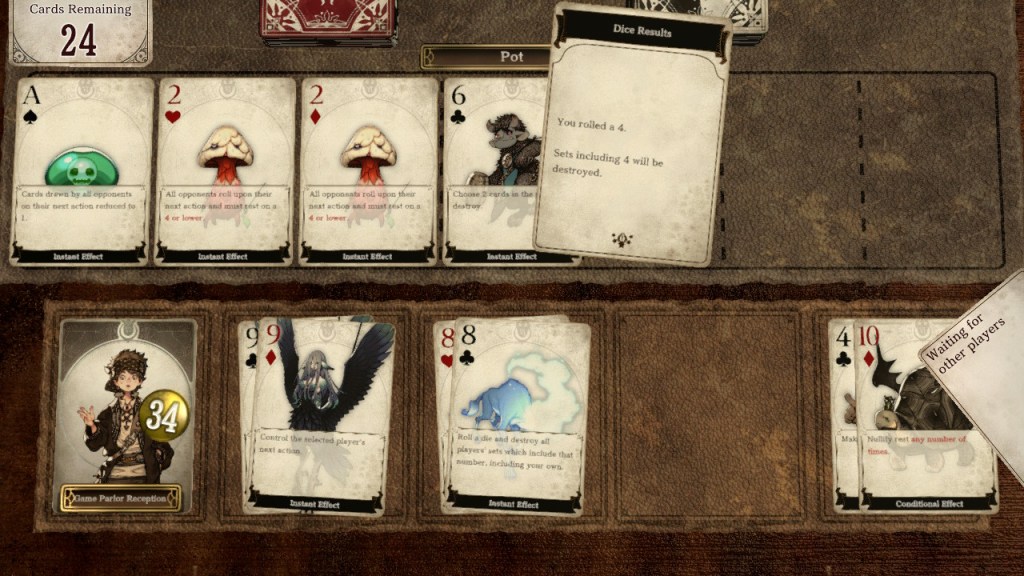


There’s also the actual card game side activity I alluded to back at the beginning of this piece. By visiting a town’s Game Parlor, you can play a unique little card game against the computer. It’s a cute little game where you assemble scored sets of numbered cards, with some abilities thrown into the mix depending on the card you combine and draw. You can unlock cosmetics for the game through victory, as well. Though it’s not a bad mode, I didn’t find the AI opponents or cosmetic rewards all that compelling, unfortunately, so I only played a few rounds. Had each town featured a unique opponent or two with a unique clear reward related to the RPG gameplay, I think they could have made it more compelling. Interestingly enough, though, you can actually play it with local friends (or enemies) straight from the title screen after you’ve unlocked it. It’s a legitimately cool little value add that they could have skimped on, so kudos to that. A multiplayer mode is not a trivial thing to implement.
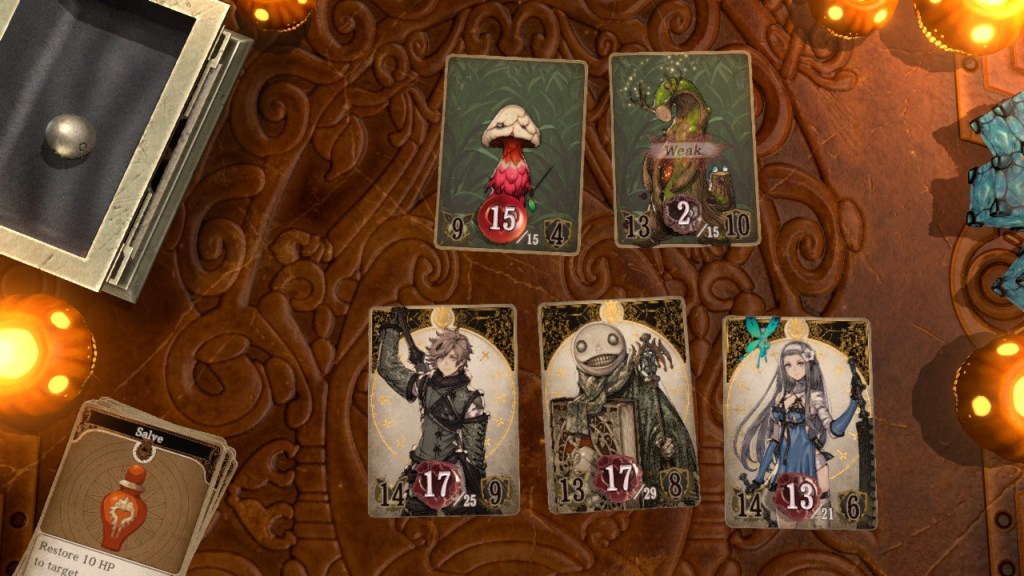
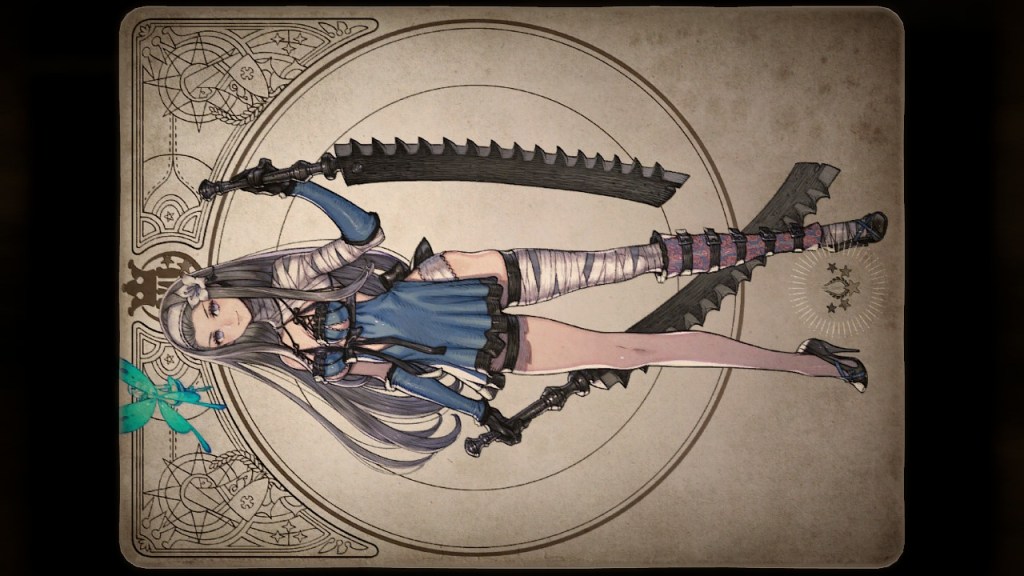
Finally, the game’s DLC. Across all three titles, the DLC is purely cosmetic, offering pixel art replacement cards for the main characters (though not the later party members), but the star of the show is the NieR DLC. Each of the Voice of Cards games feature a NieR DLC set, offering cosmetics for every customization option and a replacement soundtrack for the whole game. Each Voice of Cards game is assigned a different NieR game, and The Isle Dragon Roars got NieR: Replicant. With the DLC activated, main cast gets costumed up appropriately and the nostalgic tunes play through the whole game. Sadly I’m a bit mixed on this DLC. While the new art is brilliant and the music is as amazing as you remember, I feel the NieR DLC is a bit… too much. It’s really well made and for some people I’m sure it’ll hit just right, but for me it felt like too much. Despite the costumes looking suitably tailored to the world, I couldn’t escape that my characters were fundamentally just cosplaying as other characters. The NieR music in particular, while extremely well implemented, is just overpowering in making the game not feel like Voice of Cards any more. Now it just feels like NieR. While some people will surely like having Emil face dice to roll and a Grimoire Weiss table to play on, I was surprisingly cool on it. It’s all very skippable if you don’t care too much and want to save a few bucks, in my opinion (Square Enix also sells a DLC-less set of all three games for about $33 when it’s on one of its frequent sales).
Voice of Cards: The Isle Dragon roars is sadly a very hard game for me to recommend. Though it excels graphically and has surprisingly compelling writing (especially towards the end), the game so frequently struggles to move beyond being only just above adequate for the most part. For any Yoko Taro diehards out there who just need to know what’s up, it’s not a bad time at all. For anyone looking for a good, short and cheap time, I’d sooner recommend games like Undertale, Dungeon Encounters, Franken (which is free and you should all play it), or Dragon Ruins. Undertale aside (which magically nails everything brilliantly), those games have tighter focuses and excel in their chosen fields. The Voice of Cards games are apparently all completely standalone, so maybe I’ll even find myself recommending you just jump ahead, too. Only time will tell. Onwards and upwards, maybe? I sure hope so.

tl;dr: A surprisingly well-executed story and brilliantly landed art style don’t end up being enough to make The Isle Dragon Roars into much more than an interesting curiosity.
This article is the first of a three-part series on the Voice of Cards titles.
Stay tuned for parts two and three!


 「RISINGSUPERBLOG」
Leave a comment