Foreword – A Day at the Nintendo Museum
When we sat down for lunch at the Nintendo Museum’s in-house burger restaurant, Hatena Burger, we met a fellow who… to put it politely… had opinions I strongly diagree with. Wearing a Mario hat, tanuki tail, and what I recall being a very bright Mario t-shirt, he quickly introduced himself and the lady across from him, who wore a matching Mario dress. He seemed glad to meet people he could comfortably assume out loud were also American (we aren’t), and he was eager to let us know that Universal Studios Japan’s Super Nintendo World was way better than the museum. It hadn’t really met his expectations, though he expressed that his burger was a bit of a saving grace.
Though they were on their way out after lunch, we had only really seen one section before taking an early break. We politely nodded along to his criticism, briefly reminding him we hadn’t properly seen the museum yet (nor Super Nintendo World). He didn’t seem to mind, though he did make sure to let us know that the museum was largely dull, and also that we’d have to reserve for Super Nintendo World soon if we wanted a chance to get in during our vacation in Japan (we live here). The guy seemed more interested in sharing his Nintendo fandom cred than hearing anything out of us.
We said a polite ”goodbye“, he followed with a “enjoy the rest of your trip” from him, leaving us to our lunch. We live here, by the way.
Long term followers may think this is out of character for me, but at this point I thought this dude was a bit of a clown. Rude, I know, but it wasn’t exactly a fun exchange, either. Still, he’d seen it all, and I’d only really been in the entrance and watched Nintendo’s recent Direct covering the facility. Maybe I ought to be more trusting, I remember thinking.
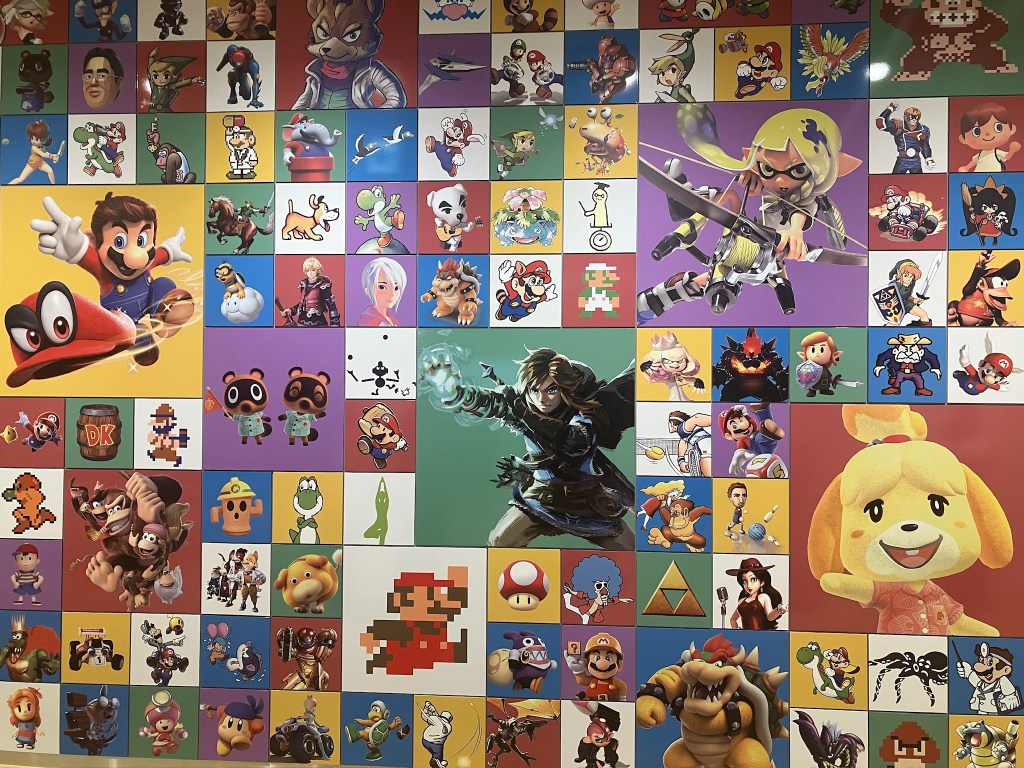
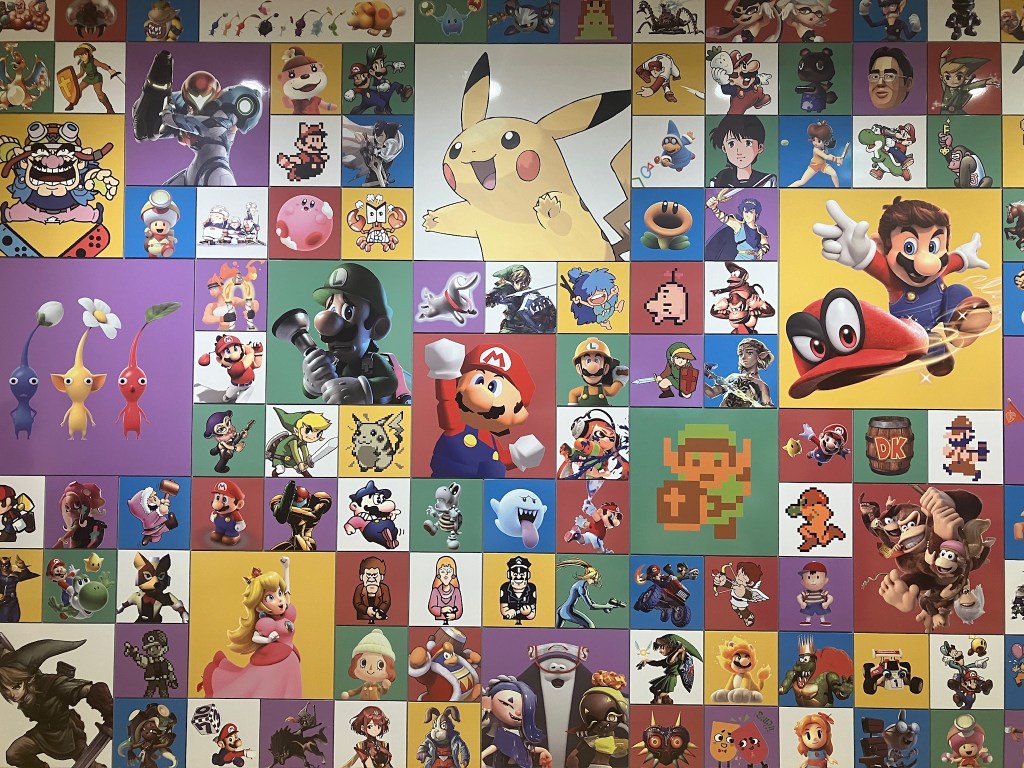
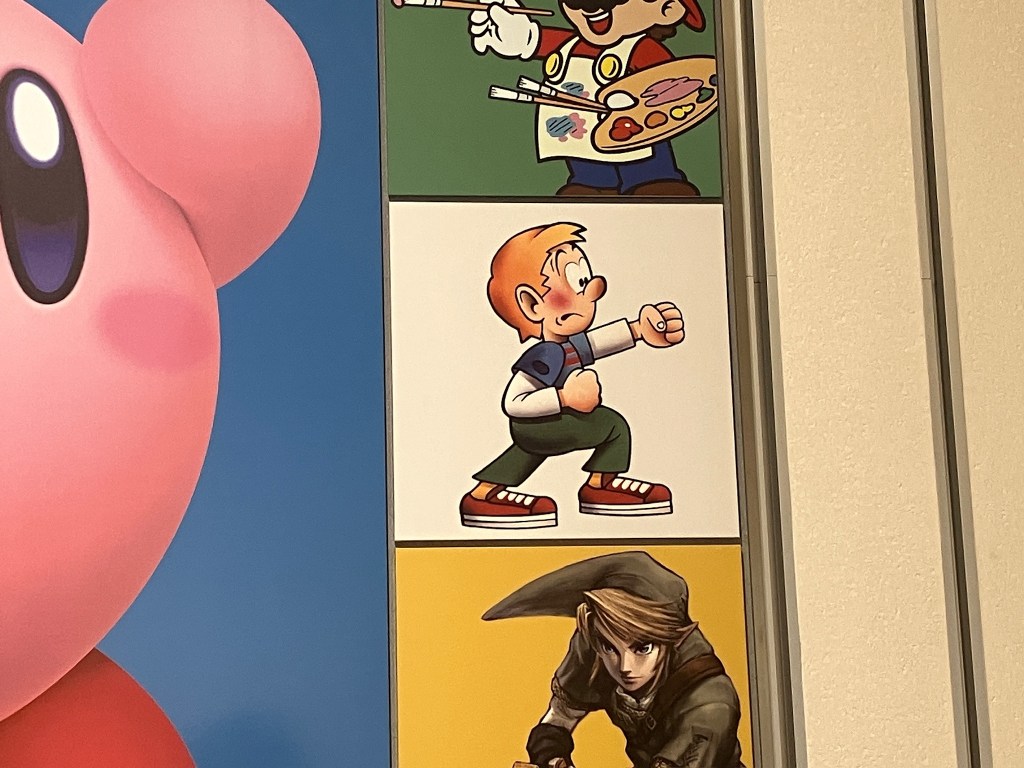
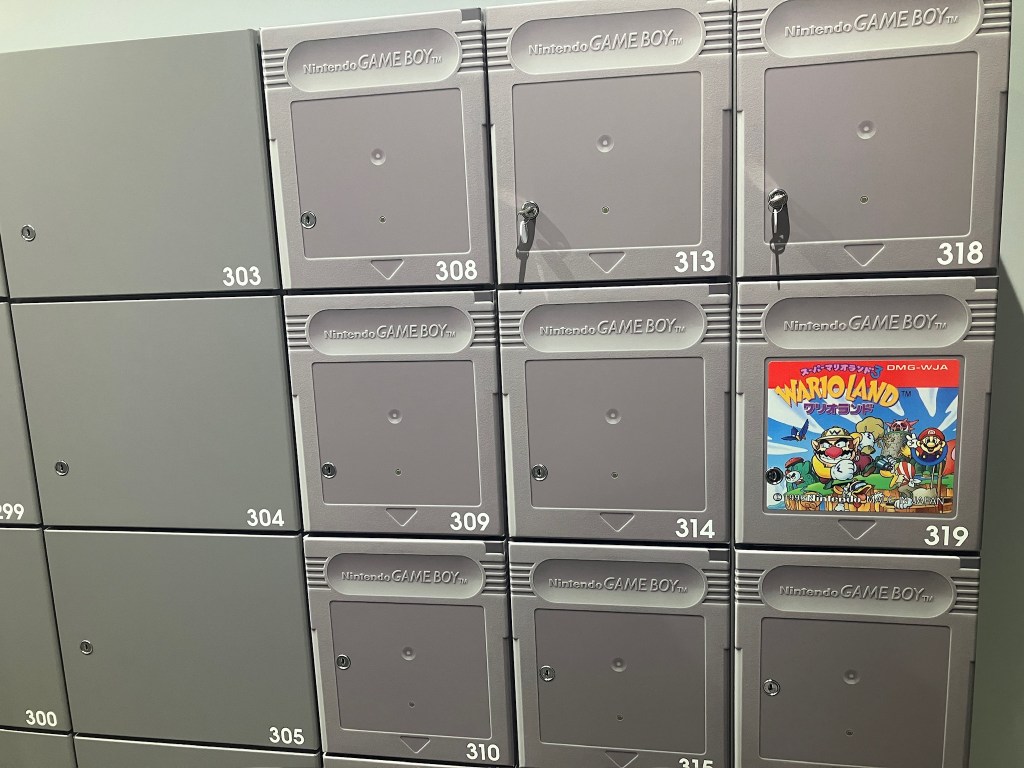
The Nintendo Museum is made up of four main areas. I don’t remember if they had names, so you’ll have to settle for my descriptors. Heading into the main exhibit hall, you’re greeted with an awesome mural displaying a real who’s who of Nintendo characters. Not just the latest and greatest, either! Urban Champion was there! Wario was there at least three times, even! Good stuff.
Immediately thereafter, you head into a dimly lit escalator chamber. It feels spacious, and mirrored walls give the escalator that cool endless mirror hall look. Lights pulse and flicker, synchronized with an unending sequence of boot sounds from many (most? All?) of Nintendo’s consoles. Sadly, pictures aren’t allowed in this area, so you’ll just have to imagine it. We went through it twice, and it was very cool both times.
Once you reach the top of the escalator, you reach the exhibit hall itself, and it’s packed. Though photos are also not allowed here, if you’re curious you can see a pretty great look at it starting at 0:54 in Nintendo’s own video. The video Nintendo shares shows what I’d approximate to be comfortably less than a tenth of the exhibit hall, so there was really a ton to dig into. The meat and potatoes here were the machine-specific displays circling the room. From NES to Switch, these displays covered all of Nintendo’s main console and handhelds (except for Virtual Boy, which is the only machine relegated to a smaller display elsewhere in the room).

The front of each display was fairly uniform, starting with some brief data on worldwide sales for the respective machine, then showing key games, then jumping into pretty exhaustive lists of all of the first-party software on the machine. These were sorted by initial release date, and each one had boxes for Japan, Europe, and North America where possible. The collection was missing a few boxes here and there for no discernible reason, which was slightly odd (and I’m not talking about rare titles, either), but ultimately not a real issue. Lastly they’d have all their single region-only titles shown off alongside a selection of highlight third-party titles. I was quite dismayed to see Buddy Mission Bond sitting along as the solitary one-region game in the Switch area. Though I have no illusions about whether the museum’s curators get to decide what gets localized or not, it was an amusingly depressing reminder that that game is probably still not happening in English. Darn.
A friend of mine offered a critique of this space that I don’t think is entirely unfair- there’s not a lot to be gleamed from these game lists outside of the raw data on display. If you don’t know broader context or understand trends from the period, it would probably be pretty uninformative. The back of the displays helps quite a bit though, explaining certain logical groups of games (as an example, there’s a large spread explaining the link cable on the Game Boy display, highlighting key software for it as well). I feel pretty confident that these back areas do a good enough job for each console that even a total layman would get a decent idea for the machine.
One thing I absolutely must mention is that the displays have rows of TVs above them, playing footage for key titles. Whoever built this part of the museum deserves massive props for implementing highly localized directional audio for each one- if you stand directly in front of a display, you can hear the sound super clearly, but even a foot away from it you can’t hear a thing. This allows for ten or more setups per console that don’t produce an overlapping cacophony of sound while you’re browsing. Super cool!
Along the walls of the room you’ll find a variety of displays covering more eclectic sets of Nintendo things. A large section for their pre-video game analog toys, a section for Game & Watch devices, sections showing the evolution of the question mark block, rhythm games on Nintendo consoles, and so forth. A Virtual Boy section had some dismantled Virtual Boy headsets built into the wall, where you could peer in and see a more modern display playing Virtual Boy footage on loop. Maybe not a 100% accurate hardware experience, but it’s more than enough and actually ends up looking better than what the games look like on real hardware. I was just glad they had it, given I’ve never been able to see a proper 3D-looking Virtual Boy Wario Land in action before. I really ought to install Red Viper on my 3DS one of these days…
The star of the miscellaneous displays is probably going to be the prototype section for most people, which had thirty to forty or so early models of controllers, consoles, and accessories. This included ones they’ve shown online in the past like the puzzling star shaped Wii controller prototype, the Circle Pad-equipped Wii U GamePad (which I had the pleasure of using a few times while working on Darksiders 2 at THQ Montreal), and myriad GameCube controllers. My favourite was undoubtedly one of the GameCube controllers that was visibly held together with sculpting putty. You rarely get to see that level of roughness in any of Nintendo’s works and seeing what I know to be one of the best controllers ever in such a shape really humanizes all the work their staff does. Behind the prototypes, you could also see a visible storage area with tons of miscellaneous Nintendo stuff packed into a corner. I can’t help but wonder if those are for a future exhibit, or if storage space really is at such a premium!
Before I move over to the next museum area, I have one extremely specific critique to make; there’s a small mistake in the game display section! In each of the console game display areas, they show each game’s Japanese, European, and North American boxes along with release date info and such. In the DS section, Elite Beat Agents is erroneously listed as the European and North American release for Osu! Tatakae! Ouendan! I still couldn’t take pictures, of course, but you can actually make it out in Nintendo’s own tour video (see this nightmarishly zoomed in picture below).
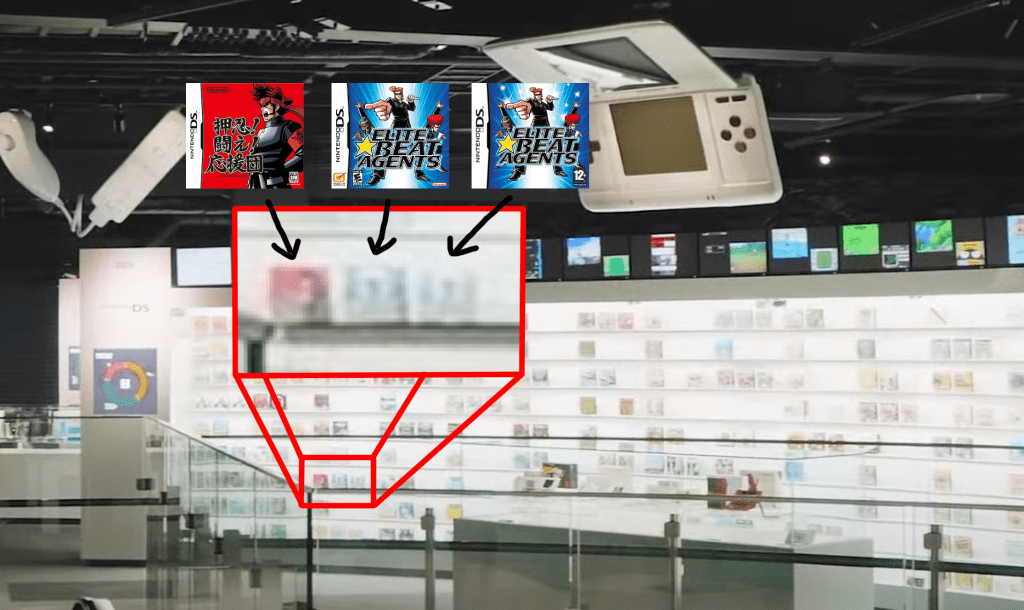
Obviously this isn’t a big complaint, but I did explain it to a staffer in the hopes that they’ll one day fix it. While I agree that EBA is “our version” of Ouendan, they’re really entirely different games in the same way than Ouendan 2 obviously isn’t just another version of them. I suspect this may have had a knock on effect in the rhythm game section, where both Ouendan titles are displayed alongside a little piece of Ouendan art. Perhaps the curators, thinking EBA was just the foreign version, opted to leave EBA out of the rhythm game area while including the other two? We may never know!
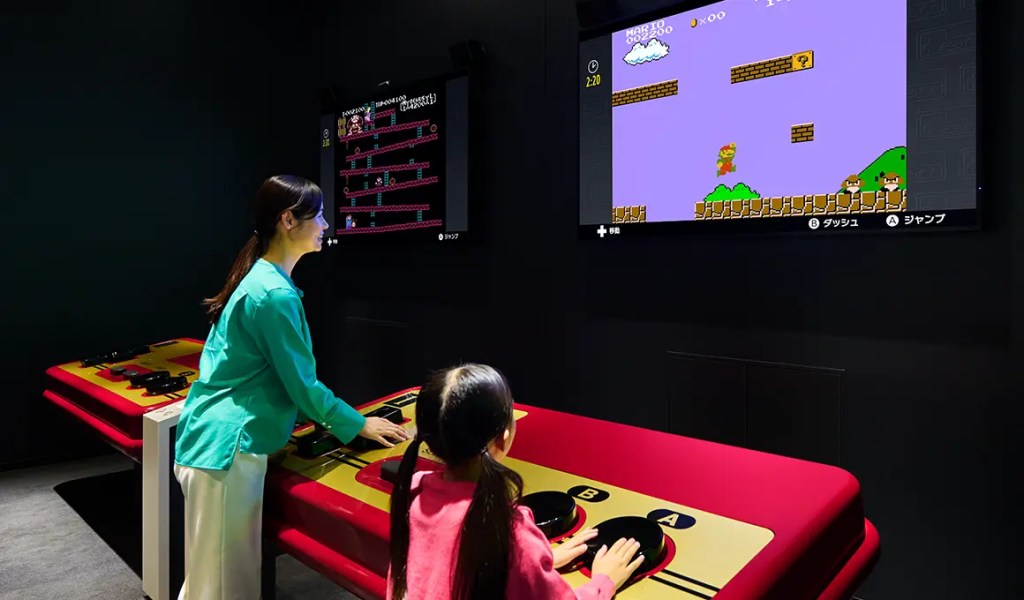
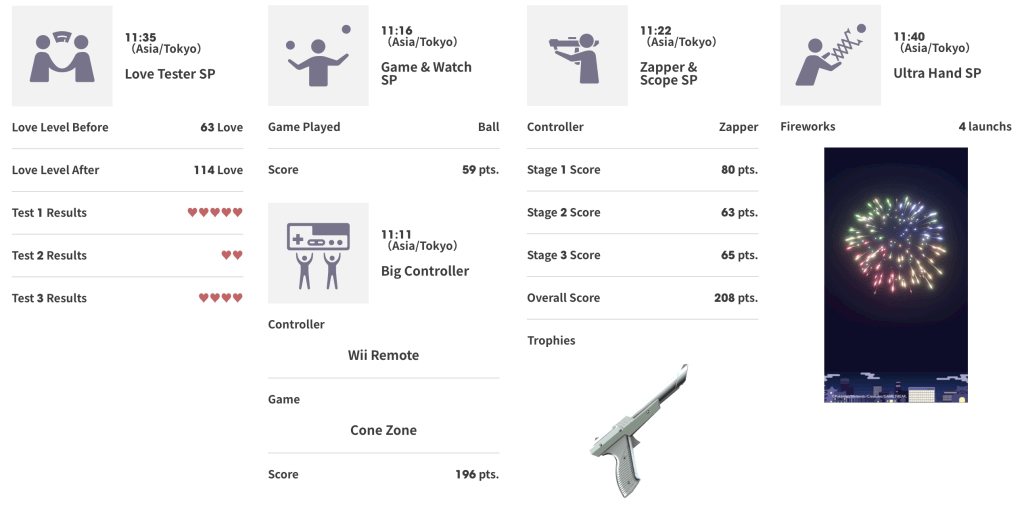
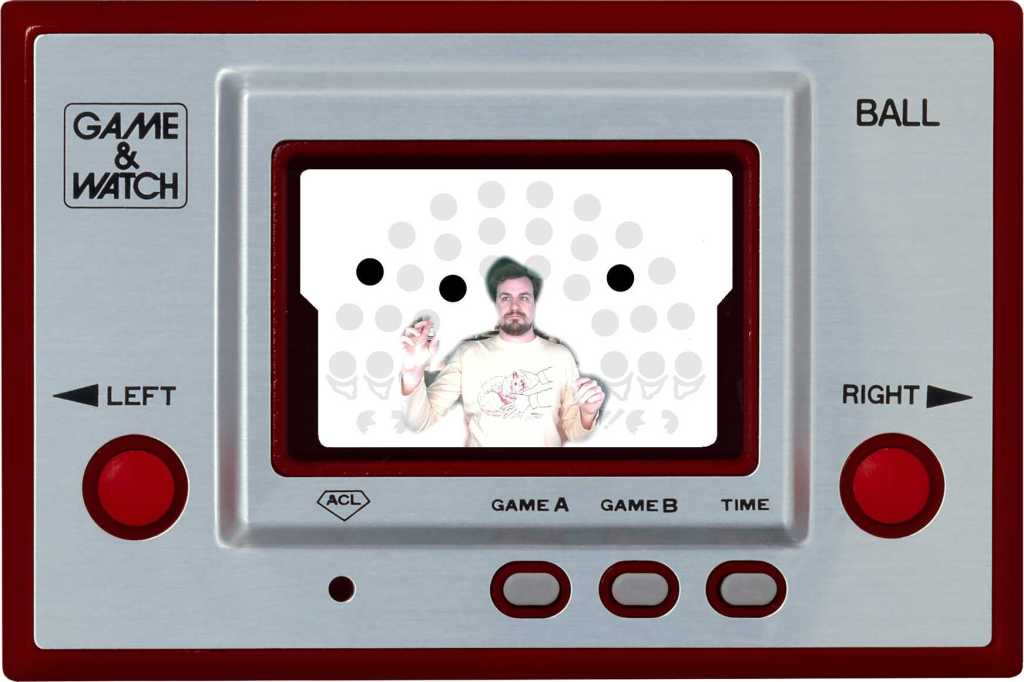
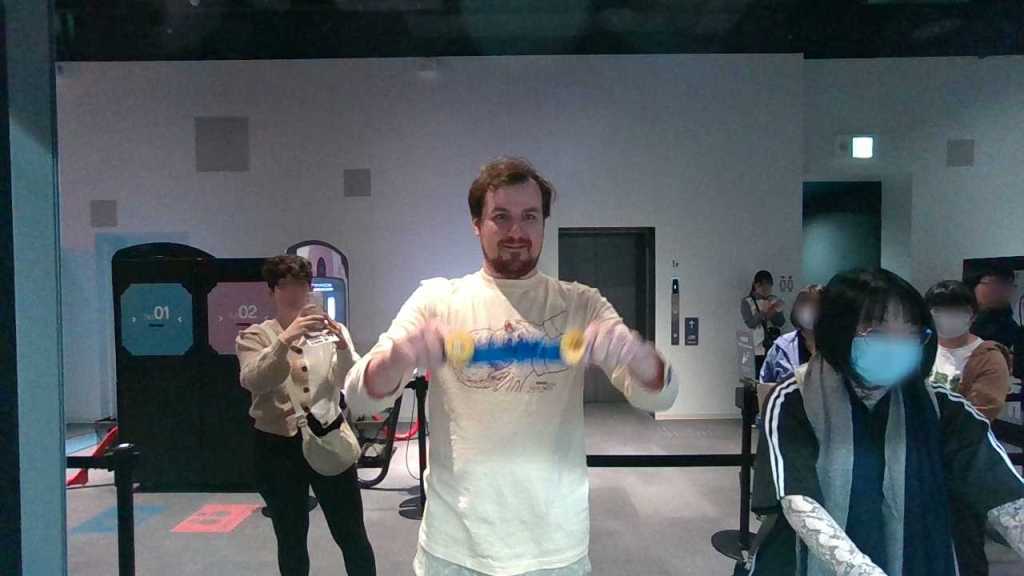
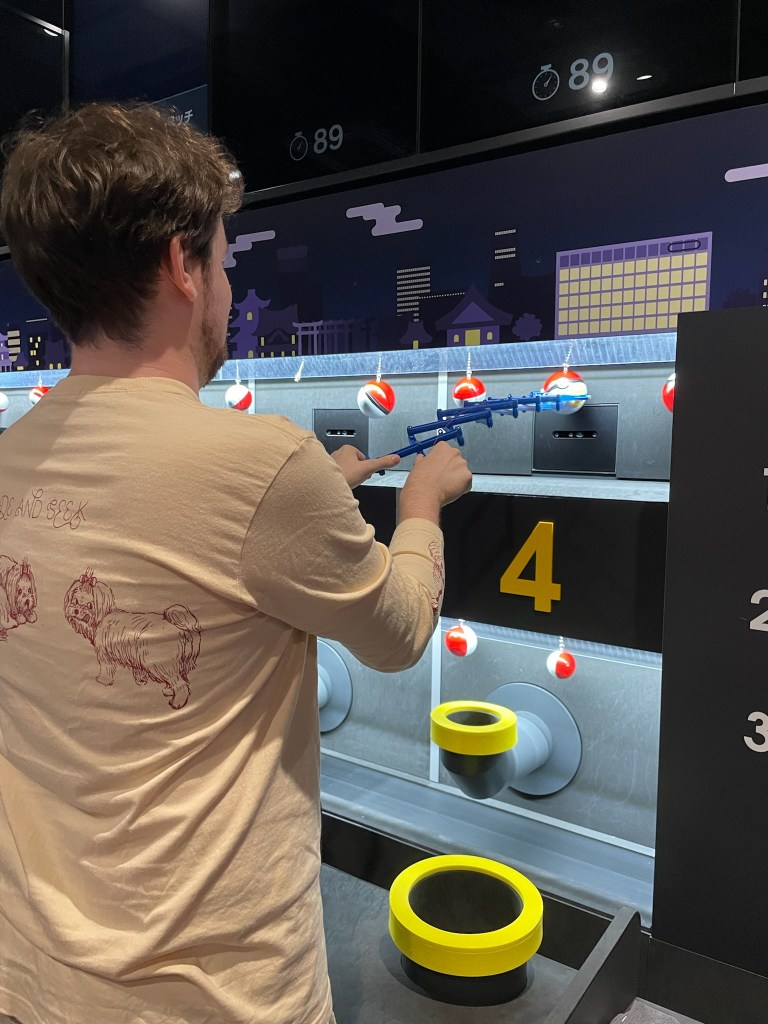
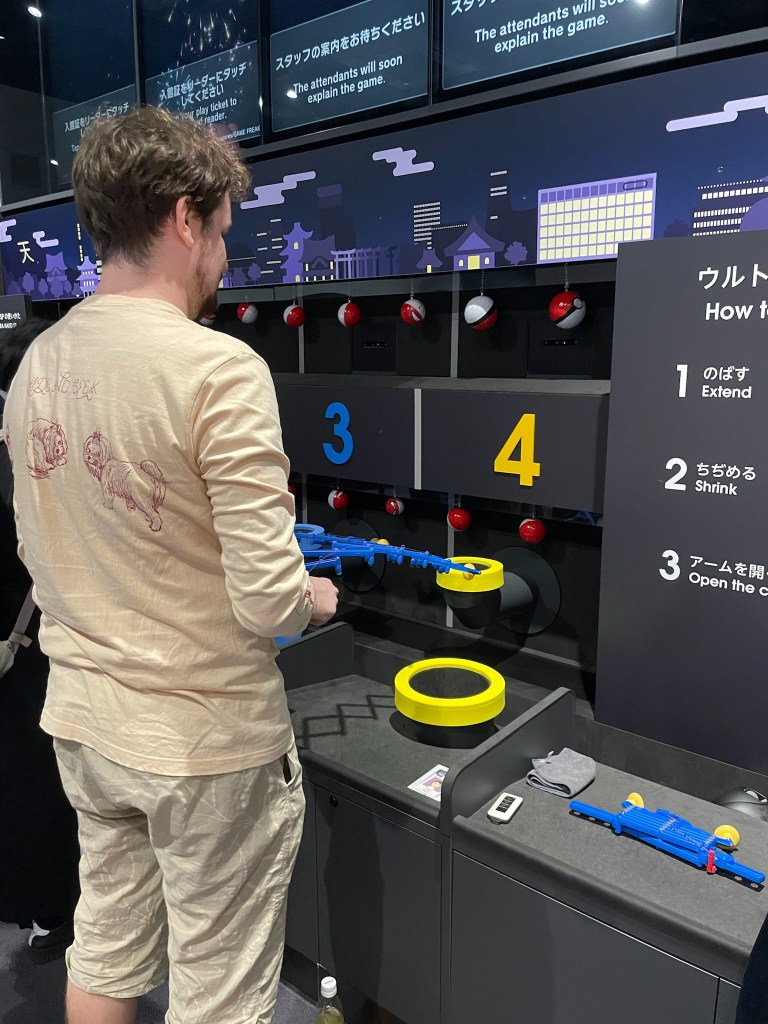
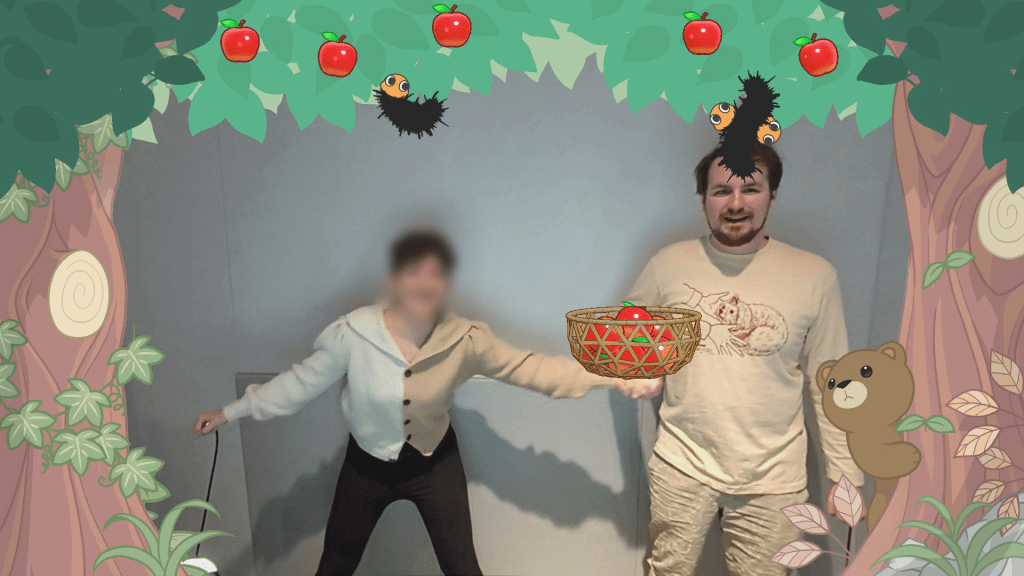
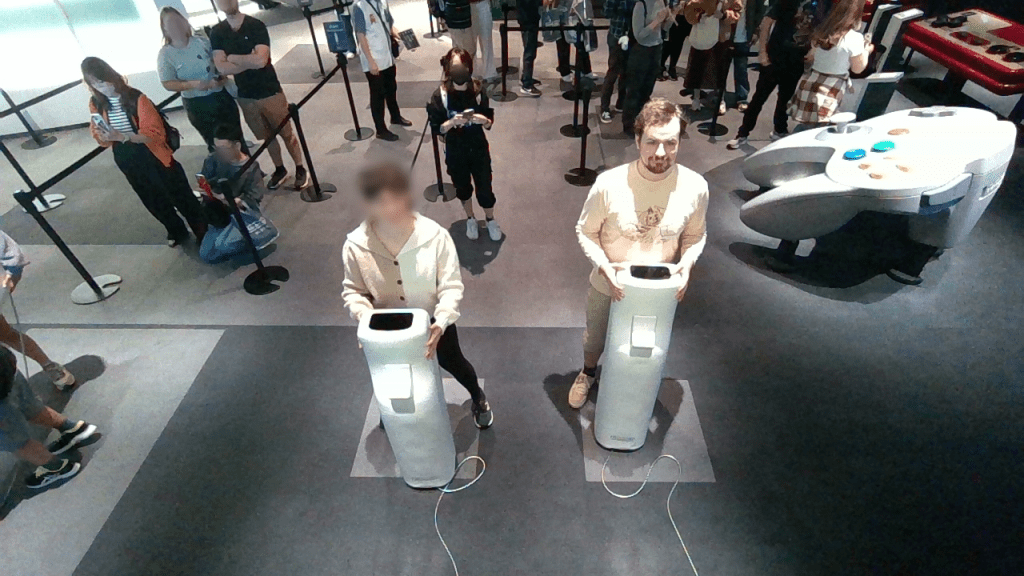
Downstairs from this display area is the main interactive display section. By scanning your museum pass, you can play a variety of things, from huge Game & Watch setups powered by your own silhouette, classic games with obnoxiously huge controllers, and so on. Though you have limited coins to spend on these attractions (presumably to prevent congestion), I was able to play Game & Watch SP (Ball), Zapper & Scope SP, Love Tester SP, Ultra Hand SP, and Big Controller SP (Wii Remote/Cone Zone). The games were fun, but mostly unremarkable aside from Zapper & Scope SP, which is arguably the main attraction on this floor. It’s a big competitive shooting gallery where you can use either an SNES Super Scope or NES Zapper to blast various Mario characters in a three round competition. I managed to score the second-place silver trophy, which is dope, but the bearded guy who took gold will haunt me forever. Zapper & Scope SP costs the most coins of any attraction by far, but if you have any interest in shooting galleries I do think it’s well worth it.
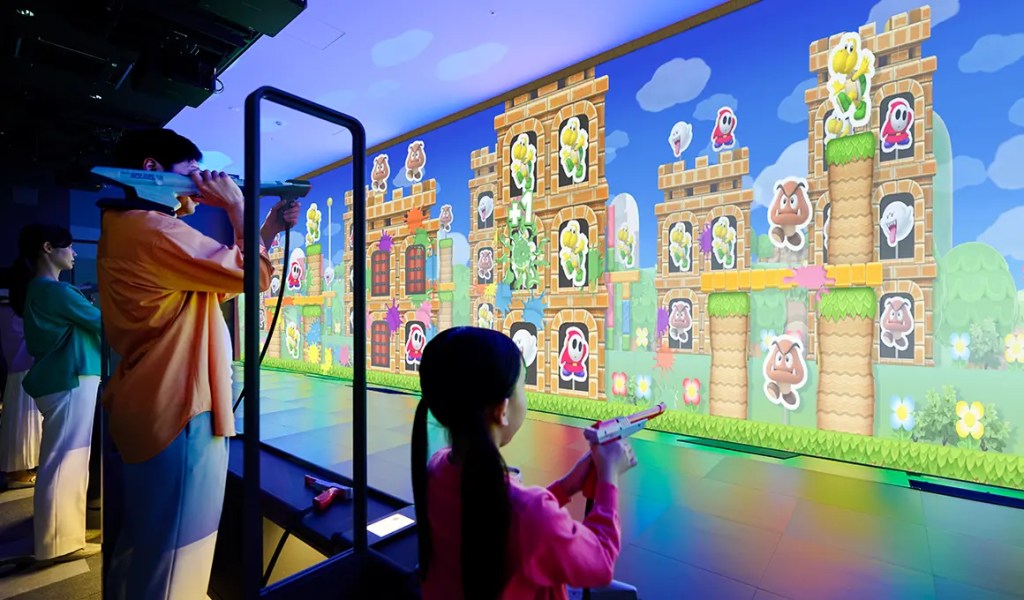
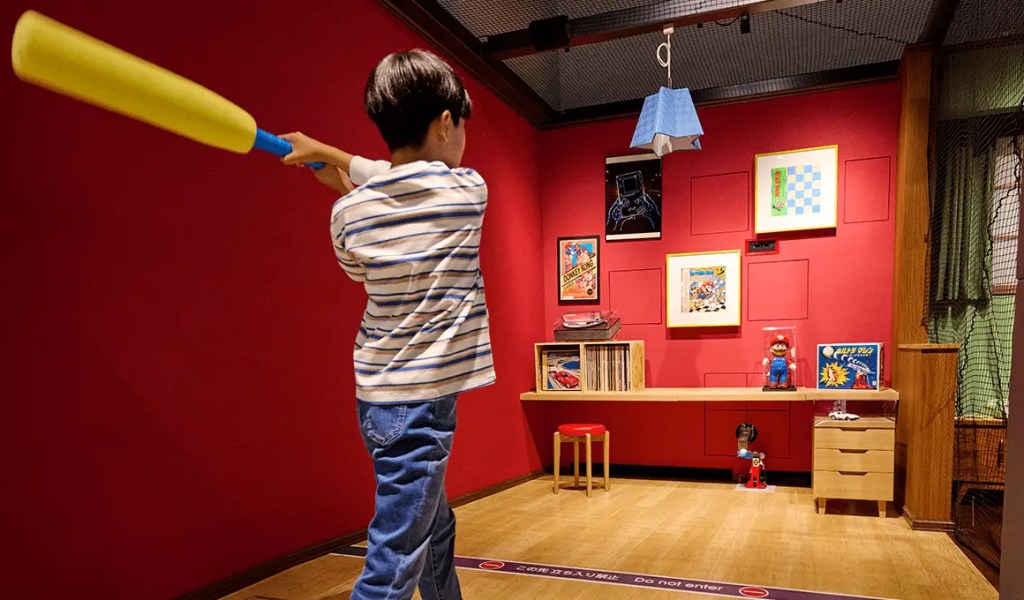
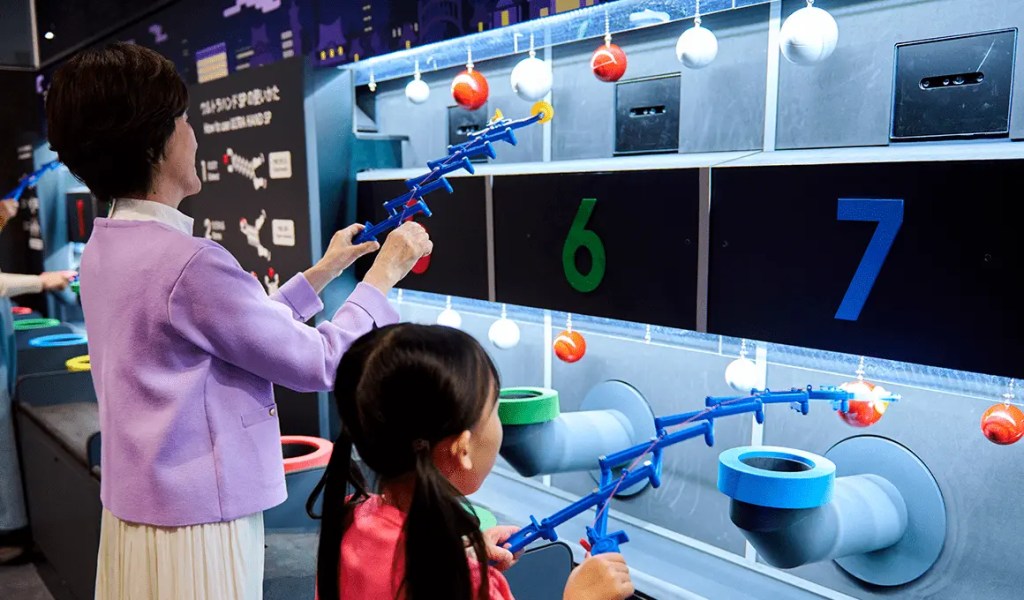

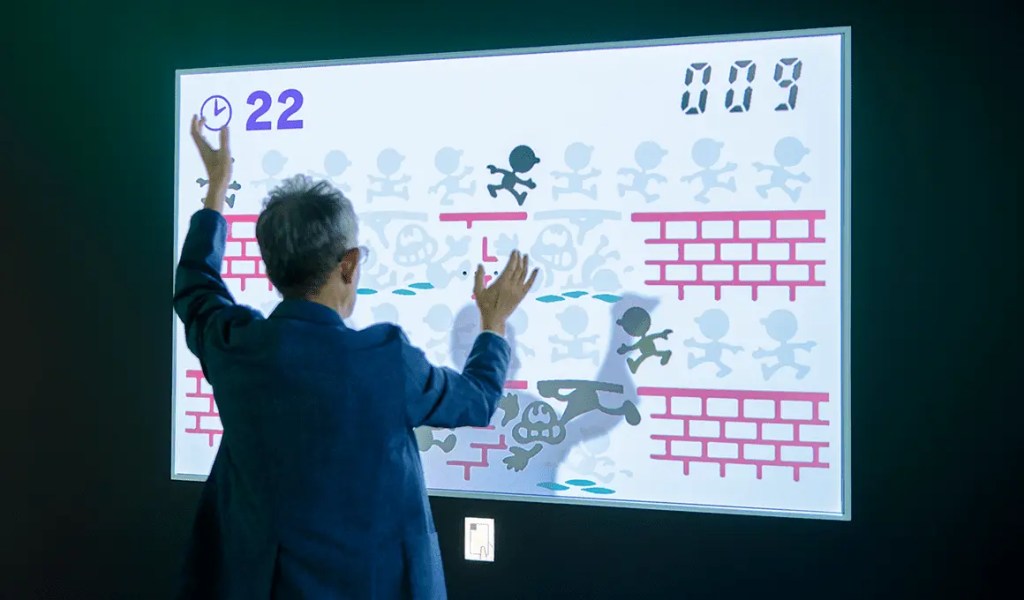
A very neat element of all these attractions is that they automatically log your scores and some accompanying photographs in your account page on the Nintendo Museum website. I’ll post mine here- feel free to share yours in the comments!
As a quick word of warning to any prospective visitors, the staff warned us that the attraction floor tends to get busy a few hours after opening, and they were dead-on. I’m very glad we jumped ahead to this floor from the start while queues were short and returned to the main display area afterwards, and I’d recommend the same path!

The last major attraction group are the two extra paid attractions, a 2,000 Yen hanafuda card painting session, and a 500 Yen hanafuda beginners play session (which naturally requires at least two players, so solo travellers may need a bit of luck or a staff member to play with them). As people who do art stuff, we all got a big kick out of the hanafuda painting session, and the trio of US travellers across from us were genuinely super nice to talk to while we worked on our cards through the hourlong session. If you have any inclination for the arts I’d recommend this one.
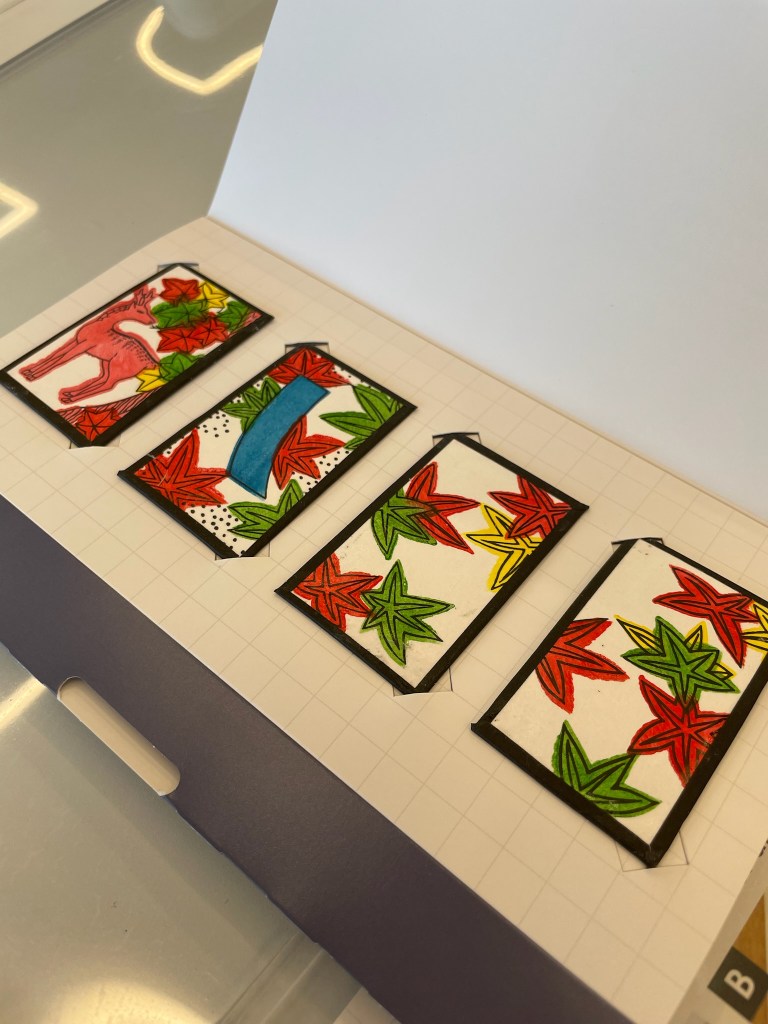
The hanafuda play session is slightly harder to recommend. The room is cool, with sitting cushions surrounding play areas projected onto the ground. After a brief intro to the modified ruleset you’ll use, players are free to play together. The projection also uses a camera to read the field and track points, which is helpful for beginners since the game relies heavily on memorization of the cards, which don’t feature obvious tells like numbers or letters on them. The main thing I disliked about the activity is that the game instructs you on which cards you can play in such a way that we didn’t really feel like we were playing, but just following the computer’s play recommendations given there’s no way to disable the recommended plays. If they offered that feature, I think it could be more enjoyable after you’ve gone through the motions on a few guided practice matches.
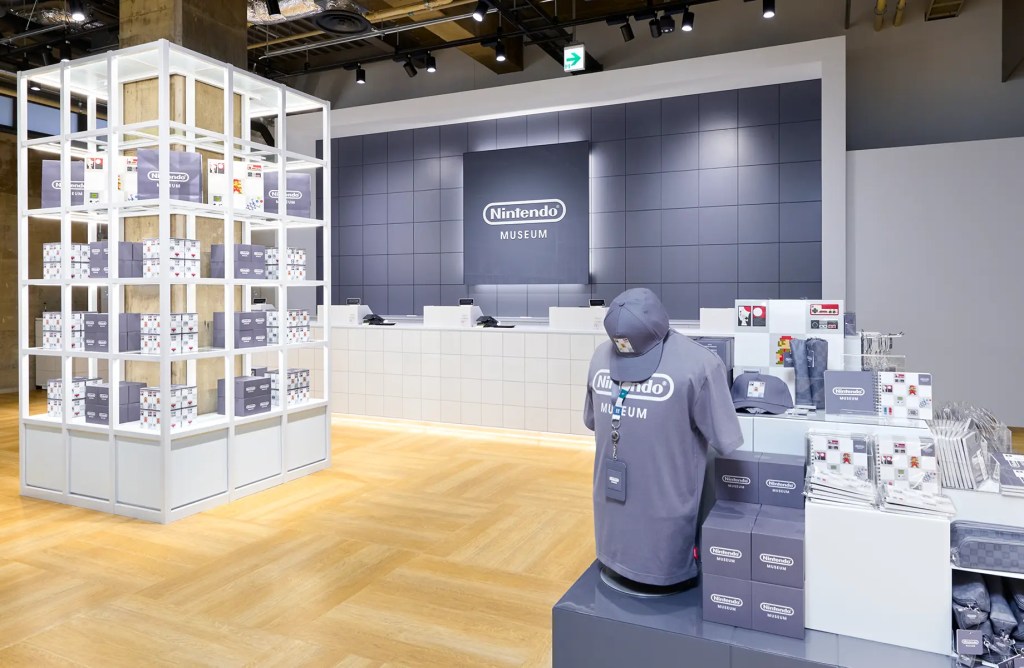
On the way out of the museum, you’ll find the store. I don’t really have a ton to say on it given it’s a pretty regular shopping expreience, though. If you’re curious about the items on sale, Japanese outlet Game Watch posted a bunch of pictures of the store, so check ’em out! Stuff was broadly more expensive than at the Tokyo and Kyoto Nintendo stores while being similar in terms of quality, so you’re mostly paying for the admittedly very sharp looking Nintendo Museum branding on everything. I bought a blind box keychain, and was lucky enough to pull the Game Boy (yippee!), which has been attached to my favourite bag ever since. The model is surprisingly detailed, so colour me a bit impressed! As a word of warning, many of the desirable items (like the giant controller plush toys) were sold out, so try not to get too married to buying a specific thing before you see the available stock for yourself.
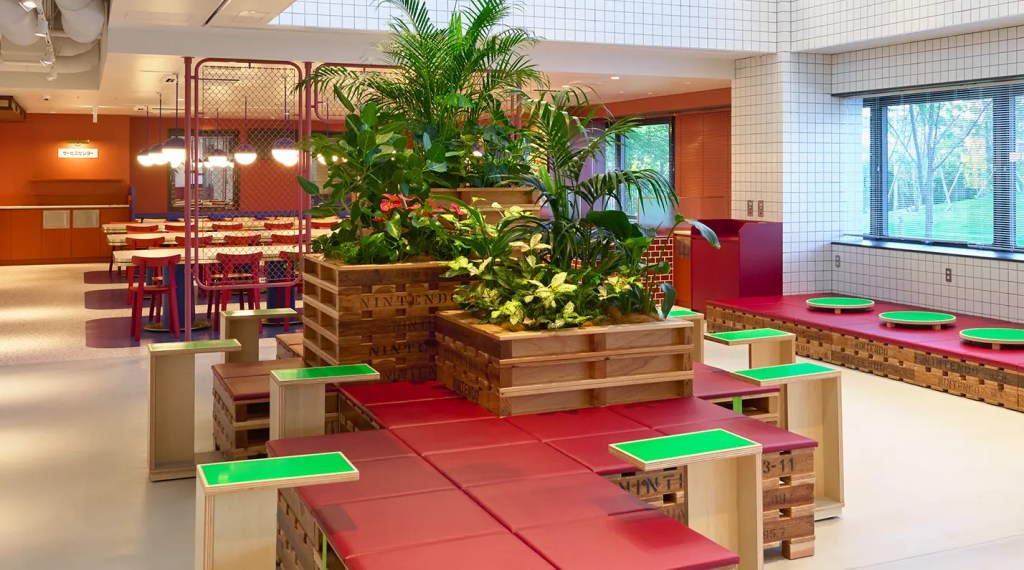
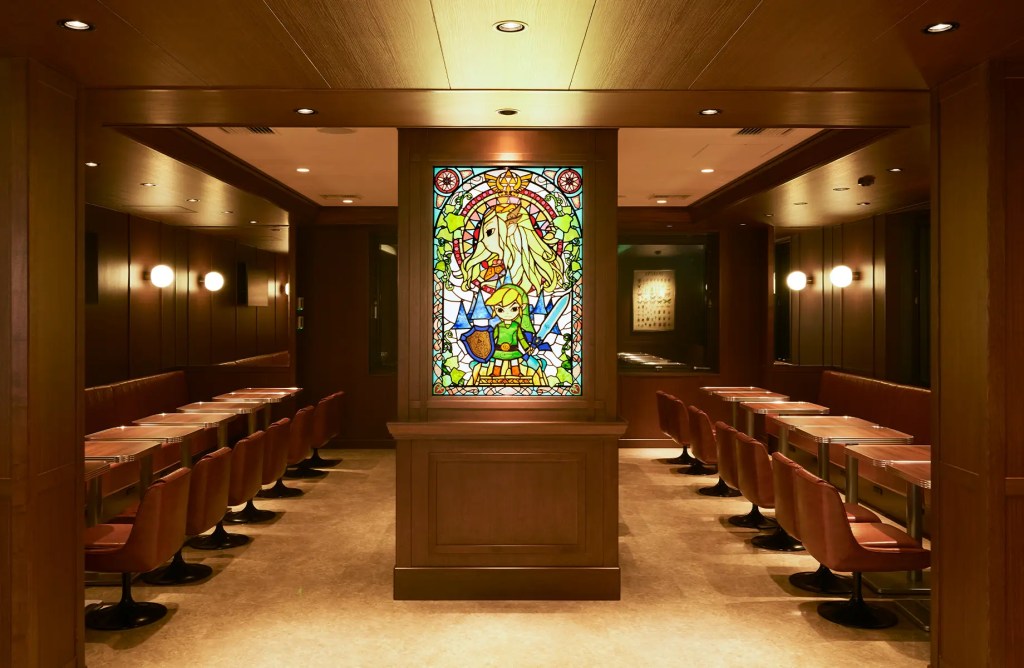
Lastly, the restaurant. Hatena Burger is a joint venture between Nintendo and a local Kyoto burger restaurant. The restaurant is only lightly Nintendo themed, which I think is a really tasteful choice for a museum. Though there are a couple of things here and there like a Wind Waker stained glass image and a gyroid, you could probably take photos in the place without a single Nintendo thing in the frame if you tried. As for the burgers themselves, we all bought combos for about 2,000 Yen a pop, and truth be told I was not terribly impressed. The potato orb french fry replacements were tasty but sparse and the burgers themselves were extremely unremarkable, especially at that price point. Hard to recommend.
When I think back upon the Mario-costumed person we initially spoke to in the cafe who was disappointed with the museum but quite happy with his burger, I feel glad that I didn’t trust him. The museum was awesome and he was truly wrong about it, reinforcing my world view that my tastes are good and everyone else is simply wrong. If I’d have gone with my gut, maybe I would have been able to grasp how diametrically opposed our tastes were and skipped the restaurant, too! Alas, I’m perhaps a little too trusting.
Overall, the Nintendo Museum was totally great. From the attractions, to the displays, to the little Pikmin hidden around the whole place, the museum exudes a very polished Nintendo-quality feel. I think anyone interested in video games who plans on visiting Kyoto really ought to go, and I’ll definitely be making the effort to do so again in the future- though I’ll probably skip the burgers this time since there’s a Tenkaippin just down the road and their ramen absolutely kicks ass. Big shout outs to my wife, who basically bankrolled the whole trip, the various lovely foreign fellows I met during the hanafuda session and waiting at the entrance of the museum (always happy to meet fans, wherever it may be!), and big shout outs to my friend who joined us for the journey. You guys rock.
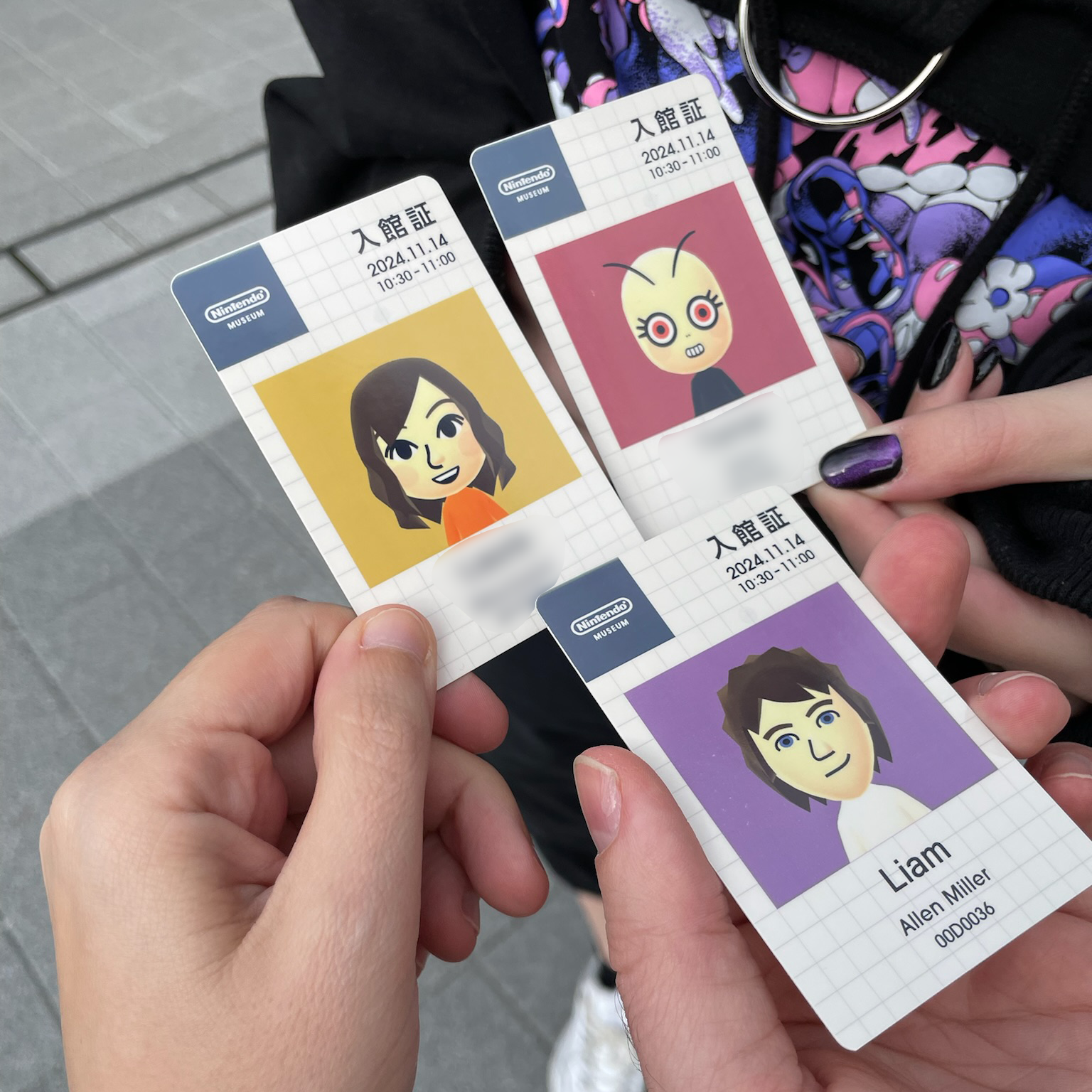
-Liam
November 2024 Articles
Castlevania Dominus Collection
tl;dr: A pristine collection of three DS classics with touch controls intact and optional, clever emulator tweaks onboard, and a surprise new (great) Castlevania game added in.
Siren
tl;dr: Despite being over 20 years old, Siren’s particular blend of level-based survival horror has very few imitators and stands tall as a truly excellent and innovative game, in spite of its shortcomings.
2 responses to “NOVEMBER 2024”
-
I don’t know why you were so judgmental about the tourist, you’re practically a tourist too.
LikeLike
-
That’s fair! For us, honestly, it was a weird event that sort of lingered in our heads for the whole museum. He interrupted our conversation over lunch to tell us how bad the museum was and was quite pushy about how we really ought to go to Universal, and he didn’t really let us talk and kept cutting us off. It was not a good experience and while I can admit it’s maybe uncharacteristically rude of me to go off on someone so hard, I think I was pretty soft on him in the writeup.
Fwiw I have no problem with him being a tourist! I agree that I’m ultimately only temporarily living here and there’s barely a difference in this case! Thanks for the feedback though, in the future I’ll have to think more carefully about this stuff.
LikeLike
-


 「RISINGSUPERBLOG」

Leave a comment